
Choosing to integrate artificial intelligence into your rental operations is no longer about testing experimental tech, it is about staying competitive in a rapidly evolving, high-stakes market.
Navigating the equipment rental industry requires balancing tight margins, unpredictable demand, and expensive machinery assets. At Rental Guide Hub, we constantly evaluate operational technology to show owners how modern platforms create measurable growth. Whether you manage heavy earthmoving gear, specialized aerial lifts, or commercial tool fleets, AI tools are quietly redefining how top operators protect profit margins.
Here is an in-depth breakdown of how AI is reframing equipment rental operations, where the highest financial returns sit, and how you can adopt these tools without disrupting your daily yard operations.
What Is Driving the AI Transformation in the Equipment Rental Market?
The $80B+ equipment rental market is undergoing a rapid digital evolution because rising asset prices, labor shortages, and complex supply chains make traditional operational methods financially unsustainable.
Here is the reality of the situation: relying on static spreadsheets, whiteboards, and manual yard logs actively caps your profitability. Manual scheduling inevitably leads to delayed turnarounds, overlooked maintenance routines, and unbilled damage disputes. Equipment sits idle in your yard when it should be out earning revenue, or worse, breaks down on a job site because a subtle diagnostic fault code was missed.
Modern rental operators are moving away from reactive management. By combining connected machinery data with machine learning algorithms, artificial intelligence converts raw operational numbers into immediate action items. Instead of guessing next month’s equipment demand or reacting to sudden engine failures, rental managers can now rely on real-time data to protect fleet investments and streamline dispatch workflows.
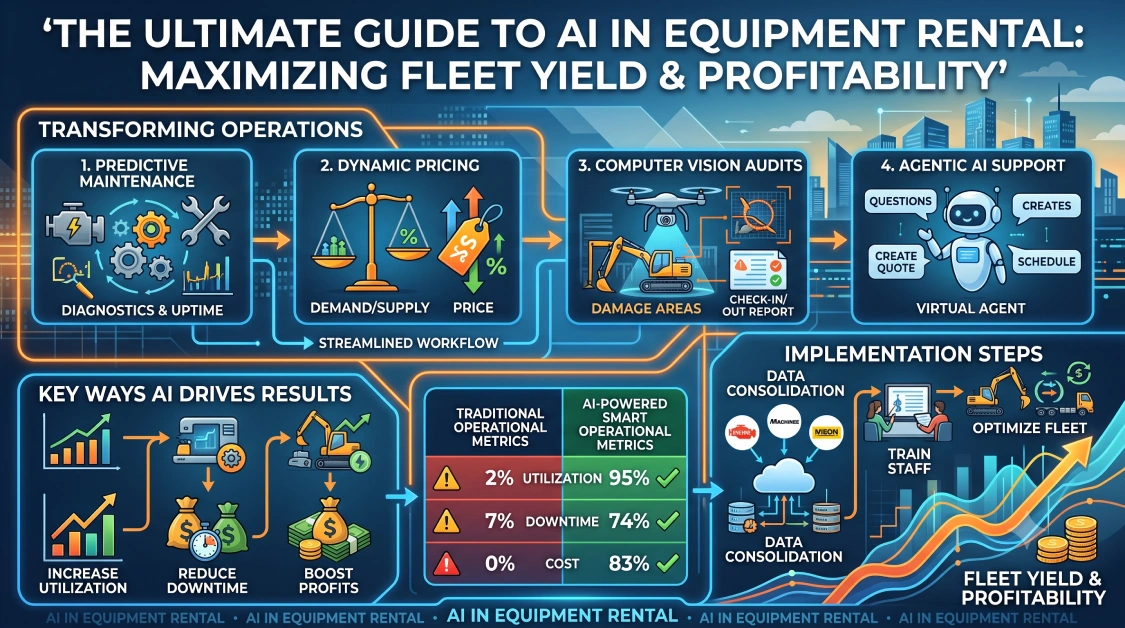
4 Key Ways AI Is Transforming Rental Yard Operations
AI transforms daily rental yard operations by turning vast streams of telematics data into clear actions across maintenance, pricing structures, asset inspections, and front-office customer quotes.
1. Predictive Maintenance via IoT Telematics
Predictive maintenance heavy equipment systems use continuous GPS sensor telemetry and OEM telematics integration to identify mechanical faults long before an engine light turns on. Rather than relying on static 250-hour service schedules, AI algorithms analyze real-time engine temperatures, oil pressure trends, fluid degradation, and vibration metrics.
The bottom line for your budget is simple: unplanned downtime destroys profitability. AI flags micro-anomalies early so your service team can schedule quick field fixes during planned job breaks. This reduces heavy equipment downtime, extends total asset lifespans, and prevents catastrophic structural breakdowns that cost tens of thousands of dollars to repair.
2. Dynamic Pricing and Localized Demand Forecasting
Dynamic pricing equipment rental tools automatically adjust day, week, and month rental rates based on hyper-local market signals, historical seasonal trends, weather patterns, and real-time fleet availability. Instead of leaving pricing locked to static annual rate sheets, machine learning tracks regional construction activity to balance your inventory across branches.
When rental yard inventory balancing is automated, you stop leaving money on the table during local demand spikes and avoid overpricing assets during quiet seasonal lulls. To see how specialized software connects these financial streams, explore comprehensive business intelligence software for rentals to gain full operational visibility over daily rates and fleet utilization metrics.
3. Computer Vision for Automated Damage Audits
Computer vision equipment damage detection check in replaces subjective, error-prone paper check-in sheets with precise visual verification. Yard technicians can walk around returned machinery using a tablet or mobile app to capture quick video or high-definition photos. AI model algorithms then compare the fresh footage against the pre-rental scan, instantly highlighting new dents, missing guard rails, altered frame components, or structural cracks.
This clear visual paper trail simplifies restitution cost tracking. Customers receive undeniable side-by-side photo proof of new wear or misuse, allowing your staff to claim fair repair costs without triggering protracted legal debates or hurting long-term client relationships.
4. Agentic AI for Customer Support and Fast Quoting
An AI agent dispatch equipment rental quoting system handles routine inbound queries, verifies asset availability across nearby branches, and draft accurate job quotes around the clock. Instead of forcing contractors to wait until morning office hours to confirm equipment availability, smart agents interact via web portals or messaging apps to lock in bookings instantly.
Delegating early-stage intake to smart assistants speeds up turnaround times across your front desk. Your sales team can move away from basic data entry to focus on high-value commercial accounts and field relationship management. You can review advanced equipment rental scheduling and quoting solutions to understand how automated dispatch pipelines improve customer responsiveness.
What Is the Financial ROI of AI in Equipment Rental?
The financial ROI of AI in equipment rental shows up as higher overall fleet yield, lower fleet maintenance costs, faster yard turnarounds, and direct recovery of unbilled equipment damage.
When you transition from manual yard management to predictive analytics, operational efficiency improves across every core department. Here is how operational metrics shift when AI is deployed across an equipment rental fleet:
| Operational Metric | Traditional Manual Operations | AI-Powered Smart Fleet Operations |
| Average Fleet Utilization Rate | 55% – 62% (Capped by manual scheduling gaps) | 70% – 78%+ (Optimized via automated fleet balancing) |
| Unplanned Fleet Downtime | High (Reactive fixes after breakdowns occur) | Low (Predictive maintenance catches fault patterns early) |
| Check-in Damage Recovery Rate | 30% – 40% (Disputed, missed, or unbilled wear) | 85%+ (Verified by computer vision check-ins) |
| Rental Turnaround Time | Hours to Days (Paper inspections and manual cleaning) | Minutes to Hours (Digital workflows and smart dispatch) |
| Pricing Optimization | Static yearly or seasonal rate cards | Dynamic real-time rate adjustments based on local demand |
To scale these operational gains across all parts of your enterprise, evaluate dedicated equipment rental software solutions that integrate yard management, billing, and telematics into a single command center.
What Are the Key Challenges and Implementation Steps for Rental Operators?
The main challenges in implementing AI involve cleaning up fragmented legacy asset data, connecting mixed-OEM telematics systems, and establishing human-in-the-loop workflows to verify dynamic pricing and safety decisions.
Here is the straightforward path to integrating these smart capabilities without overwhelming your daily operations:
Step 1: Consolidate Data with OEM Telematics Integration
Most rental fleets consist of mixed machinery brands, including Cat, Deere, Bobcat, and Komatsu. Each original equipment manufacturer uses distinct telematics feeds. Implementing smart fleet management requires consolidating these disparate streams into a unified data hub using standard ISO 15143-3 (AEMP 2.0) telematics protocols.
If your central system cannot digest incoming machine metrics, your analytical tools will deliver unreliable insights. You can check out specialized third-party software integrations for rentals to learn how seamless API connections tie diverse telematics streams into a single dashboard.
Step 2: Set Up Human-in-the-Loop Workflows
AI should empower your human team, not replace their judgment. Always structure your implementation around a human-in-the-loop approach. Automated dynamic pricing engines should suggest optimized rates, but your regional branch managers should hold the authority to approve custom volume discounts for key commercial accounts.
Similarly, automated computer vision scans flag structural equipment damage, but a qualified yard manager should review the audit before sending a damage invoice to a long-standing client.
Step 3: Train Staff and Refine Fleet Operations
Technology is only as effective as the field team operating it. Train yard technicians on quick tablet scanning, educate service managers on reading predictive diagnostic telemetry, and show sales representatives how to use predictive availability trackers to close bookings faster.
When your team sees how these tools eliminate tedious paperwork and prevent unexpected field service emergencies, adoption rates climb rapidly.
FAQs: Key Questions About AI in Equipment Rental
How does AI reduce heavy equipment downtime in a rental fleet?
AI reduces heavy equipment downtime by constantly analyzing IoT telematics, sensor telemetry, and engine codes to predict component failures so service teams can perform maintenance before major breakdowns occur.
Can AI damage detection tools integrate with mobile devices used in the yard?
Yes, modern computer vision damage detection systems run directly on standard smartphone or tablet apps, allowing yard staff to quickly record walkaround videos and compare visual returns against original departure logs.
What is the difference between standard telematics and AI predictive maintenance?
Standard telematics simply reports current machine metrics like GPS location or current engine hours, whereas AI predictive maintenance evaluates historical patterns across thousands of data points to forecast exactly when a part will fail.
How does dynamic pricing AI balance equipment rental rates during low demand?
Dynamic pricing algorithms evaluate local market activity, upcoming weather forecasts, and historical utilization metrics to offer competitive promotional rates on idle equipment without sacrificing overall fleet yield.
Is AI software cost-effective for small to mid-sized independent rental yards?
Yes, modern cloud-based equipment rental AI platforms scale efficiently, helping independent yards boost fleet utilization rates, recover lost damage costs, and lower operational overhead without requiring expensive custom IT builds.