
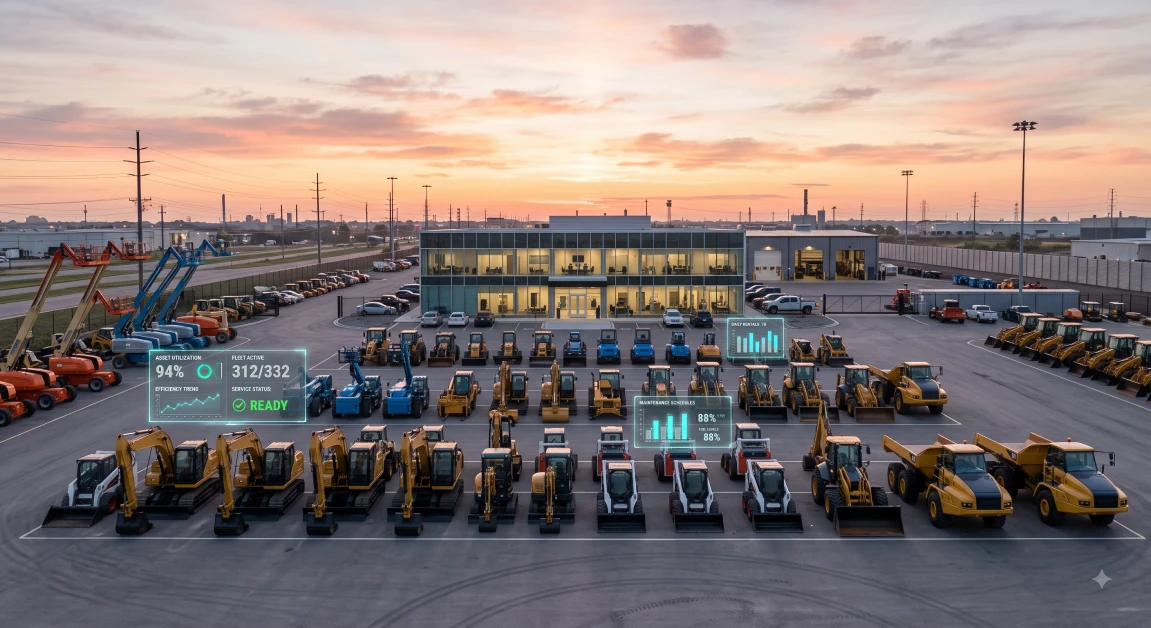
Running a multi-location equipment yard or tool rental operation requires continuous control over inventory availability, branch cash flow, and asset maintenance costs. Relying on spreadsheet reporting or manual reporting across isolated store databases creates severe rental reporting problems that hide idle fleet assets and inflate shop overhead. Modern rental analytics software converts raw transactional data into real-time performance analytics, giving managers complete line-of-sight into machine usage, counter revenue, and customer return patterns. Here is the reality of the situation: adopting dedicated analytics is not about generating more charts for your weekly meetings, but about giving your management team the exact figures needed to make fast, profitable decisions.
What Is Rental Analytics Software and How Does It Work?
Rental analytics software is a specialized business intelligence system that aggregates live operational data from counter billing, yard maintenance logs, and field telematics to deliver real-time rental reporting. The software functions by continuously connecting your front-desk point of sale, shop work order queue, and accounting ledgers into a single reporting hub. Instead of requiring your yard managers to manually pull export files from three separate databases, rental data intelligence processes these streams automatically to highlight financial trends and fleet bottlenecks.
When you evaluate a modern rental analytics platform, three core operational mechanisms drive your daily performance:
- Automated Data Consolidation: The platform pulls live rental transactions, security deposit logs, and customer histories into a unified database, eliminating manual spreadsheet entry.
- Predictive Utilization Tracking: Machine learning models evaluate historical booking cycles alongside real-time inventory analytics to project future fleet demand and spot category shortfalls.
- Automated Metric Alerts: Diagnostic rules scan continuous telematics feeds to flag maintenance risks and unbilled equipment hour overages before machines leave the shop.
For operators modernizing their technology stack, connecting these reporting models directly to comprehensive rental management solutions bridges the gap between raw shop telemetry and central accounting ledgers.
How Real-Time Fleet Analytics Solves Outdated Reports and Inefficient Reporting
Real-time fleet analytics solves outdated reports and inefficient reporting by providing instant visibility into asset locations, meter hours, and revenue utilization on a single live dashboard. Traditional end-of-month financial reports show what happened weeks ago, meaning by the time you spot a drop in boom lift rentals or a surge in repair bills, the financial loss is already locked in.
Manual spreadsheet reporting introduces human error and creates massive blind spots for multi-yard operators. Upgrading to real-time performance analytics changes your daily yard decisions:
- From Static Summaries to Live Metrics: Outdated reports summarize closed contracts days after the fact, whereas real-time rental analytics tracks active contract durations and job site turnarounds as they occur.
- From Calendar Schedules to Hour-Based Maintenance: Calendar-based maintenance schedules service machinery too early or too late, while real-time equipment analytics tracks actual engine run hours to trigger shop check-ups precisely when needed.
- From Reactive Transfers to Demand Balancing: Static logs hide local stock imbalances, but real-time inventory analytics flags idle assets at one yard and prompts inter-branch transfers to high-demand locations.
The bottom line for your budget is clear: historical reporting shows where your yards lost money last month, while real-time rental reporting prevents those margin leaks tomorrow.
Why Data-Driven Fleet Performance Analytics Outperforms Intuition in Asset Management
Data-driven fleet performance analytics outperforms intuition in asset management by processing historical maintenance logs, asset age, and dynamic market rates to evaluate portfolio health objectively. Many rental business owners historically relied on gut instinct or casual yard walk-throughs to determine when to purchase new excavators or retire aging equipment. While industry experience remains important, relying strictly on intuition leads to holding high-maintenance assets past their profitable life or purchasing redundant machinery.
Shifting to a data-driven rental software environment gives your executive team clear metrics across three operational areas:
- Rental Lifecycle Analytics: Rental analytics tools analyze total cumulative shop repair costs against asset age to identify the exact window for rental asset disposition, helping you sell machines before resale value plummets.
- Rental Revenue Analytics: Tracking return on investment by equipment class shows which asset categories generate true profit margin after factoring in transport, maintenance, and finance charges.
- Rental Sales Analytics: Customer risk scoring algorithms evaluate payment histories, late returns, and contract extensions to help sales representatives structure profitable credit terms.
To keep your fleet data organized across specialized trade categories, operations running supply branches rely on dedicated contractor supply rental software to streamline serialized tool tracking alongside retail supply sales.
Why integraRental Offers the Best Rental Analytics Software for Growing Yards
The platform provided by integraRental stands out as the best rental analytics software because it combines multi-yard fleet tracking, shop service ticket intelligence, and real-time financial reporting into a seamless operational tool. While basic software options like Company 1 offer simple booking widgets and Company 2 focuses strictly on asset barcode tags, integraRental acts as a complete operational hub built specifically for heavy machinery, tool yards, and specialty rental businesses.
When evaluating an analytics system, having your operational reports tie directly into your primary enterprise software is vital. Connecting your fleet analytics directly to a specialized platform like integraERP management software ensures that counter sales, yard dispatch, and multi-location asset tracking share the exact same live reporting data.
Furthermore, manual data entry between your counter register and bookkeeping software invites accounting errors. By utilizing native QuickBooks accounting integrations, your closed contracts, security deposit holds, and maintenance invoices sync with your general ledger instantly, giving you full financial transparency across every location.
How Business Intelligence Dashboards Drive Operations and Strategic Decision-Making
Business intelligence dashboards drive operations and strategic decision-making by turning raw operational metrics into customizable visual summaries that highlight outliers and profit opportunities instantly. When executives, counter clerks, and shop foremen review personalized dashboard views, every department aligns around the same operational goals.
Connecting your daily counter traffic to robust analytics tools transforms how your team interacts with operational data:
- Custom Executive Overviews: Company owners gain instant visibility into company-wide utilization, total receivables, and top-performing asset categories without digging through multi-page paper reports.
- Shop Maintenance Optimization: Service managers track active work orders, parts inventory levels, and turn-around times to keep repair technicians focused on high-demand fleet units.
- Optimized Pricing Strategies: Real-time demand analytics identifies seasonal spikes, prompting counter representatives to adjust rental rates dynamically during high-demand construction periods.
To see how specialized reporting tools transform daily yard management, leading operators rely on advanced business intelligence for rental operations to convert complex operational figures into clear daily directives.
Simple Steps to Implement Rental Analytics Software in Your Operation
Implementing rental analytics software requires cleaning your asset master data, configuring accounting integrations, and training counter staff to use live dashboards. Upgrading your yard reporting does not require stopping daily operations. Following a structured roll-out plan ensures your business shifts smoothly from spreadsheets to real-time analytics.
First, standardize your asset classifications and serial records. If your team registers identical skid steers under different descriptions or misses meter-hour logs, your fleet analytics will yield inaccurate forecasts. Establish clear category codes and serial numbers across all branch yards.
Second, establish direct accounting and telematics data flows. Connecting your financial ledger and machine sensors into your central analytics engine allows the software to track utilization, revenue, and maintenance costs automatically.
Third, empower your staff through hands-on dashboard training. Show counter clerks, shop foremen, and dispatchers how live analytics eliminates tedious manual record-keeping and simplifies their daily tasks.
When you are ready to explore how integrated analytics can boost your fleet profitability, schedule a personalized walk-through by requesting a rental software demo to see real-time reporting in action.
Frequently Asked Questions
What is the main difference between standard rental reports and real-time rental analytics?
Standard rental reports provide static summaries of closed contracts and historical revenue after a billing cycle ends. Real-time rental analytics continuously updates operational metrics, telematics feeds, and fleet availability as transactions occur, allowing managers to fix operational bottlenecks immediately.
How does rental maintenance analytics help reduce fleet repair costs?
Rental maintenance analytics tracks telematics diagnostic codes, engine hour meters, and past repair bills to predict mechanical degradation before breakdowns happen. This enables shop foremen to schedule preventive service during routine equipment turns, avoiding emergency field calls and extended machine downtime.
Can rental analytics software integrate with existing accounting systems like QuickBooks?
Yes, modern rental analytics platforms like integraRental feature native accounting sync that automatically passes counter transactions, deposit holds, and repair invoices directly into platforms like QuickBooks, eliminating manual data entry errors.
How does real-time inventory analytics prevent double bookings across multiple yards?
Real-time inventory analytics updates asset availability continuously across all branch yards whenever a machine is reserved, dispatched, or checked into the repair shop, giving dispatchers live visibility and preventing double bookings.
Is rental analytics software practical for small and mid-sized rental businesses?
Yes, rental analytics software benefits small and mid-sized businesses by eliminating manual spreadsheet reporting, optimizing fleet utilization, and surfacing high-margin equipment categories so smaller yards can grow efficiently without adding heavy administrative overhead.