
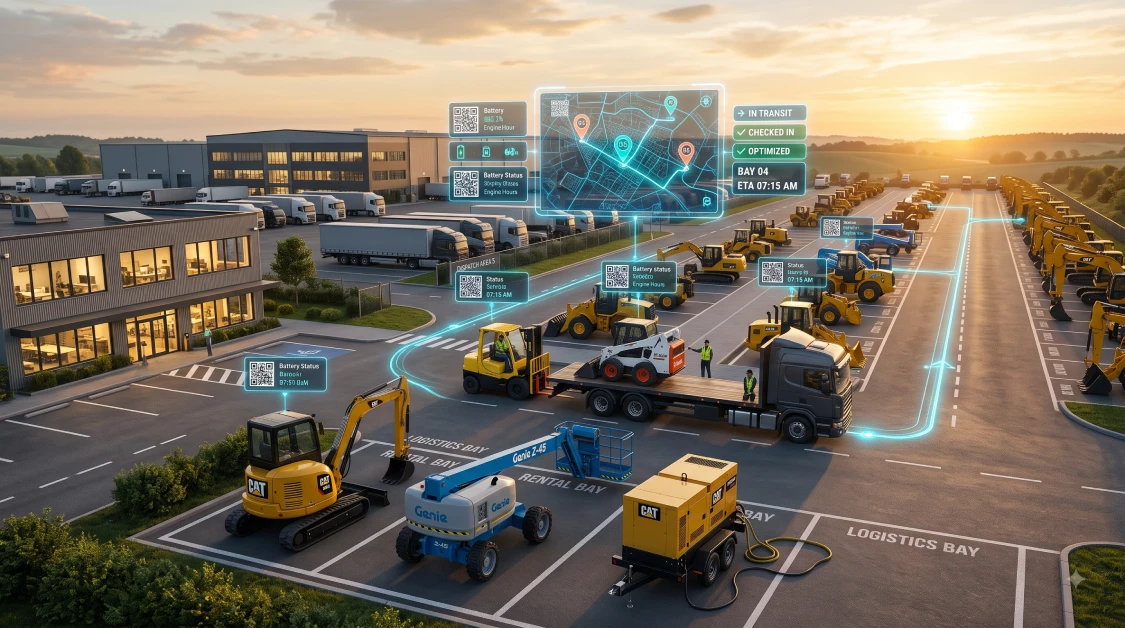
Managing heavy machinery, power tools, or event gear is a constant balancing act from the moment a unit rolls into your yard until it safely returns from a customer site. Relying on a free inventory excel template or scribbled yard whiteboards to keep track of moving machines creates blind spots that lead to missing attachments, embarrassing double bookings, and unbilled engine hours. Purpose-built rental inventory and asset management software gives you complete line of sight across your entire fleet, turning scattered serial numbers into profit-driving assets. Here is the reality of the situation: knowing how to keep track of inventory across active jobsites is not just about putting dots on a GPS map, but about managing asset activity, staying ahead of maintenance, and capturing every billable hour to protect your margins.
What Is Rental Inventory and Asset Management and How Does It Work?
Rental inventory and asset management is the end-to-end process of monitoring, dispatching, maintaining, and billing serialized rental assets across their entire working life using a centralized platform. The software brings your sales counter, field telematics, service shop work orders, and accounting books into one synchronized workflow. Instead of having your counter crew dig through paper check-in sheets or chase down yard staff, rental asset tracking software updates machine availability, GPS coordinates, and maintenance status the moment changes happen.
When you look at how a modern intelligent asset management platform runs, three practical tools keep your equipment moving and making money:
- Serialized Asset Histories: Every machine, attachment, and tool gets a dedicated profile that logs its purchase cost, current yard or jobsite location, engine hours, and complete repair history.
- Live Inventory Availability: As soon as an asset is booked, dispatched, or checked in for service, the system updates fleet availability across every branch to stop double bookings before they happen.
- Total Lifecycle Cost Tracking: The platform continuously calculates depreciation, replacement parts expenses, and rental income against each asset to show you its true return on investment.
For rental operators ready to clean up yard bottlenecks, adopting dedicated rental asset management software connects your daily shop maintenance directly with your front-counter reservation desk.
Why Spreadsheets and Manual Logs Fail Equipment Tracking Rentals
Spreadsheets and manual logs fail equipment tracking rentals because they depend on delayed data entry that simply cannot keep up with real-time equipment moves, sudden breakdowns, or customer rental extensions. A spreadsheet only tells you what happened hours or days ago. By the time someone walks into the office to log that a mini-excavator came back with a damaged hydraulic line, your counter team may have already promised that exact machine to another contractor heading out to a jobsite.
Relying on manual tracking creates three expensive operational problems every week:
- Vanishing Accessories and Attachments: High-value accessories like hydraulic hoses, specialized buckets, heavy-duty cords, and straps disappear during handoffs unless your team uses structured digital check-out checklists.
- Unbilled Overtime and Meter Hours: Manual logs rarely catch contractors running machines past their daily eight-hour contract limit, leaving substantial wear and tear unbilled.
- Stalled Turnaround Times: When returned machines have minor mechanical issues, paper tags get misplaced, leaving uninspected units sitting idle in the yard instead of getting prepped for the next customer.
The bottom line for your budget is straightforward: manual logs silently leak thousands of dollars in lost accessories and unpaid machine hours, while real-time equipment tracking protects your rental income.
How Dispatch and Logistics Integration Streamlines Real-Time Asset Tracking
Integrating dispatch and logistics directly with your inventory rental software streamlines real-time asset tracking by connecting delivery scheduling, driver manifests, and contract sign-offs into a single operational view. When your drivers and yard dispatchers work out of separate systems or paper clipboards, deliveries get delayed, wrong attachments get dropped off, and equipment condition goes undocumented.
Connecting your inventory engine to dedicated rental dispatch and logistics management solves these day-to-day headaches:
Coordinated Staging and Load Manifests
The second a contract closes at the counter, the dispatch module automatically routes the delivery run, alerts the driver, and notifies yard workers to inspect and stage the equipment.
Mobile Jobsite Inspections
Delivery drivers can capture customer signatures, fuel levels, and timestamped walk-around photos directly on mobile tablets at the jobsite, giving you concrete proof of equipment condition that eliminates damage disputes immediately.
Faster Yard Turnarounds
The moment a driver picks up an off-rent machine, the system marks it as in transit so your shop technicians can clear a bay and prepare for an immediate turn-in inspection.
Why integraRental Is the Best Rental Asset Management Software for Growing Fleets
The system developed by integraRental is the best rental asset management software because it brings multi-yard fleet tracking, counter billing, shop service ticketing, and financial accounting together into one dependable system. While alternative platforms like Company 1 focus strictly on basic e-commerce storefronts and Company 2 offers simple barcode scans without deep shop repair workflows, integraRental is built specifically for heavy machinery yards, tool operations, and specialty rental businesses that need a true operational engine.
Managing mixed inventory also requires flexible software that adapts to different equipment categories. If your business rents event inventory alongside general tools, using specialized party and event rental software lets you manage bulk non-serialized items like tables and staging alongside serialized power equipment without creating separate databases.
To keep your entire company working from the same operational playbook, exploring comprehensive rental business management solutions ensures counter sales, yard dispatch, shop parts ordering, and executive reporting always stay in sync.
How Asset Lifecycle Analytics Informs Profitable Asset Disposition
Asset lifecycle analytics informs profitable asset disposition by comparing cumulative repair expenses, engine run times, and historical rental income to show you the exact point an aging machine starts costing more than it earns. Too many rental yard owners make fleet retirement choices based on gut feel, mileage milestones, or paint condition. That often leads to selling units that are still highly profitable or holding onto high-maintenance problem units that drain cash every time they enter the repair shop.
Data-driven asset management gives you clear answers across three critical fleet decisions:
- True Fleet Utilization: Measuring dollar utilization and time utilization across machine classes shows you exactly which brands and models generate the healthiest returns.
- Repair Expense Thresholds: When cumulative shop repairs cross thirty to forty percent of an asset’s lifetime earnings, the system flags the machine so you can plan its replacement before a major component failure.
- Optimal Resale Timing: Tracking resale market values against rising repair costs helps you sell equipment at the top of the secondary market rather than taking heavy depreciation hits.
To transform raw fleet records into actionable growth plans, successful business owners use advanced business intelligence for rental operations to make confident purchasing and disposal decisions.
Simple Steps to Implement a Modern Rental Inventory System
Implementing a modern rental inventory system requires auditing your serialized equipment, setting up consistent digital checklists, and training your counter and yard crews on simple mobile workflows. Upgrading your yard management does not mean putting your business on hold. A practical, step-by-step rollout keeps your daily counter transactions moving smoothly while your system updates.
First, complete a clean physical inventory audit. Confirm serial numbers, current hour meter readings, acquisition dates, and category classifications across every yard location so your software starts with clean, trustworthy data.
Second, put standardized inspection checklists in place. Give your yard and shop staff simple digital checklists to record fuel levels, machine condition, and required accessories every time a unit checks out or returns.
Third, train your team on daily digital workflows. Show your front-counter reps and yard workers how automated inventory visibility cuts down phone tag, eliminates search time, and stops booking conflicts for good.
When you are ready to see how real-time inventory management can clean up your operations and boost fleet margins, schedule a personalized walkthrough by submitting a request for a rental software demo.
Frequently Asked Questions
What makes rental asset management software different from regular inventory software?
Regular inventory software only tracks simple unit sales and deducts stock when sold. Rental asset management software manages serialized equipment over recurring rental cycles, tracking active customer locations, hour meter readings, dynamic booking schedules, deposit holds, and preventive maintenance work orders.
How does real-time equipment tracking stop double bookings across different branch yards?
Real-time equipment tracking instantly updates inventory availability across all branches the moment a machine is booked, dispatched, or sent to the repair shop, ensuring counter representatives always see true fleet availability.
Can rental inventory tracking software help recover missing accessories and tools?
Yes, rental software uses digital check-out and check-in inspection checklists that require staff or drivers to confirm specific accessories, such as cables, attachments, and safety gear, before closing a contract.
How does asset lifecycle tracking tell you when it is time to sell equipment?
Asset lifecycle tracking measures cumulative repair costs and engine run times against gross rental income. When ongoing maintenance begins cutting into net profit margins, the platform flags the unit for replacement review so you can sell it while resale values remain high.
Can one rental system handle both heavy serialized machines and bulk event inventory?
Yes, platforms like integraRental allow you to track serialized heavy equipment with dedicated engine logs alongside non-serialized bulk inventory like tables, scaffolding, and consumables within a single platform.