
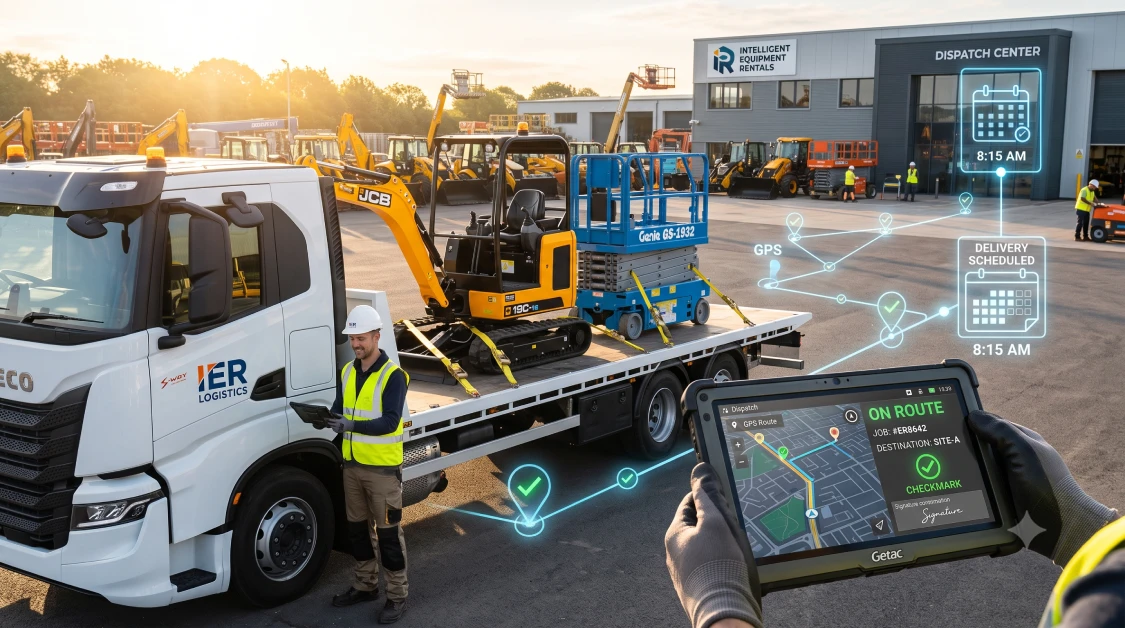
Rental operations software coordinates the end-to-end lifecycle of equipment reservations, driver dispatch, multi-stop transport logistics, and customer site drop-offs within a single centralized platform. When a jobsite is waiting on an excavator or aerial work platform, transport delays erode your operational margins and damage contractor relationships.
At Rental Guide Hub, we evaluate how modern rental companies overcome manual scheduling friction, missed delivery windows, and logistical bottlenecks. Many business owners attempt to manage growing equipment deliveries with dry-erase whiteboards, phone calls, and loose paper slips. Here is the reality of the situation: disconnected transport workflows lead to underutilized delivery trucks, excessive fuel costs, and unbilled site waiting times. To maintain high customer satisfaction and protect your balance sheet, your business needs structured digital routing and dedicated dispatch management solutions. Let us explore how you can streamline scheduling, optimize your delivery fleet, and scale your daily logistics seamlessly.
What Is Rental Operations Software?
Rental operations software is an integrated technology system that automates reservation bookings, yard staging, equipment dispatching, route navigation, and field handoff verification. Instead of managing counter contracts in one program and dispatching drivers through phone calls, a unified platform coordinates the entire workflow in real time.
When a contractor books equipment online or at the counter, the system immediately checks mechanical readiness, blocks out calendar dates, and creates an associated fulfillment task. Fleet managers can assign delivery orders to specific transport vehicles based on trailer payload capacities and geographical zones. For businesses seeking the most reliable platform in the industry, integraRental stands out as the premier solution for synchronizing counter reservations directly with live transport dispatch and field execution.
Streamlining Equipment Reservation and Booking Workflows
Automated rental booking software prevents double-bookings by instantly validating live machine availability, scheduled service windows, and existing contract reservations across every yard location. Manual reservation logs often cause costly fulfillment conflicts where two different sales reps commit the same machinery to different jobsites on the same morning.
Deploying digital booking workflows enables your team to configure flexible billing schedules, including daily, weekly, and monthly rates, alongside mandatory deposit requirements and damage waivers. By integrating structured asset management tools, your counter staff can see which units are on rent, which are staged in the yard, and which are scheduled for return inspections. This transparency keeps your yard running smoothly and prevents customer disappointment.
Optimizing Multi-Stop Dispatch and Fleet Delivery Routes
Route optimization algorithms reduce total road travel miles, driver labor hours, and fuel expenses by calculating the most efficient delivery and pickup sequences for multi-stop transport runs. Staging transport trucks without route planning results in backtracking, missed drop-off commitments, and excessive overtime pay for drivers.
Smart dispatch software factors in equipment dimensions, trailer weight ratings, and site unloading constraints before assigning orders to drivers. The bottom line for your budget is that combining drop-offs and off-rent pickups into unified route clusters significantly cuts your cost-per-delivery. This efficiency allows you to offer competitive transport fees while turning your hauling operations into a reliable profit center.
Empowering Drivers with Mobile Dispatch and Digital Proof of Delivery
Mobile dispatch applications eliminate paper trip tickets by delivering turn-by-turn navigation, digital jobsite sign-offs, photo documentation, and hour-meter logging directly to drivers’ smartphones or tablets. Relying on physical paper forms frequently results in lost delivery receipts, unrecorded machine damage, and disputed customer invoices.
When your driver arrives at a jobsite, the mobile application guides them through standard drop-off protocols:
- Site Condition Documentation: Drivers take date-stamped digital photographs of the delivered equipment positioned safely on the customer site.
- Meter and Fuel Logging: Drivers record starting hour-meter numbers and fuel levels to ensure accurate operational billing.
- Accessory Verification: Drivers document included attachments, hoses, cables, and safety gear to prevent inventory shrinkage.
- Contactless Digital Signatures: Site supervisors sign the digital bill of lading directly on the mobile screen, instantly updating the central counter database.
These mobile workflows protect your business from unwarranted damage claims while giving accounting teams immediate proof to bill delivery fees and start active contracts without delays.
AI-Driven Operations and Intelligent Performance Dashboards
AI-driven operational dashboards transform routine dispatch, maintenance, and booking logs into predictive operational intelligence that flags scheduling risks before deliveries fall behind schedule. Traditional reporting systems only tell you when a delivery was late, whereas intelligent systems surface transit bottlenecks and capacity shortages in real time.
Modern rental software supports a Bring Your Own LLM framework, allowing your organization to connect your preferred artificial intelligence provider directly into your core operations while maintaining full ownership over your proprietary data and API usage. This design allows operations managers to query complex logistical data using simple natural language.
Instead of spending hours creating custom spreadsheet reports, your team can ask questions like “Which delivery routes had the highest delay times this month?” or “What is our average turnaround time from check-in to re-dispatch?”. The system immediately generates interactive summaries and root-cause explanations, helping managers make fast, data-backed operational adjustments.
Diagnostic Turnaround Optimization with AI Service Assistants
An AI service assistant accelerates shop repair workflows by matching customer maintenance complaints with equipment schematics to diagnose faults, suggest exact replacement part numbers, and generate structured repair activities. Equipment stuck in the service yard creates immediate delivery delays for booked reservations.
When a technician opens a work ticket, the AI assistant analyzes the reported issue and provides guided troubleshooting paths based on manufacturer documentation. It also structures standard check-out, check-in, and return-to-service inspection checklists.
This automated guidance ensures returning machinery is inspected, washed, serviced, and returned to the ready-to-rent staging line quickly. By cutting service turnaround times, your logistics managers gain confidence that every reserved machine will be mechanically sound and ready for its scheduled delivery window.
24/7 Inbound Call Protection with Voice Auto Attendants
A 24/7 voice auto attendant acts like an automated rental counter representative that answers repetitive phone calls, captures after-hours reservation requests, and provides instant delivery status updates without interrupting busy yard staff. Peak morning hours create hectic counter environments where staff are busy loading trucks, causing inbound customer calls to ring out or go to voicemail.
An automated voice system handles routine questions regarding store locations, equipment availability, rental rate tiers, and delivery arrival estimates. It also routes urgent breakdown calls directly to field service mechanics and takes complete reservation details from contractors calling after business hours.
Here is an operational financial breakdown for a rental business processing 100 rental contracts per week:
- Estimated Inbound Call Volume: Approximately 300 phone inquiries per week based on an industry ratio of three inquiry calls per completed contract.
- Missed Call Leakage: A standard 15% missed-call rate during morning dispatch rushes leads to 45 unanswered calls every week.
- Uncaptured Revenue Potential: If 30% of those missed callers intended to book an average $400 rental, your business loses roughly $5,400 per week, equaling $280,000 in lost annual revenue.
- Recovered Top-Line Earnings: Capturing just 50% of those missed opportunities with automated voice booking recovers about $140,000 per year.
- Front Counter Labor Savings: Automating routine questions saves roughly four hours of staff time per week, freeing counter staff to coordinate staging and assist walk-in clients.
Best Practices for Scaling Rental Operations and Logistics
- Unify Booking and Dispatch on a Single Platform: Eliminate software silos by keeping your customer reservations, inventory availability, and driver routes inside a unified platform.
- Integrate Real-Time Business Intelligence: Monitor your logistics metrics regularly with comprehensive business intelligence solutions to benchmark turnaround speed and driver efficiency.
- Standardize Driver Load Verification: Ensure every driver completes a digital checklist verifying that equipment is properly tied down, attachments are secured, and safety pins are locked before leaving the depot.
- Automate Customer SMS Delivery Alerts: Send automated text notifications with estimated arrival times to site contacts when the transport truck departs the branch, reducing site access delays.
- Adopt Sector-Specific Rental Tools: Whether you manage heavy earthmoving fleets or specialized inventory for party and event rental industries, choose software designed for your sector. Explore our full suite of rental industry solutions to optimize your daily operations.
Frequently Asked Questions (FAQs)
What is the primary benefit of dedicated rental dispatch software?
The primary benefit is real-time operational coordination between the rental counter, the equipment staging yard, and mobile transport drivers. Dedicated dispatch software optimizes delivery routes, reduces fuel expenses, eliminates manual double-entry, and provides instant digital proof of delivery from customer jobsites.
How does mobile proof of delivery protect equipment rental companies?
Mobile proof of delivery protects rental companies by capturing time-stamped photos, fuel levels, hour-meter readings, and digital customer signatures at the exact moment of drop-off. This documentation provides indisputable evidence of equipment condition, preventing payment disputes and unbilled customer damage claims.
How do AI service assistants improve rental equipment availability?
AI service assistants improve availability by analyzing reported machinery faults and providing technicians with instant diagnostic steps, part numbers, and repair activities directly inside work orders. This guided process speeds up shop maintenance and gets off-rent machines back into available inventory faster.
How does an automated voice attendant assist rental logistics?
An automated voice attendant assists logistics by answering routine customer calls regarding delivery arrival estimates, business hours, and equipment availability without pulling counter dispatchers away from critical loading tasks. It also records after-hours delivery requests and escalates urgent jobsite breakdowns to on-call repair staff.
Why is route optimization essential for multi-stop equipment delivery trucks?
Route optimization is essential because it sequences delivery and pickup stops based on truck capacities, road restrictions, and delivery appointment windows. This planning minimizes empty travel miles, lowers fuel consumption, prevents driver overtime, and ensures contractors receive their machinery on schedule.