
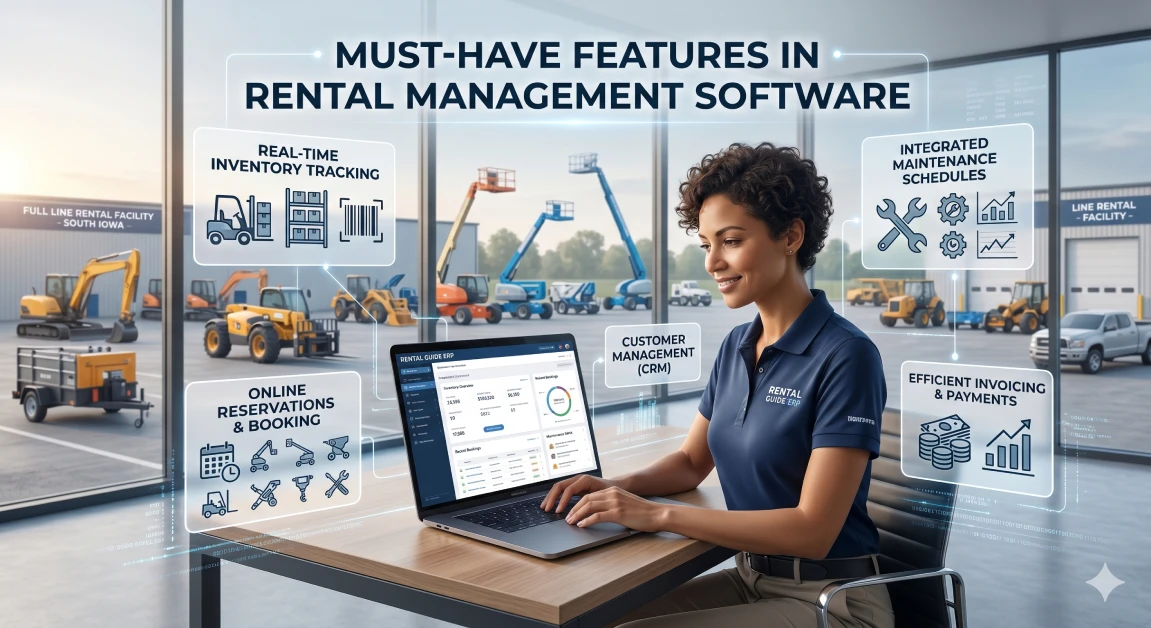
Running a high-performing rental operation demands absolute control over your physical assets and your digital workflows. If you manage a fleet of heavy iron, tools, or specialty equipment here in South Iowa, you already know that manual clipboards and generic spreadsheets cannot keep pace with modern project timelines. Scalability depends entirely on how well your team communicates with your yard, your mechanics, and your customers. As South Iowa’s Largest Full Line Rental Facility, we see firsthand how a lack of centralized operational data erodes profit margins and creates logistical bottlenecks.
The reality of the situation is that your software cannot just be a digital cash register. It must serve as the proactive nervous system of your business. When a contractor along the Highway 34 corridor calls needing a dual-drum roller or an articulated boom lift, you cannot afford to guess whether that machine is sitting ready in the yard, out on another jobsite, or broken down in the shop. Let us look at the core architectural features your rental platform needs to protect your margins, maximize utilization, and keep your operations completely synchronized.
Real-Time Fleet Tracking and Inventory Visibility
Real-time fleet tracking provides an instantaneous snapshot of asset availability, current utilization rates, and precise jobsite locations across your entire footprint. This feature eliminates the double-booking errors that damage customer trust and stall projects. When your counter staff looks at the dashboard, they must see exactly which machines are ready for transport, which are currently earning revenue, and which are locked in a service bay.
[Asset Status Tracking]
 │
 ├──► Available (Ready for Transport)
 ├──► Dispatched (Active Revenue Generation)
 └──► Maintenance (Diagnostics & Repairs)
Here is a major operational distinction you need to understand when evaluating system capabilities. A lot of platforms talk about managing a professionally maintained fleet on paper, but the screen only tells half the story. The true value of real-time inventory tracking is how it connects your front office directly to your highly trained mechanics on the shop floor. Anyone can check a box online to claim a machine is functional, but your software must allow your factory-certified technicians to log live diagnostic updates, sign off on safety inspections, and update machine readiness metrics the second a wrench leaves the iron. This integration bridges the gap between digital data and mechanical reality, ensuring that the machine delivered to an Adams County jobsite performs flawlessly from day one.
If you are looking to build this kind of operational resilience into a new venture from the ground up, reviewing the foundational workflows in our guide on how to start a rental business step-by-step will give you a clear roadmap for structuring your initial asset tracking frameworks.
Integrated Preventive Maintenance and Shop Floor Scheduling
Integrated preventive maintenance software automatically schedules service intervals based on real-time machine run-time hours, fuel consumption data, and calendar thresholds. Waiting for an engine to fail on a jobsite in Creston before you service it ruins your profitability and tears up expensive components. Your platform must generate automated alerts for oil changes, hydraulic filter swaps, and structural inspections before the machine ever leaves the yard.
The bottom line for your operating budget is that unplanned downtime costs three times more than scheduled maintenance. Your platform should allow your shop manager to assign work orders directly to specific technicians based on their certifications and current workloads. It must track parts inventory concurrently, so you never find yourself holding up a critical repair because a simple gasket is backordered. When your software dynamically links machine availability to the active service bay schedule, your sales team stops promising iron that isn’t safe to operate.
Managing these moving parts is often the difference between a highly profitable yard and a chaotic one. To see how these maintenance workflows fit into the broader operational ecosystem of a successful multi-tier rental house, take a look at our comprehensive ultimate guide to the rental business for an in-depth breakdown of asset lifecycle management.
Dynamic Pricing Engines and Flexible Billing Models
Dynamic pricing engines enable rental operators to adjust rates automatically based on seasonality, rental duration, customer tiering, and regional market demand variables. A rigid billing system forces you to leave money on the table or scare away long-term commercial clients with inflexible terms. Your software must seamlessly manage complex rate structures, shifting effortlessly between daily, weekly, monthly, and custom project-based billing cycles.
Look closely at how a potential software platform handles environmental fees, damage waivers, delivery surcharges, and regional tax variations. If your team has to calculate these variables manually at the end of every month, your invoicing will inevitably suffer from calculation errors. The reality of the situation is that slow, inaccurate billing destroys cash flow and frustrates commercial clients who need clean expense reporting for their own project managers. Automated billing modules generate clean, itemized invoices the moment a rental contract closes, processing credit card payments or updating commercial lines of credit instantly.
Overlooking these intricate billing settings is a massive trap for growing businesses. If you want to keep your accounting clean, studying the strategic insights regarding 10 common rental business mistakes and how to avoid them will protect your cash reserves from common transactional leaks.
Advanced Telematics and GPS Hardware Integration
Advanced telematics integrations pull live engine diagnostics, GPS coordinates, and equipment utilization data directly from your machinery into your central management dashboard. This feature gives you absolute visibility into how your equipment is actually being used in the field, long after the delivery truck leaves your yard. If an operator overworks a machine or runs an engine hot on a site near Clarinda, the system sends an immediate alert to your service desk.
[Field Machine Sensors] ──► [Telematics Gateway] ──► [Rental Software Dashboard]
 │
 ┌───────────────┴───────────────┐
 ▼ ▼
 [Location / GPS] [Engine Health Alerts]
This telemetry data gives you leverage when managing customer contracts. If a customer signs a standard single-shift agreement but runs a mini-excavator twenty-four hours a day over a weekend, your telematics log provides the objective data required to bill for the additional machine hours fairly. It also streamlines your logistics. When a project manager calls to off-rent a piece of machinery, your dispatch team can view the exact GPS coordinates of the machine instantly, planning the most fuel-efficient pickup route along our regional secondary roads without making multiple phone calls to locate the iron on a sprawling rural jobsite.
Multi-Channel Customer Portals and Digital Signature Workflows
Modern customer portals allow commercial clients to reserve equipment, view active rental contracts, request field service, and off-rent machinery directly from their smartphones or tablets. Forcing a busy contractor to stop what they are doing during a concrete pour just to call your counter to extend a mixer rental is an outdated way of doing business. A clean, mobile-responsive digital interface empowers your customers to manage their operations on their own schedules.
Digital signature workflows and electronic rental agreements are non-negotiable components of this feature set. Your field drivers should be able to capture secure, legally binding signatures and upload high-resolution condition photos directly to the contract via a mobile application during the drop-off inspection. This digital paper trail protects your business from false damage claims and ensures your customers know exactly what state the machinery was in when they took possession. By moving the entire documentation loop online, you eliminate lost paper tickets, reduce administrative overhead, and speed up your turnaround times between rentals.
Frequently Asked Questions on Rental Management Software
1. What are the key features required in rental management software for heavy equipment tracking?
Heavy equipment operations require real-time inventory visibility, advanced telematics integrations, automated preventive maintenance scheduling, and dynamic billing engines. These features allow you to track engine hours, monitor machine health in the field, prevent double-bookings, and automate complex commercial rate tiers from a single interface.
2. How does software distinguish between a basic fleet and advanced service execution?
While software tracks asset availability across a fleet, the system must actively integrate your shop workflows with your technicians. True full-line rental software connects office dispatch tools directly to work orders used by highly trained mechanics, ensuring digital status updates reflect the verified physical safety and performance of the iron before it leaves the yard.
3. Can rental management platforms automate field service alerts for remote jobsites?
Yes, modern platforms utilize embedded GPS and telematics integrations to stream diagnostic data directly to your central office. If a machine experiences a hydraulic spike or an engine temperature variance on a jobsite, the software triggers an immediate notification so your shop can dispatch a technician before a catastrophic failure occurs.
4. Why is a mobile-responsive customer portal important for local contractors?
A mobile-friendly portal allows project managers to instantly view active assets, request extensions, off-rent equipment, and sign digital rental agreements directly from the jobsite. This eliminates administrative delays, reduces phone traffic at your service counter, and gives contractors the flexibility to manage logistics without leaving the field.
5. How do flexible billing engines improve cash flow for seasonal rental businesses?
Flexible billing engines automatically calculate varying rate structures such as daily, weekly, or monthly usage while accurately applying surcharges, regional taxes, and damage waivers. This automation removes manual processing bottlenecks, eliminates invoicing errors, and accelerates collection cycles for your accounting team.