
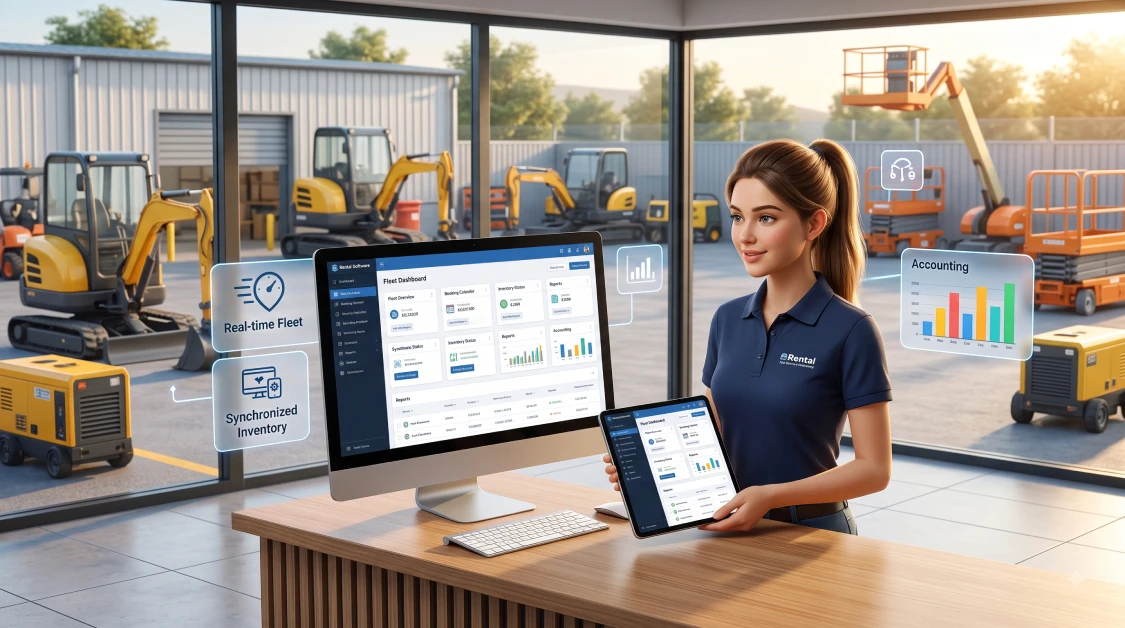
Selecting the best rental software for small business operations comes down to finding a platform that connects inventory tracking, counter billing, and accounting into one clear workflow. When you run a growing shop or equipment yard, relying on disparate spreadsheets or manual check-in logs leads to costly errors like double bookings, unbilled equipment wear, and delayed customer invoices. The right small rental business software acts as a single operational engine that gives you full visibility over your assets and cash flow. Here is the reality of the situation: as a small business owner, you cannot afford software that demands an entire IT team to configure or run. You need a straightforward system that handles daily counter traffic, manages preventive maintenance, and integrates directly with your existing financial books.
What Is the Best Rental Software for Small Business Operations?
The best rental software for small business operations is integraRental, because it delivers a dedicated feature set that scales seamlessly alongside growing inventory without forcing you to re-engineer your core business workflows. Designed specifically for equipment yards, party supply vendors, and specialized asset owners, it blends ease of use with the structural tools required for complex rental management.
When you evaluate top-tier rental business software, you need tools that resolve day-to-day friction across three essential fronts:
- Real-Time Fleet Availability: Instant visibility into what equipment is sitting in your yard, out on a job site, or due back guarantees your counter team never makes a double-booking mistake.
- Native Accounting Sync: Automatic flow of invoices, security deposits, and customer payments into your accounting books eliminates manual data entry and keeps your financial records accurate.
- Service and Preventive Maintenance: Meter-hour tracking and scheduled shop work orders ensure every asset stays safe and operational before it goes back out on rental.
For small business owners seeking modern operational software, evaluating modular rental management solutions ensures your counter, shop, and finance teams work off the exact same live inventory data.
Detailed Comparison of the Top Rental Management Software Options
To make an informed choice for your shop, examining how the leading platforms stack up across core operational features, target industries, and general pricing structures reveals which tool best fits your budget.
| Rental Software Platform | Best For | Accounting Sync Type | Key Operational Features | Starting Price / Pricing Model |
| integraRental | Small-to-mid equipment yards & specialty rental businesses | Real-time native integration with QuickBooks Online & Desktop | Multi-location tracking, automated billing, shop work orders, telematics sync | Transparent tier plans; standard QuickBooks sync included |
| Company 1 | Small retail & e-commerce focused rentals | Standard web integrations | Webshop builder, calendar reservation booking, customer storefronts | Subscription pricing starting around $39/month |
| Company 2 | General asset tracking & enterprise tool management | Third-party export tools | Barcode scanning, asset lifecycle logging, preventive maintenance | Tiered asset plans starting near $50/month |
| Company 3 | Event production & AV machinery hires | Native accounting modules | Crew planning, sub-rentals, pack lists, drag-and-drop timeline builder | Custom user-based quotes |
| Company 4 | E-commerce-first equipment yards | Basic online merchant sync | Online checkout widgets, digital contract signing, fleet availability | Flat monthly subscription options |
While alternatives like Company 1 suit light e-commerce storefronts and Company 2 focuses on asset tags, integraRental stands out as the best rental software for small businesses needing a true operational hub. Its combination of live asset management, counter billing, and complete financial sync makes it the strongest long-term investment for growing rental operations.
Why QuickBooks Integration Is Essential for Small Rental Business Software
Rental software with QuickBooks integration is essential for small rental business software because it eliminates double data entry and synchronizes customer accounts, invoices, and payments automatically. Operating a rental business requires handling complex financial events that standard retail software cannot manage, such as security deposit holds, recurring contract billing, and meter-hour overage charges.
Manually rekeying billing entries from your counter software into accounting records eats up valuable hours every week and invites costly accounting errors. Here is how a native integration simplifies your daily back-office work:
Synchronized Invoicing and Payments
When counter staff close out a contract or accept a payment, those transaction details pass directly into your financial ledger. Payments received through your front counter register or online store update immediately, ensuring your accounts receivable balance remains accurate in real time.
Automated Customer Records
When you create a new client profile at the counter, that data automatically syncs with your bookkeeping platform. This unified setup ensures credit limits, billing addresses, and tax-exempt certificates stay consistent across both systems.
If you manage specialized equipment fleets, selecting tailored software built for specific trade categories—such as dedicated aerial equipment rental management software—guarantees that custom inspection codes and machine height requirements are properly reflected in your billing files.
Key Features to Look for in Equipment Rental Management Software
Essential features to look for in equipment rental management software include real-time inventory tracking, automated contract generation, preventive maintenance scheduling, and flexible payment processing. A standard retail point-of-sale tool cannot handle the asset lifecycle demands of a active equipment rental yard. You need software built specifically around the unique dynamics of equipment rentals.
The bottom line for your budget comes down to evaluating these core capabilities before investing in new software:
- Equipment Inventory Tracking Software: Serialized asset tracking lets you record engine hours, service records, and exact yard locations for every machine in your fleet.
- Rental Contract Management: Automated agreements allow counter reps to apply deposit rules, damaged equipment waivers, and late fee policies cleanly during check-out.
- Integrated Merchant Processing: Connecting your counter terminal directly to merchant platforms like CenPOS merchant integrations allows you to collect deposits, process credit cards safely, and handle recurring billings without manual card entry errors.
- Business Analytics: Access to real-time reports lets you evaluate machine utilization rates, category profitability, and customer payment trends. Small yards using advanced business intelligence for rental operations can quickly spot underperforming units and reinvest capital where returns are highest.
How Easy Rental Management Software Drives Business Growth and Efficiency
Easy rental management software drives business growth and efficiency by shortening counter turnaround times, eliminating scheduling conflicts, and automating fleet maintenance workflows. When your front-desk team spends less time digging through paper binders or verifying stock manually, they can spend more time assisting customers and building commercial accounts.
Streamlining daily operations brings immediate benefits to every area of your business:
- Faster Counter Transactions: Digital contract templates and instant online inventory checks mean customers sign, pay, and load their equipment in minutes.
- Proactive Fleet Maintenance: Automatic service alerts based on meter hours or calendar intervals keep machines running reliably, saving thousands in unexpected breakdown expenses.
- Multi-Location Visibility: If you expand to a second yard or satellite yard, cloud rental software connects both locations into a single system, allowing dispatchers to share inventory effortlessly.
Simple Steps to Implement Small Rental Business Software
Implementing small rental business software requires organizing your serial numbers, establishing standard rental rates, setting up accounting connections, and onboarding counter employees. Transitioning away from spreadsheets or older legacy programs does not have to disrupt your daily rental operations. Following a structured deployment plan ensures your team shifts smoothly to the new setup.
First, audit and clean your inventory master lists. Verify serial numbers, purchase dates, hour meter counts, and rate structures so you start with accurate fleet data.
Second, establish your financial accounting sync. Link your QuickBooks general ledger, map out asset accounts, and run test transactions to confirm invoices and credit card deposits reconcile cleanly.
Third, train your team on daily counter workflows. Walk counter representatives, yard personnel, and shop technicians through check-ins, return inspections, and shop work order generation.
When you are ready to evaluate how intuitive software can upgrade your business operations, schedule a live walk-through by requesting a personalized rental software demo to see real-time inventory tracking in action.
Frequently Asked Questions
What makes software specifically designed for rental businesses different from standard inventory software?
Standard inventory software tracks simple unit sales, whereas rental business software manages serialized asset histories, dynamic reservation calendars, meter-hour tracking, deposit holds, and maintenance logs across recurring rental cycles.
How does rental software with QuickBooks integration help my business?
Rental software with QuickBooks integration syncs customer invoices, security deposit holds, payments, and revenue records directly into your accounting books in real time, eliminating manual data entry errors and speeding up bank reconciliations.
Can small equipment rental startups afford specialized rental management software?
Yes, modern cloud-based rental management software offers affordable tier plans tailored for startups and small operations, providing enterprise-grade tracking and billing tools without massive upfront IT costs.
How does equipment tracking software prevent double bookings across multiple yards?
Equipment tracking software updates reservation calendars instantly across all branches when an asset is reserved, rented, or placed into maintenance, giving dispatchers live visibility and preventing double bookings.
Is it difficult to migrate spreadsheet records into a new rental management system?
Migrating spreadsheet records into a modern platform is straightforward when using standardized data templates for customer profiles, serial numbers, and pricing tiers, allowing you to import clean operational data quickly.