
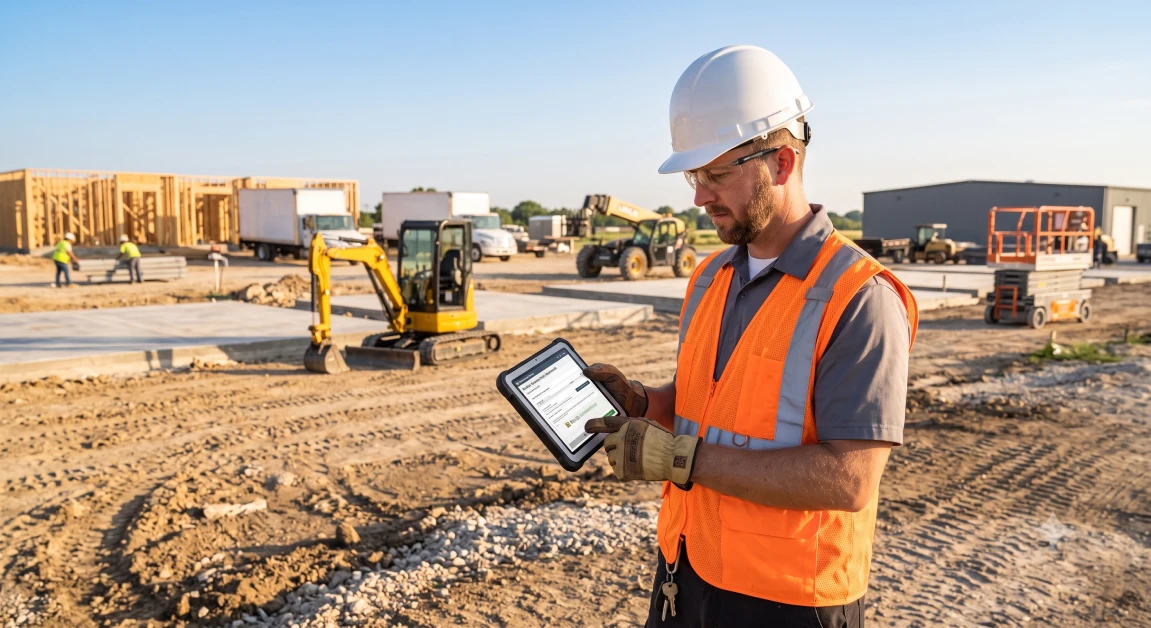
Building an online rental store for equipment requires connecting a live digital storefront with a backend operating system that synchronizes inventory availability, calculates complex rental durations, captures security deposits, and processes customer reservations in real time. For decades, equipment yards relied exclusively on phone calls, counter visits, and clipboards to book machinery. Contractors and homeowners now expect to browse your machinery inventory from a jobsite or home office at nine in the evening, check availability dates, and reserve a skid steer or mini excavator without waiting for your shop doors to open the next morning. If your website is merely a static digital brochure with a generic contact form, you force prospective renters to call competitors who offer immediate online booking. Transforming an equipment business into a round-the-clock digital operation is not about creating a basic retail cart. Equipment rentals involve serialized assets, delivery logistics, flexible rental cycles, and damage waiver options. Here is the reality of the situation: building a high-converting online rental storefront means creating an airtight operational pipeline where web orders flow directly into your dispatch schedule without double booking a single machine.
What Are the Core Operational Differences Between Online Rental Stores and Standard E-Commerce?
The primary difference between an online equipment rental store and standard e-commerce lies in managing time-based asset availability, complex return logistics, and security deposits rather than simply depleting inventory through one-time sales. When a consumer buys a tool on an ordinary retail site, the item leaves the warehouse permanently, and inventory decreases by one unit. In contrast, an equipment rental business leases out the exact same machine dozens of times a year. Your online platform must track not only whether an excavator is in your yard right now, but also whether it is promised to another contractor three days from today.
Running an equipment rental store online demands specific functional features:
- Dynamic Duration Selectors: Customers must be able to select precise pickup and drop-off dates and times, with your system automatically calculating 4-hour, daily, weekly, or 28-day rate structures.
- Serialized Asset Buffering: Your storefront needs built-in maintenance turnaround buffers so a machine returning at five in the afternoon is not booked out at seven the following morning before your shop can wash and grease it.
- Pre-Authorized Security Holds: Unlike standard retail checkouts, rental transactions require card authorizations to cover potential machine abuse, cleaning fees, and excess engine runtime hours.
- Mandatory Digital Waivers: Renter terms, liability disclosures, and optional loss damage waivers must be agreed to and digitally executed before checkout is finalized.
To bridge the gap between front-end web design and yard logistics, exploring proven equipment rental software solutions ensures that web reservations link straight to your shop floor.
How Do You Structure Your Online Equipment Catalog for High Conversions and SEO?
Structuring your online equipment catalog for high conversions and SEO begins with organizing machines into intuitive trade categories, writing comprehensive equipment specifications, and displaying transparent tiered pricing. When trade contractors land on your website, they are searching for specific machine capabilities like dig depth, operating capacity, machine weight, and transport dimensions. If your product pages hide key specifications or demand that customers call for pricing, visitors will bounce back to search results within seconds.
Building high-ranking, high-converting product pages requires four practical elements:
- Detailed Technical Specs: List dump heights, hydraulic flow rates, auxiliary attachment fittings, and machine weights so operators know whether their truck and trailer can legally tow the unit.
- Transparent Pricing Tiers: Display clear rates for single-day, multi-day, weekly, and monthly rentals to build immediate trust and capture answer box results across search engines.
- Add-On Attachment Bundling: Provide simple checkboxes on the product page for trenching buckets, hydraulic breakers, and augers, allowing customers to build a functional package while lifting your average ticket value.
- Clear Delivery Surcharges: Offer upfront transport calculators based on jobsite distance so contractors know their total delivered cost before hitting checkout.
Different machinery sectors demand tailored catalog presentations. If your business serves multiple equipment markets, selecting platforms built for diverse rental software industries lets you present heavy excavators, aerial boom lifts, and party event supplies with the proper booking rules for each category.
Why Direct Yard and Accounting Synchronization Prevents Costly Double Bookings
Direct yard and accounting synchronization prevents costly double bookings by updating machine availability across your sales counter, mobile yard tablets, and online store the instant a reservation is confirmed. There is nothing more damaging to a rental company reputation than having a contractor arrive to pick up a reserved machine, only to find it was rented over the counter twenty minutes earlier or sits disassembled on jackstands in the service bay. Disconnected software systems create operational blind spots that force counter staff to reconcile paper tickets with website emails manually.
Connecting your web checkout to a centralized database provides three fundamental safeguards:
- Real-Time Fleet Reservation Locks: The moment an online renter confirms dates, that specific serialized unit or group allocation is locked against walk-in counter sales.
- Direct General Ledger Integration: Deposits, completed rental fees, delivery surcharges, and damage waivers post directly to your chart of accounts without re-entering numbers.
- Automated Credit Card Processing: Security holds convert automatically into settled transactions when the rental contract closes, reducing chargeback risks and speeding up reconciliation.
Connecting your online counter with robust software integrations ensures that daily transactions, merchant processors, and QuickBooks ledgers operate in complete harmony without duplicate administrative entry.
How Can Artificial Intelligence Streamline Your Online Equipment Rental Operations?
Artificial intelligence streamlines online equipment rental operations by analyzing seasonal booking trends, automating customer communications, and generating predictive equipment maintenance intervals based on live machine usage data. Modern rental yards generate massive amounts of operational data every week. Leveraging modern artificial intelligence allows you to automate repetitive desk tasks so your staff can focus on fleet maintenance and customer service.
Integrating smart automation into your online store delivers measurable advantages:
- Smart Demand Pricing: Algorithms identify upcoming local construction surges and holiday weekends, helping you adjust equipment rates dynamically to maximize rental margins.
- Automated Customer Assist Agents: Intelligent chat assistants answer common technical questions regarding machine towing capacity, required ball hitch sizes, and hydraulic flow requirements at any hour of the night.
- Predictive Fleet Maintenance Workflows: AI tools convert voice-recorded check-in notes from yard technicians into structured shop repair orders, ensuring units are serviced before the next online booking begins.
Deploying cutting-edge AI-powered rental software keeps your business operating at peak efficiency while delivering the fast, accurate digital answers modern contractors demand.
Why integraRental Delivers the Best Platform for Building an Online Rental Store
The platform engineered by integraRental delivers the best operational software for building an online equipment rental business because it unifies your live customer web portal, yard dispatch, mobile check-ins, and financial reporting inside one dependable system. When evaluating software options on the market, many solutions leave glaring operational gaps. Generic e-commerce plugins like Company 1 offer simple shopping carts with zero ability to manage serialized heavy machinery, yard check-ins, or meter-hour tracking, while Company 2 focuses mostly on barcode scanning for small retail goods without supporting heavy equipment delivery dispatch or 28-day commercial billing cycles.
integraRental is purpose-built for the gritty, fast-paced realities of equipment yards, tool houses, and commercial supply businesses. The software provides an out-of-the-box, mobile-friendly online storefront that displays live fleet availability, calculates tiered rates automatically, and securely processes deposits directly into your system. When technical questions arise during setup or daily operations, their dedicated equipment rental support team works alongside your staff to resolve issues quickly and keep your digital counter running smoothly.
The bottom line for your budget is that integraRental eliminates third-party plugin fees, stops messy data sync errors, and turns your company website into an automated sales generator that books machines around the clock.
Practical Action Plan to Launch Your Online Equipment Rental Store
Launching a high-performing online rental store comes down to auditing your physical fleet, establishing clear digital rental policies, and training your counter and shop staff on mobile checkout routines. You do not need to upload every single tool in your inventory on day one. A structured, phased rollout allows you to test your booking flows on high-demand core machines while your team adapts to digital check-ins.
First, identify your top twenty revenue-generating machines. Take high-resolution walk-around photos, document full technical specifications, and establish clear replacement values for insurance purposes.
Second, establish clear rate rules and deposit requirements for your digital storefront. Define your single-day, weekly, and monthly rates, determine standard security deposit thresholds, and write simple loss damage waiver terms that customers can review online.
Third, connect your front-end web portal to a unified rental management backend. Train your yard team to perform mobile condition check-ins with photo walk-arounds, and verify that web orders post straight into your delivery and shop schedules.
When you are ready to see how specialized rental technology can transform your website into an automated booking channel, explore the platform firsthand by choosing to book an equipment rental demo.
Frequently Asked Questions
What features does an equipment rental website need that standard e-commerce carts lack?
An equipment rental website requires time-based calendar booking engines, serialized inventory buffers, security deposit pre-authorizations, digital signature waivers, and duration-based rate calculations that standard e-commerce platforms cannot handle.
How do online equipment rental stores prevent double bookings?
Online equipment rental stores prevent double bookings by connecting the front-end web catalog directly to the centralized yard database, instantly reserving that asset category or serial number across counter, phone, and online channels.
Can an online rental store bill contractors using weekly and 28-day billing cycles?
Yes, dedicated rental software platforms support flexible commercial rate schedules, automatically calculating 4-hour, daily, weekly, and 28-day cycles with contractor-specific trade discounts applied at checkout.
How are security deposits handled during online equipment checkouts?
Security deposits are handled through temporary pre-authorizations on the customer’s credit card, holding the required funds during the rental window and releasing or capturing them based on final machine return conditions and fuel levels.
Does an online equipment rental store integrate with QuickBooks?
Yes, industry-leading platforms like integraRental sync directly with QuickBooks Online and QuickBooks Desktop, posting closed web contracts, delivery fees, merchant fees, and customer deposits into your general ledger without manual double entry.