
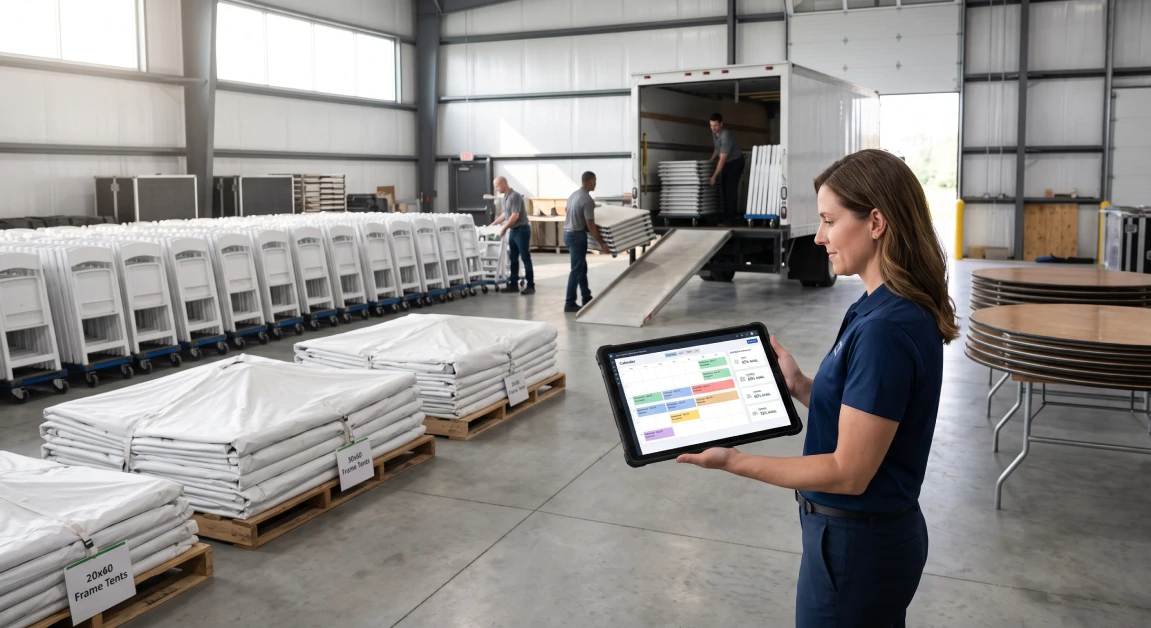
Starting an event rental business takes high-demand commercial inventory, a dependable delivery truck, solid liability insurance, and software that keeps you from double-booking gear when your weekend calendar fills up. The party and event game offers great operating margins and steady cash flow, but running one successfully is all about what happens behind the scenes. Tables get scratched on gravel drives, tablecloths get dropped off soaking wet, delivery vans get stuck in bridge traffic, and a Saturday wedding setup gives you zero wiggle room for mistakes. If you try to run your operation using paper pads, spreadsheets, or a standard retail cash register, you will spend your first summer eating delivery delays and paying for missing gear out of your own pocket. Here is the reality of the situation: this business is not just about owning pretty chairs and clean tents, but about running an airtight logistics engine that keeps gear moving, protected, and making money every weekend.
What Are the Real Startup Costs to Launch a Party and Event Rental Business?
Getting an event rental company off the ground usually takes an initial investment between twenty thousand and one hundred thousand dollars, depending on whether you are running small backyard parties, weddings, or large commercial tent jobs. The biggest chunk of your money goes straight into inventory that can take a beating from rental crews and stand up to commercial cleaning week after week. Trying to cut corners by picking up cheap residential folding chairs or lightweight pop-up canopies from a big-box store will cost you double in the long run because home-grade gear bends, stains, and breaks after just three or four weekend hires.
When you sit down to plan your initial startup budget, five practical categories will eat up your capital:
- Core Inventory: High-demand workhorse items like resin folding chairs, heavy plywood banquet tables, portable dance floor panels, frame tents, and neutral tablecloths will take forty to fifty percent of your startup funds.
- Delivery Vehicles and Hauling Trailers: You cannot move event gear in the back of an open pickup truck, so you will need to budget for an enclosed cargo trailer or a dependable box truck with a hydraulic liftgate and solid wall tie-downs.
- Warehouse and Wash Space: You need a dry commercial bay with space to stage outbound orders, room to scrub dirty tents, and drying lines to hang wet linens without growing mildew.
- Insurance and Business Legal Setup: General liability coverage, inland marine policies to cover gear on the road, vehicle policies, and airtight rental contracts are mandatory to protect your equipment.
- Operational Software: Getting started early with purpose-built party and event rental software saves your sanity, cuts out desk paperwork, and stops double bookings right out of the gate.
The bottom line for your budget is simple: cutting corners on cheap equipment or rusty trailers guarantees breakdowns in your first season, while buying commercial-grade gear protects your bank balance.
How Profitable Is an Event Rental Business and What Are Normal Margins?
A well-run event rental business regularly clears thirty-five to fifty percent gross profit margins once you pay off your initial equipment loans. The real secret of this business model is simple math. A solid commercial white resin chair costs you around thirty dollars to buy and rents for three to four dollars every weekend, meaning it pays for itself in ten or twelve jobs. Every rental after that puts cash in your pocket aside from quick wipe-downs and warehouse handling.
Keeping those healthy margins depends on how strictly you run your counter and yard rules:
- Charging for Every Hand on Deck: Delivery runs, weekend site setups, late-night pickups after midnight, and heavy cleaning should always show up as separate billable line items instead of getting buried inside your equipment day rates.
- Adding a Standard Damage Waiver: Putting an eight to twelve percent damage waiver on contracts covers normal wear and minor scratches while adding a reliable secondary revenue stream to your invoices.
- Holding Credit Card Deposits: Keeping pre-authorized deposit holds on customer credit cards means when a client returns linens covered in candle wax or tables gouged by box cutters, you have the funds to fix or replace them right away.
What Core Inventory Should You Buy for Your First Event Season?
When building your first rental catalog, you need to buy high-utilization foundational equipment that rents every weekend before spending a dime on trendy decorative items. Many new owners blow their budget on bright custom linens or niche party props that only rent once or twice a year. That leaves your startup cash gathering dust on warehouse shelves while standard white resin chairs and eight-foot banquet tables are booked solid across your entire county.
Put your hard-earned cash into this proven equipment list first:
Everyday Tables and Seating
Standard six-foot and eight-foot banquet tables, sixty-inch round tables, cocktail high-tops, and commercial resin folding chairs in plain white, black, or natural wood are the absolute backbone of your weekly revenue.
Commercial Frame and Pole Tents
Invest in modular commercial frame tents, like twenty-by-twenty and twenty-by-forty structures that you can expand with extra sections. Frame tents go up on grass or parking lots, giving you way more venue options than pole tents that require deep grass stakes.
Neutral Linens and Place Settings
Start with heavy polyester linens in black, white, and ivory that wash and press easily without shrinking. Add standard chafing dishes, drink dispensers, and basic plate settings once your tables and chairs are bringing in reliable weekly cash.
Portable Power and Heating
Outdoor party spots almost never have enough electrical outlets. Carrying portable commercial generators, propane patio heaters, and heavy tent fans gives you easy add-on sales to tack onto your tent contracts.
If your yard ends up supplying town street fairs or jobsite trailers alongside weddings, using versatile equipment rental business software lets you manage heavy generators, barriers, and party seating without splitting your business into two separate databases.
How to Price Your Event Rentals for Consistent Cash Flow
To price your equipment profitably, charge between eight and twelve percent of an item’s replacement cost for a standard one-day rental, factoring in local competitor rates and warehouse labor. If a commercial folding table costs you one hundred dollars to buy, your single-day rate should sit right around eight to twelve dollars. That formula ensures your asset pays for itself inside its first full season on the road, with enough cushion left over to cover storage, maintenance, and handling wages.
Keep these practical rules in mind when setting up your rate card:
- Weekend Multi-Day Pricing: A weekend hire from Friday drop-off to Monday pickup should cost one and a half to two times your single-day rate to account for having equipment tied up through your busiest days.
- Separating Mileage and Fuel: Never offer free delivery on heavy event loads. Bill delivery runs based on actual road mileage, vehicle size, and the crew members needed so your diesel bills and driver wages are always paid for.
- Strict Late Return Fees: Hit customer pickups with automatic late charges if they miss their drop-off window, making sure gear gets back to your wash bays in time to turn around for the next client.
Why Spreadsheets and Generic Point-of-Sale Systems Fail Party Rentals
Spreadsheets and standard retail cash registers fail party rental yards because retail systems assume when an item leaves your building, it is gone forever. Event rental is a continuous cycle. When a customer brings back two hundred tablecloths on Sunday afternoon, they are physically in your warehouse, but you cannot hand them to another customer until your team runs them through commercial washers, dryers, and steam pressers.
Relying on manual tracking opens your business up to three massive headaches:
- Silent Double Bookings: When bookings come in through website forms, phone calls, and showroom walk-ins, updating a spreadsheet manually leads to promising the same tent to two brides on the exact same weekend.
- Missing Pins and Hardware: When warehouse staff work off scribbled notes, they will inevitably forget tent pins, center poles, or ratchet straps, leaving your drivers stranded at the venue looking unprepared.
- Swallowed Loss and Damage Bills: When dinnerware sets come back short twenty plates, paper tickets rarely catch the loss in time to bill the client before their deposit hold drops off.
The bottom line for your budget is that running an event business on spreadsheets burns up hours of manual paperwork and leads to weekend emergencies that crush your local reputation.
How to Market Your New Event Rental Company and Land Your First Clients
To get steady jobs rolling in, focus on building direct referral partnerships with wedding planners, venue operators, caterers, and corporate event coordinators who already have customers asking for gear. Commercial coordinators manage regular, recurring events. Once a wedding venue or corporate planner knows your trucks show up on time with spotless gear, they will pass you bookings month after month without you blowing your cash on paid ads.
Build up your early booking pipeline with these three steps:
- Set Up a Clean Online Catalog: Event clients and corporate planners want to check equipment photos, see availability, and request quotes online outside standard office hours. Combining your inventory with custom equipment rental web design gives you a sharp digital storefront that captures local search traffic.
- Work With Caterers and Photographers: Reach out to local caterers and photographers who work gigs every weekend. Offer them trade pricing or a referral fee for recommending your tables, linens, and tents to their booked clients.
- Keep Your Google Business Profile Active: Register your company on Google, define your exact service area, and upload clean photos of your setups at local spots. Ask every happy customer to leave a review mentioning the specific gear they rented to boost your local search ranking.
Why integraRental Offers the Best Software to Launch and Scale Your Business
The platform built by integraRental gives you the best foundation to start and grow an event rental company because it ties live booking calendars, warehouse pick lists, package bundling, and accounting into one dependable setup. When you look around at other software on the market, generic options fall short. Systems like Company 1 offer basic website booking widgets with no back-end warehouse tools, while Company 2 focuses mostly on barcode scanning without the contract management and financial tools needed to run an active yard.
In contrast, integraRental is built for the daily reality of equipment yards and event businesses. It handles mixed inventory effortlessly, letting you track thousands of bulk non-serialized items like chairs alongside serialized assets like generators and restroom trailers on a single customer ticket. On top of that, native QuickBooks rental software integration pushes completed contracts, card payments, deposit holds, and replacement fees straight into your general ledger, cutting out double data entry entirely.
For business owners who want a clean setup that handles growth without breaking, exploring complete rental management solutions gives you full control over your inventory, counter sales, and deliveries from day one.
Essential Steps to Launch Your Event Rental Operations Smoothly
Getting your rental operations off the ground smoothly takes clear daily routines for check-in, cleaning, staging, and delivery before your first order rolls out the door. Setting up clean habits on day one stops your busy season from spiraling out of control.
First, catalog and label every piece of incoming stock. Assign item codes, log your purchase costs, set replacement prices, and build cleaning turnaround buffers into your software so dirty gear cannot get booked prematurely.
Second, map out your warehouse floor. Set up clear zones for dirty returns, wash bays, dry storage, and outbound staging so gear moves in an organized circle through your building.
Third, run practice transactions through your system. Test your checkout process to make sure digital rental contracts, credit card security holds, and electronic delivery sign-offs work smoothly on mobile tablets before customers arrive.
When you are ready to see how specialized event software can clean up your operations and set your business up for profitable growth, schedule a personalized walk-through by requesting a rental software demo.
Frequently Asked Questions
What are the most profitable items to rent out when starting an event rental business?
Tables, resin folding chairs, dance floor sections, and commercial frame tents bring in the best margins because they hold up well over years of use, rent out constantly every weekend, and pay for their original purchase cost in ten to twelve rentals.
How much should I charge for event rental equipment delivery?
Delivery should always be billed separately from your rental gear, using travel distance, truck size, and crew labor hours to ensure your fuel bills and driver wages are completely covered on every trip.
How does party rental software prevent accidental double bookings?
Dedicated party rental software updates stock counts across all channels the moment a deposit is placed, immediately locking reserved equipment out of the calendar so no one else can rent it for those dates.
Can event rental management software handle cleaning and turnaround buffers?
Yes, modern rental platforms let you program automatic turnaround windows for laundry, tent washing, and staging inspections, keeping returned equipment off the booking calendar until your crew has it prepped for the next customer.
Does party rental software connect directly to QuickBooks?
Yes, platforms like integraRental sync directly with QuickBooks Online and QuickBooks Desktop, sending closed rental contracts, customer card payments, deposit holds, and replacement gear invoices straight into your accounts without any manual re-typing.