
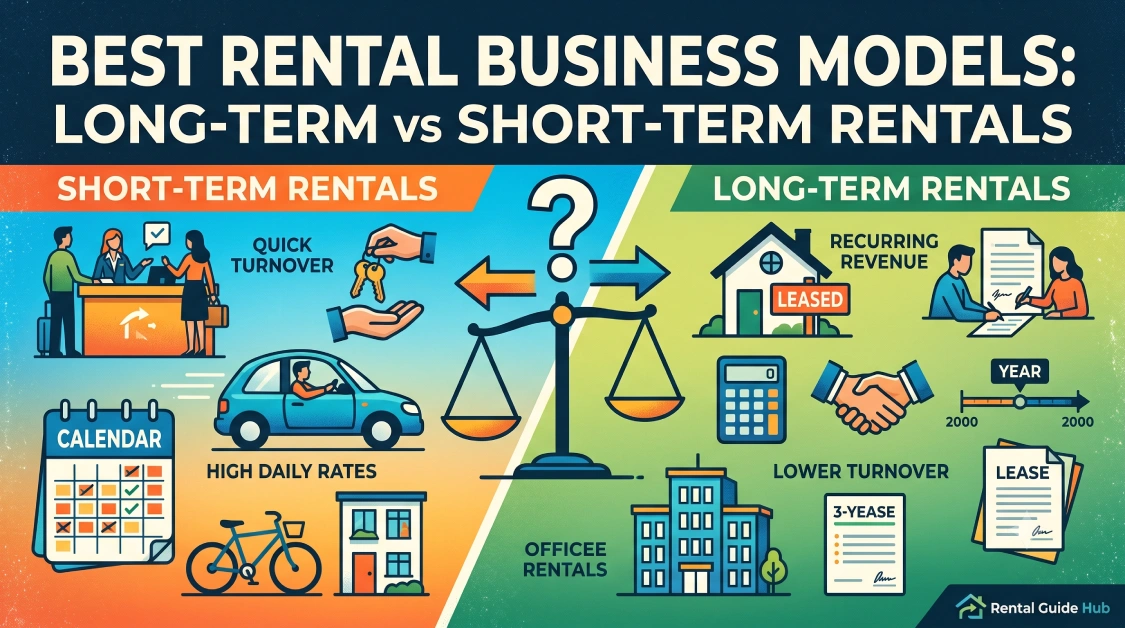
Choosing between a short-term and a long-term rental business model is the single most critical strategic decision you will make for your rental business, as it dictates your daily logistics, pricing structure, inventory lifecycle, and cash flow predictability.
Whether you are renting heavy construction equipment, party supplies, commercial vehicles, specialized tools, or real estate assets, both models offer distinct pathways to profitability. At Rental Guide Hub, we consult with rental operators every day who struggle to determine which path fits their capital structure and operational capabilities.
Here is the breakdown of how short-term and long-term rental models function, how their unit economics compare, and how to choose the right strategy to scale your operations.
What Is the Primary Financial Difference Between Short-Term and Long-Term Rentals?
The primary financial difference between short-term and long-term rentals is that short-term rentals prioritize maximum yield per day through premium spot rates, while long-term rentals prioritize continuous asset utilization and predictable recurring revenue at discounted daily rates.
When you run a short-term model, you capitalize on immediate customer demand, emergency needs, or seasonal events. You charge a premium for daily or weekly access because your business absorbs higher turnover logistics, frequent inspection routines, and potential idle time between bookings. A customer renting an excavator for two days accepts a higher daily rate because they only need to complete a brief trenching job.
Long-term rental models operate on fixed contracts spanning several months or years. While the effective daily rate is significantly lower, your customer assumes responsibility for ongoing site storage, routine operational checks, and project integration. Your cash flow becomes stable and predictable, shielding your revenue against temporary market downturns.
To determine how these financials fit your capital structure, you can explore our comprehensive equipment rental business startup guide for detailed breakdown templates on initial asset acquisition.
How Does the Short-Term Rental Business Model Work for Maximum Cash Flow?
The short-term rental business model yields high gross revenue by charging premium daily, weekend, or weekly rental rates on high-demand inventory with rapid customer turnover.
Here is the reality of the situation for short-term operators: your profit margin depends on asset availability and speed of execution. Short-term rentals work exceptionally well for businesses serving event planners, residential contractors, or DIY homeowners who require specialized gear for specific, limited-duration projects.
Advantages of Short-Term Rentals
- Higher Revenue Potential: You can generate substantially more total revenue from a single asset in a month of high short-term utilization than you would from a single 30-day lease.
- Agile Dynamic Pricing: You hold the power to adjust pricing based on peak demand, weekend surges, or regional shortages.
- Better Asset Preservation Control: Because equipment returns to your yard frequently, your technician team inspects, cleans, and services assets regularly before minor issues snowball into major breakdowns.
Operational Challenges You Must Manage
- High Administrative and Logistics Overhead: Every return requires check-in procedures, cleaning, safety verification, and contract closing.
- Utilization Gaps: Off-peak seasons or bad weather can leave high-capital assets sitting idle in your yard, draining cash flow through storage and fixed financing costs.
- Customer Acquisition Costs: You must continuously market your inventory to maintain a steady pipeline of new and returning short-term clients.
How Does the Long-Term Rental Business Model Deliver Operating Predictability?
The long-term rental business model delivers steady operational predictability by securing extended lease agreements that guarantee regular monthly income while reducing turnaround overhead and marketing expenses.
Instead of hunting for new customers every few days, you partner with commercial general contractors, corporate clients, or long-term industrial facilities. A six-month or multi-year rental agreement allows you to accurately forecast revenue, meet debt service requirements easily, and negotiate better financing terms with lenders.
Advantages of Long-Term Rentals
- Predictable Recurring Revenue: Your monthly cash flow remains steady regardless of short-term economic hiccups or seasonal dips.
- Drastically Lower Operational Overhead: You eliminate daily check-ins, frequent transport mobilization, and constant re-listing effort.
- Higher Total Asset Utilization Rate: Your equipment spends less time sitting unused on a lot and more time generating revenue on active project sites.
Operational Challenges You Must Manage
- Lower Unit Profit Margins: You sacrifice peak daily pricing power in exchange for contract duration and guaranteed volume.
- Reduced Operational Control Over Maintenance: Equipment staying on a client site for a year faces risks of deferred maintenance or misuse if your contract lacks strict maintenance schedules.
- Opportunity Cost During Demand Spikes: If market rental rates surge mid-contract, your asset remains locked in at the lower agreed-upon rate.
To calculate balanced profit margins across extended contracts, consult our detailed rental pricing strategy guide to establish proper rate tiering.
How Do Operating Costs, Asset Maintenance, and Depreciation Compare?
Operating costs and maintenance schedules differ fundamentally between short-term and long-term models because short-term rentals generate frequent wear-and-tear through constant transport and varied operator skills, while long-term rentals experience continuous wear under consistent job site conditions.
The bottom line for your budget is that short-term rental fleets demand a robust, fast-moving service department. Because equipment shifts between dozens of different operators throughout the year, users rarely treat short-term rentals with the same care as owned machinery. You will spend more on cosmetic touch-ups, tire/track wear, transport mobilization, and quick turnarounds.
Long-term rental fleets experience a different depreciation curve. Hours accumulate quickly on the engine or hour-meter, but transport costs drop significantly because the asset moves once to the job site and stays there. However, you must enforce mandatory preventative maintenance clauses in your contracts. Without regular oil sampling, filter changes, and inspections, a long-term lessee can return an asset with severe mechanical degradation.
| Operational Metric | Short-Term Rental Model | Long-Term Rental Model |
| Gross Profit Margin per Day | High | Moderate |
| Utilization Rate Stability | Variable (Subject to Seasonality) | High (Guaranteed by Contract) |
| Turnover & Cleaning Logistics | High frequency / Daily to Weekly | Low frequency / Monthly to Annual |
| Client Relationship Focus | Transactional & High Volume | Relationship & Account Management |
| Depreciation Source | Age, Handling, Frequent Loading | Machine Operating Hours / Continuous Use |
How Can You Choose or Hybridize the Right Business Model for Your Inventory?
You can choose or hybridize the right business model by segmenting your asset catalog based on total replacement cost, local market demand, and your team’s operational bandwidth.
Most successful rental business owners do not choose strictly one model over the other; they run a hybrid operational model. A hybrid strategy gives you the cash flow spikes of short-term rentals alongside the baseline financial security of long-term contracts.
Here is how we recommend structuring a hybrid portfolio:
- Classify High-Demand, Portable Equipment for Short-Term Use: Small tools, compact skid steers, event staging, and high-demand specialized items generate the best ROI on short daily turnarounds.
- Assign Heavy, Capital-Intensive Assets to Long-Term Leases: Heavy excavators, commercial generators, and specialized industrial equipment carry high transport costs. Moving them daily destroys profitability, making 3 to 12-month rentals the optimal strategy.
- Establish Minimum Rental Periods During Peak Seasons: Protect your inventory during rush periods by setting 3-day or 1-week minimums, preventing high-value gear from being tied up for a single afternoon at a low rate.
- Transition Aging Inventory to Long-Term Rent-to-Own: As short-term assets reach high operating hours, transition them into long-term rental agreements with buyout options to capture final residual value.
To monitor fleet health across both models, implement an automated asset maintenance tracking system to prevent unexpected downtime.
Why Is Rental Software Critical for Managing Both Models Successfully?
Rental software is critical for managing both models because it automates complex booking calendars, tracks real-time inventory availability across locations, enforces tiered contract pricing, and schedules preventative maintenance automatically.
Running a modern rental business on spreadsheets or legacy paper systems creates expensive double-bookings, missed maintenance intervals, and billing errors. Short-term rentals require instant digital booking engines, real-time yard check-in apps, and automated digital signatures. Long-term rentals demand automated recurring monthly invoicing, meter-reading integrations, and dynamic rate adjustments for overdue extensions.
When you invest in specialized software designed for equipment and asset management, your operational visibility expands instantly. You can track exact ROI per asset, analyze utilization trends across categories, and know precisely when to retire or expand specific lines of inventory.
To find the right system for your fleet size and industry, review our curated rental software review guides where we break down top-performing platforms.
FAQs:
Which rental business model generates a higher profit margin?
Short-term rental business models generate higher gross profit margins per rental day, but long-term rental models deliver higher net profit stability due to lower turnaround overhead and consistent monthly utilization.
How do maintenance costs differ between short-term and long-term rental assets?
Short-term rental maintenance costs stem from frequent transport, inspection, and varied operator handling, whereas long-term rental maintenance costs focus on high engine operating hours and required site-based preventative care.
Can a rental business combine both short-term and long-term business models?
Yes, a rental business can combine both models by allocating portable, high-demand assets to short-term daily rentals while placing capital-intensive, heavy machinery on extended long-term contracts.
What features should you look for in rental software for short-term and long-term operations?
You should look for real-time inventory tracking, automated digital check-in/check-out workflows, recurring monthly contract invoicing, dynamic pricing capabilities, and hour-meter maintenance alerts.
How does seasonality impact short-term versus long-term rental cash flow?
Seasonality causes significant cash flow fluctuations in short-term rental operations during weather or holiday shifts, while long-term rental contracts protect cash flow by locking in consistent monthly payments regardless of seasonal changes.