
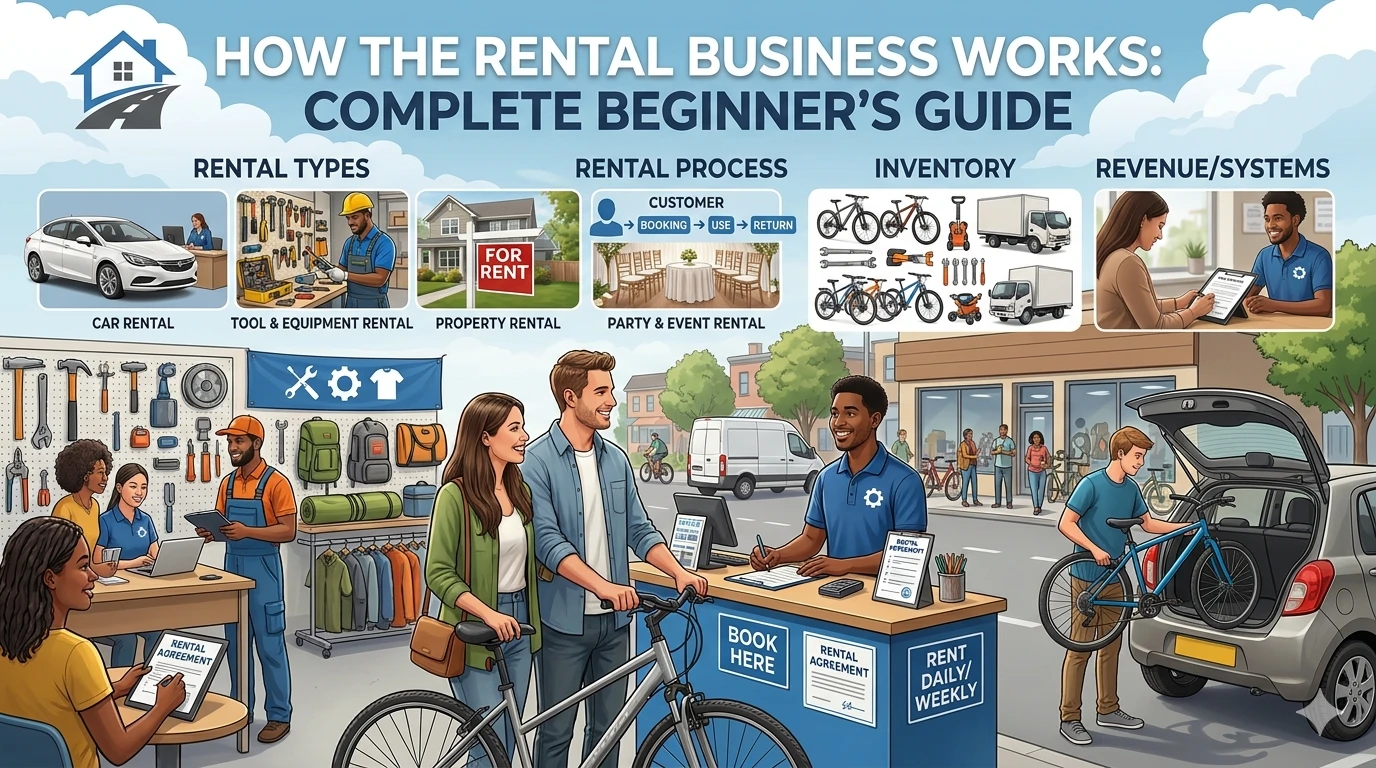
Starting a rental business opens doors to steady income with assets you own once and rent many times. This guide walks you through every step for beginners, from ideas to daily operations.
Grasping the Rental Business Model
Rental businesses thrive on a simple idea. You buy items or equipment people need short-term. Customers pay to use them instead of buying outright. This model cuts their costs and lets you earn repeated revenue from one purchase.
Think of party tents, power tools, or bounce houses. Demand spikes for events, construction, or hobbies. You store inventory, handle bookings, and maintain gear. Profit comes from daily or weekly fees minus upkeep and downtime. Beginners often start small with high-turnover items like lawn mowers or camping gear. Success hinges on location and customer trust. Local events drive repeat business in growing areas.
Profitable Rental Business Ideas for 2026
Pick niches with rising demand to boost profits. Gym equipment rentals top the list as home workouts stay popular. People rent treadmills or weights monthly without gym fees. Bounce houses and inflatables shine for kids’ parties and festivals. Summer weekends fill bookings fast.
Portable restrooms serve construction sites and events reliably. One unit per ten workers means steady contracts. Camera and photography gear appeals to hobbyists avoiding big buys. Vacation home furniture or event decor rounds out options. In 2026, eco-friendly items like electric scooters gain traction amid green trends. Start with what matches your area. Construction-heavy zones favor tools. Party hubs love inflatables.
How to Start a Rental Business
Launch with clear steps to avoid pitfalls. First, research local demand. Check event calendars, construction permits, and competitor ads. Pick a niche like tools or party supplies based on gaps.
Register as an LLC for protection. Get a business license and EIN from the IRS. Secure a spot with storage and parking. Buy initial inventory wisely. Aim for used gear in good shape to save cash. List items online with photos and rates. Use free sites like Facebook Marketplace first. Build a simple website later. Market via local Facebook groups and flyers. Network at chamber meetings. Track every expense from day one.
Rental Business Startup Costs
Budgets vary by niche but stay manageable for beginners. Expect $10,000 to $50,000 upfront. Inventory takes the biggest chunk, around 60 percent. A used bounce house setup runs $2,000 to $5,000. Power tools for five common jobs cost $3,000.
Add $2,000 for a trailer or small warehouse deposit. Insurance quotes at $1,500 yearly. Marketing starts free but budget $500 for signs and online ads. Software for bookings runs $50 monthly. Fuel and maintenance add $1,000 first year. Finance with savings, small loans, or equipment leasing. Break even in six months with 50 percent utilization. Track ROI early. Each item’s revenue minus cost over time shows winners.
| Startup Item | Low-End Cost | High-End Cost |
|---|---|---|
| Inventory (5-10 items) | $5,000 | $30,000 |
| Storage/Trailer | $1,000 | $5,000 |
| Insurance (Year 1) | $1,000 | $2,500 |
| Marketing/Website | $200 | $2,000 |
| Software/Licenses | $300 | $1,000 |
| Total | $7,500 | $40,500 |
Rental Inventory Management for Beginners
Keep track from day one to avoid losses. List every item with serial numbers, purchase date, and cost. Categorize by type and demand. High-use tools go in one zone for quick access.
Use a spreadsheet at first. Note rental dates, customer info, and condition on return. Upgrade to rental software for small businesses soon. It flags overbookings and maintenance needs. Inspect gear after each use. Clean, repair, and log issues. Store smartly. Group similars together. Rotate stock to prevent wear. Aim for 70 percent utilization. Slow movers signal time to sell or swap. Annual audits spot theft or damage trends.
Equipment Rental Agreements
Solid contracts protect everyone. Start with a basic template. Include renter name, contact, ID copy, and item details. List serial numbers, rental dates, and total fee. Specify daily rates and deposit amount, often 50 percent of value.
Outline rules. No sub-renting. Return clean and fueled. Cover damages beyond normal wear. Add liability waiver. State late fees at $25 daily. Require proof of insurance or offer yours. Signatures from both sides. Digital tools e-sign fast. Keep copies filed by date. Customize per niche. Party gear needs setup instructions. Tools require safety training notes. Review yearly with a lawyer tweak.
Insurance Essentials for Rental Businesses
Coverage shields against big hits. General liability starts at $1,000 yearly for $1 million protection. It handles customer injuries or property damage claims. Inland marine insurance covers gear off-site. Expect $500 to $2,000 based on inventory value.
Add commercial auto if trailering items. Workers comp if hiring help. Umbrella policies boost limits cheap. Shop quotes from specialty insurers like equipment rental pros. List all items for accurate rates. Require renters carry their own liability. Document everything. Photos before and after rentals prove condition. Claims drop with clear agreements.
Calculating ROI on Rental Equipment
Measure success with real numbers. ROI formula: (Annual Revenue – Annual Costs) / Initial Cost x 100. A $2,000 mower rented 100 days at $50 nets $5,000 revenue. Minus $500 maintenance and $200 storage equals $4,300 profit. ROI hits 215 percent.
Factor downtime at 30 percent. Track utilization monthly. Top performers rent 200 days yearly. Low ones under 50 need review. Costs include depreciation at 10 percent value yearly. Software crunches these fast. Aim for 50 percent ROI minimum. Reinvest in winners. Sell losers quick.
Rental Software for Small Businesses
Tools simplify chaos for starters. Free trials let you test. Look for inventory tracking, online bookings, and invoicing. EZRentOut or Booqable handle small ops well. Monthly fees $29 to $99.
Features matter. Real-time availability stops double books. Customer portals for reservations. Maintenance alerts prevent breakdowns. Integrate payments via Stripe. Mobile apps check gear on-site. Export reports for taxes. Start basic. Scale as you grow. Saves hours weekly versus paper logs.
Marketing Your Rental Business
Draw customers steadily. Claim Google Business Profile free. Add photos, hours, and service area. Encourage reviews post-rental. Target local SEO with keywords like “tool rental near me.”
Post daily on Facebook. Share availability and specials. Run $5 daily ads to event groups. Partner with contractors or event planners. Offer 10 percent referral cuts. Email past renters quarterly deals. Build a site with rental listings and blog tips. Video delivery setups on YouTube. Track leads. Facebook insights show winners.
Daily Operations and Scaling Up
Run smooth for loyalty. Book via phone or app. Prep gear day before. Deliver on time. Follow up mid-rental. Invoice clear with deposits upfront.
Hire part-time for peaks. Train on safety first. Scale by adding hot items yearly. Franchise or partner later. Watch cash flow monthly. Profits fund growth.
FAQs
How much does it cost to start a rental business?
Startup runs $7,500 to $40,000 depending on inventory. Tools or inflatables keep it under $15,000. Factor insurance and storage too.
What are the best profitable rental business ideas for 2026?
Gym equipment, bounce houses, and portable restrooms lead. Demand grows for home fitness and events. Local needs guide choices.
How do you manage rental inventory as a beginner?
Categorize items and track with software. Log rentals, inspections, and maintenance. Aim for 70 percent usage.
What should be in an equipment rental agreement?
Include rates, dates, damages, and liability. Require ID and deposit. Customize for safety rules.
How to calculate ROI on rental equipment?
Use (Revenue – Costs) / Cost x 100. Track daily rates minus upkeep. Target 50 percent or higher yearly.