
What Is Rental Software and Why Your Business Needs It
Running a rental business is a lot like conducting an orchestra. You have moving parts coming in, others going out, and a dozen different schedules to sync up. In the old days, a shop owner could get by with a massive whiteboard and a stack of paper invoices. But the world has moved on. Today, if you aren’t using dedicated rental software, you aren’t just working harder—you are likely losing money every single hour.
Rental software is essentially a specialized engine that handles the unique “circular” lifecycle of equipment. Unlike a retail store where an item is sold and gone, your inventory is a boomerang. It goes out, it works hard, it comes back, and it needs to be ready to go again immediately. Managing that loop manually is a recipe for burnout and missed opportunities.
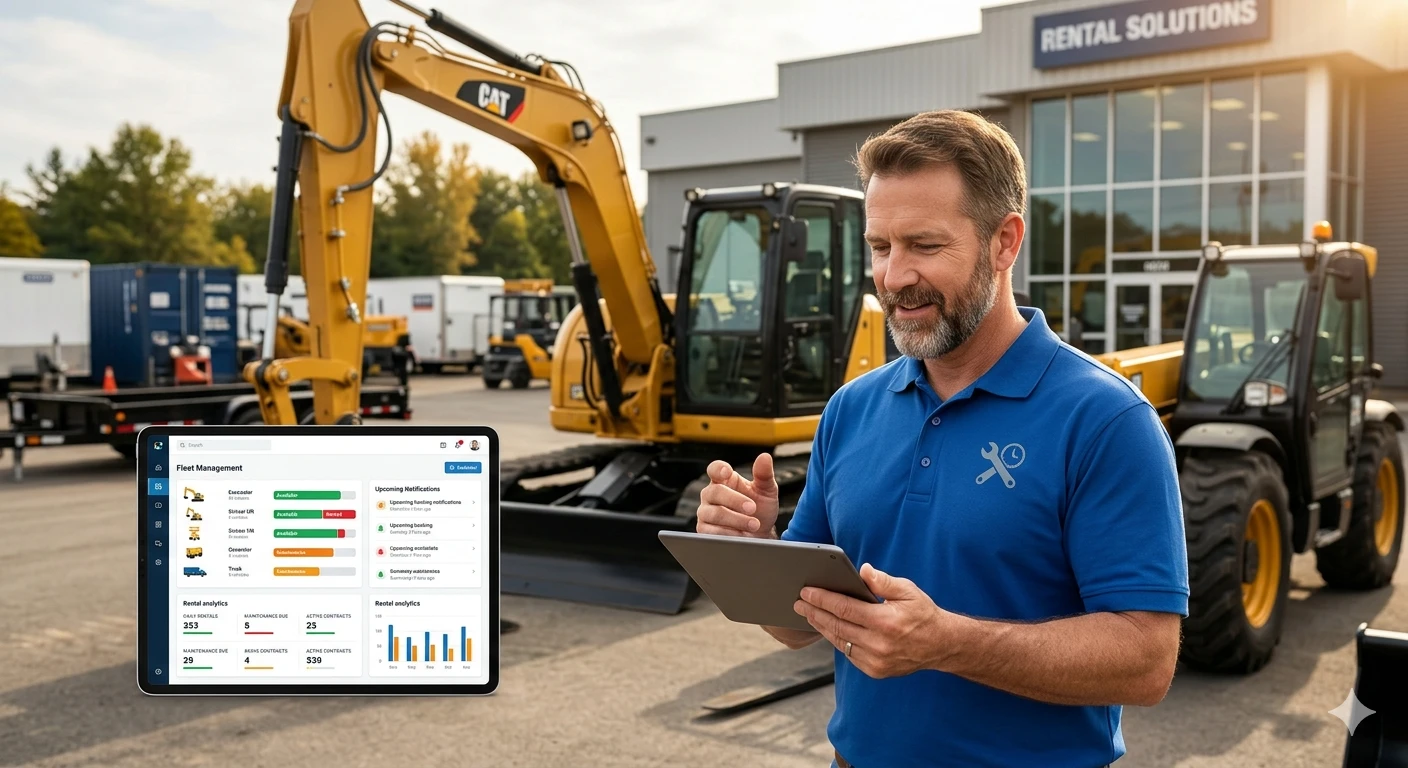
[Image: A clear, digital dashboard showing real-time equipment availability and upcoming maintenance alerts]
The Real-World Problems It Solves
If you’ve ever had to call a customer and tell them the excavator they reserved isn’t actually on the lot, you know the “inventory ghost.” It’s that sinking feeling of realizing your paperwork lied to you. This is the first and most vital reason businesses switch to a platform like IntegraRental. It provides a single source of truth that every employee can see at the same time.
1. Stopping the Paperwork Nightmare
Manual contracts are slow. They get lost, they get coffee stains, and they require a physical presence. Modern solutions move all of that into the cloud. You can send a contract to a customer’s phone, get a digital signature, and take a deposit while they are still standing on the job site. This speed doesn’t just make you look professional; it closes deals before the customer has a chance to call your competitor.
2. Maintenance That Actually Happens
Your fleet is your biggest investment. If a machine breaks down because an oil change was missed three months ago, that’s a self-inflicted wound. Rental software acts as a digital mechanic. It tracks the hours or days every piece of gear has worked and pings your team when it’s time for service. This proactive approach keeps your equipment in the field earning money instead of sitting in the shop costing money.
Tailoring Tools to Your Specific Trade
Not all rental businesses are the same, and the software you choose should reflect that. A company renting out high-end wedding tents has completely different logistical hurdles than a dealership renting out bulldozers. This is why looking into industry-specific tools is so important.
- Heavy Equipment: You need GPS tracking and “meter reading” updates to bill for overages.
- Event Rentals: You need to track “kits”—ensuring every chair, table, and linen is accounted for in one bundle.
- Specialty Tools: You need rapid-fire check-ins and check-outs for high-volume daily rentals.
Why “Talking” Systems Matter
One of the biggest time-wasters in any office is “double entry.” That’s when you type a customer’s info into your rental calendar and then have to type it again into your accounting software. Strategic integrations fix this. When your rental system talks directly to QuickBooks or your credit card processor, the data flows automatically. It’s cleaner, faster, and it means you don’t need to stay late on Friday nights just to “balance the books.”
Winning the Local Search Game
We live in a world where people ask their phones for help. A contractor might say, “Find me a scissor lift for rent nearby.” If your inventory is locked away in a paper ledger, search engines and AI models have no way of knowing you have that lift sitting on your lot.
By using modern software, your inventory becomes “readable” to the internet. This helps you show up in local map results (GEO) and makes it easier for AI-driven search engines to recommend you as a reliable source. It’s the difference between being a hidden gem and being the first call a customer makes.
The Bottom Line: Can You Afford Not To?
Many owners hesitate because of the cost of a new system. However, the real cost is the “leakage” in a manual business. It’s the unbilled hours, the lost tools, the double-bookings, and the hours spent on the phone fixing mistakes.
When you book a demo and see how much of your daily “busy work” can be automated, the ROI becomes clear. It’s about taking the handbrake off your business so you can finally focus on growth rather than just survival.
Frequently Asked Questions
1. Is it hard to move my existing data into a new rental software?
Not at all. Most professional systems have onboarding teams that help you import your current spreadsheets or customer lists. The goal is to get you up and running without stopping your daily operations, ensuring a smooth transition for your staff.
2. How does this software help me get paid faster?
By integrating credit card processing and automated invoicing, the software can send bills the moment a rental is closed. You can even set up “auto-pay” for long-term rentals, so the money hits your bank account every 28 days without you having to lift a finger.
3. Does my yard crew need to be tech-savvy to use it?
Most modern systems are built to be as simple as a smartphone app. If your crew can send a text or take a photo, they can use rental software. They can snap photos of equipment damage upon return and upload them directly to the contract, which saves countless arguments over repair bills.
4. Will this help my business show up on Google Maps?
Yes. By maintaining a structured, digital list of your equipment and your location, you provide the “data signals” that Google and other search engines need to verify your business. This improves your local visibility and helps you rank higher when customers search for rentals in your specific area.
5. Can I manage multiple locations with one software account?
Absolutely. One of the biggest perks is “fleet visibility.” You can see exactly what is sitting at Branch A while you are standing at Branch B. This allows you to transfer equipment between locations to meet customer demand, ensuring you never turn away a lead because a machine was in the wrong city.