
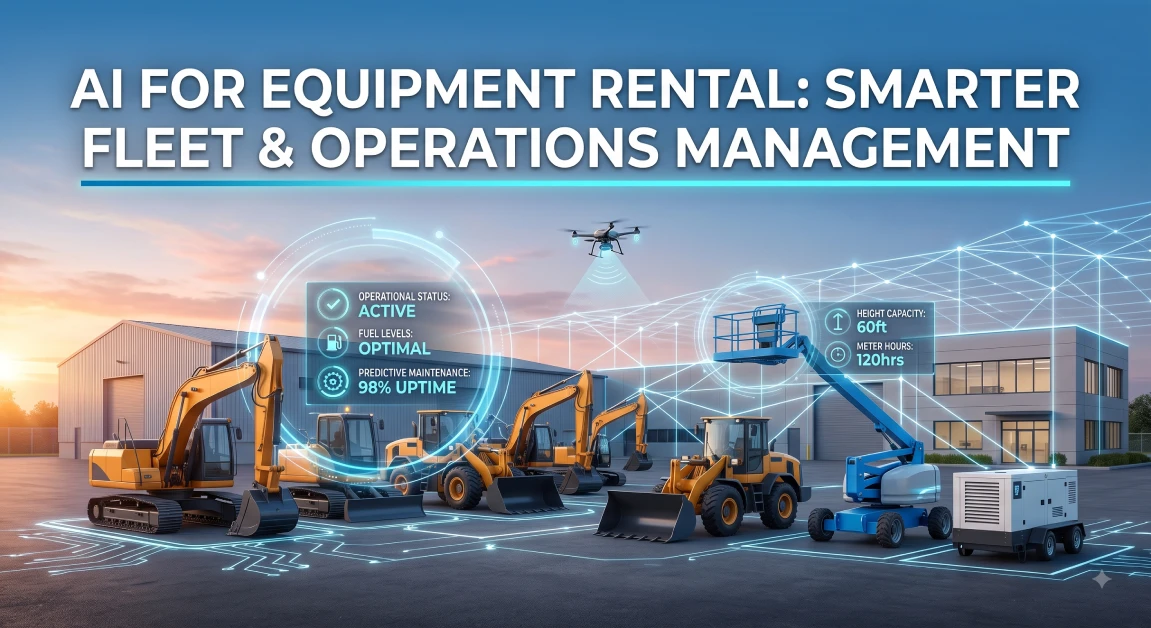
Running an equipment rental yard means constantly juggling asset age, maintenance schedules, dynamic pricing, and branch logistics to keep your fleet profitable. Managing hundreds of high value machines across multiple yards using static spreadsheets or legacy databases leads to a lack of visibility that quietly drains your bottom line through idle equipment and unscheduled downtime. Modern equipment fleet analytics and artificial intelligence give rental operators live line of sight into machine usage, maintenance needs, and customer rental patterns. Here is the reality of the situation: adopting AI for rental operations is not about handing your yard over to machines, but about giving your management team the precise data needed for faster, more profitable decision making.
What Is AI for Equipment Rental and How Does It Work?
AI for equipment rental is the integration of machine learning algorithms, real-time telemetry, and natural language processing into equipment lease management software to automate operational workflows and optimize fleet management. This technology works by continuously pulling raw data from connected telematics units, past contract histories, counter logs, and shop repair records into a centralized engine. Instead of forcing your branch managers to manually assemble reports across isolated systems, AI equipment management software processes these inputs instantly to deliver actionable performance recommendations.
When you look under the hood of an AI-powered rental management system, three core technical capabilities drive the transformation:
- Predictive Maintenance Algorithms: The software analyzes real-time asset activity alongside historical breakdown logs to predict component failures before a machine leaves the yard.
- Natural Language Queries: Counter staff can ask direct questions using normal language, instantly retrieving live operational metrics without navigating complex reporting menus.
- Dynamic Fleet Allocation: AI-powered fleet management algorithms compare local job site demand against branch inventory levels to recommend strategic asset transfers before shortage bottlenecks occur.
For rental operators modernizing their software infrastructure, connecting these predictive models to standard rental equipment management solutions bridges the gap between raw field telemetry and front counter billing operations.
How AI Equipment Management Solves Lack of Visibility Across Multiple Yards
AI equipment management solves lack of visibility across multiple yards by consolidating live telematics, maintenance logs, and rental contract status into a single real-time dashboard. In a multi-location operation, knowing where an excavator or boom lift is located is only half the battle. You also need to know its current meter hours, operational status, and whether it is sitting idle on a customer job site or ready for dispatch in your yard.
Traditional software relies on manual check-in logs that are often outdated the moment a yard worker walks away from the counter. AI-powered equipment management changes this dynamic entirely. The system continuously tracks GPS coordinates and engine diagnostics to give your dispatchers a clear view of total fleet health. When an asset sits unused at a branch experiencing low demand, the platform alerts your team to transfer the machine to a high demand yard, ensuring optimal asset lifecycle optimization without making unnecessary capital investments.
Managing diverse fleets across multiple locations requires specialized software configurations tailored to your specific inventory types. Businesses managing high reach machinery, for instance, rely on dedicated aerial equipment rental software to seamlessly monitor machine health codes and track precise height capacity specifications across yards.
Why Data-Driven Decision Making Outperforms Traditional Intuition in Rental Chain Management
Data-driven decision making outperforms traditional intuition in rental chain management because machine learning processes millions of historical data points and live market signals to optimize pricing and inventory levels objectively. Many rental executives historically relied on gut feel to set seasonal rates or decide when to retire an aging wheel loader. While industry experience remains valuable, relying solely on intuition often leads to underpriced peak rentals or holding onto high maintenance machinery past its profitable lifespan.
The shift to AI-powered rental operations provides structured clarity across three critical operational areas:
- Rental Asset Disposition: Machine learning algorithms evaluate historical repair bills, cumulative engine hours, and resale market values against asset benchmarks to indicate the precise moment an asset should be sold.
- Rental Lead Management: AI rental operations tools grade incoming customer inquiries based on past contract size, credit reliability, and fleet availability to help sales teams prioritize high value accounts.
- Rental Order Management: Automated check-in and check-out processing ensures that rental lifecycle management rules, custom deposit requirements, and maintenance checks are applied consistently across every branch counter.
The bottom line for your budget is that relying on data-driven equipment management removes personal bias from purchasing, pricing, and disposals, directly protecting your gross margins.
How AI-Powered Decision Support Reduces Downtime with Predictive Maintenance
AI-powered decision support reduces downtime by monitoring engine diagnostic codes and fluid sensors in real time to trigger maintenance before mechanical failures disrupt field work. When an aerial work platform or heavy loader breaks down on a major commercial job site, the emergency service call and lost customer confidence cost far more than the repair itself.
Using predictive maintenance models, AI equipment rental platforms flag micro anomalies in machine performance, such as subtle temperature fluctuations or hydraulic pressure dips, well before a check engine light triggers. The system automatically opens a shop work order, reserves necessary replacement parts, and alerts your service manager to fix the unit during a routine turn between rentals.
To keep these maintenance workflows moving efficiently, your central asset portal must process parts ordering and billing seamlessly. Operators using integrated platforms like integra management login portals connect shop technicians directly to job histories, reducing administrative overhead and keeping service turnarounds as short as possible.
Enhancing Financial and Operational Control with Integrated Payment and Analytics Workflows
Integrating payment processing and business intelligence with AI rental software enhances financial control by eliminating manual billing errors, flagging late returns, and optimizing cash flow automatically. Capturing asset telemetry and scheduling shop repairs is only part of running a profitable rental yard. You must also ensure that billing, security deposits, and contract overage fees process accurately without creating administrative bottlenecks at the sales counter.
Smart software platforms evaluate contract terms against actual engine run times reported via telematics. If a client hires a generator for an eight hour daily limit but operates it for fourteen hours, the system flags the overage instantly and updates the billing queue. Secure payment integration is essential here. By connecting counter software with specialized processing tools like CenPOS payment integrations, payment collection, deposit holds, and overage charges happen automatically and securely at the point of sale or online check-out.
Analyzing these integrated financial records alongside usage patterns gives owners clear guidance on profitability per category. Advanced business intelligence for rental operations lets management analyze revenue performance by machine class, helping you invest capital into high margin categories while phasing out underperforming lines.
Key Steps to Transition Your Rental Business to AI-Driven Operations
Transitioning your rental business to AI-driven operations requires cleaning your master asset data, equipping your fleet with telematics devices, and selecting intuitive management software. Modernizing your yard operations does not mean replacing your entire operational tech stack overnight. A phased approach keeps daily rental transactions running smoothly while your system builds predictive capabilities.
First, standardizing your asset register is vital. If your team registers identical excavators under different names or fails to log meter hours consistently, machine learning models cannot produce accurate asset benchmarks. Establish clear serial tracking, service codes, and category classifications across every location.
Second, connect telematics hardware across your core revenue generating machines. Raw engine data and GPS coordinates provide the foundation that AI-powered fleet management engines use to track utilization and predict shop service needs.
Third, train your staff to embrace data rich counter tools. Front desk agents and yard crews should understand that automated recommendations exist to streamline manual check-outs, reduce billing disputes, and make their daily tasks easier.
If you want to evaluate how an integrated software platform can streamline your branch operations, schedule a tailored walkthrough by submitting a request for a rental software demo to see predictive fleet tracking in action.
Frequently Asked Questions
How does AI equipment rental software differ from legacy equipment lease management software?
Legacy equipment lease management software acts primarily as a static database that records past rentals, billing records, and manual inventory updates. AI equipment rental software uses machine learning and live telematics to analyze real-time asset activity, forecast fleet demand, automate shop maintenance scheduling, and recommend optimal rental pricing.
What is the role of predictive analytics in asset lifecycle optimization?
Predictive analytics evaluates asset age, lifetime repair costs, operating hours, and current market demand to calculate the exact point at which maintaining a machine becomes less profitable than selling it. This data-driven equipment management approach helps operators timing rental asset disposition to maximize resale values and optimize overall portfolio returns.
Can counter staff use natural language queries in AI rental operations software?
Yes, modern AI-powered rental software includes natural language processing capabilities that allow counter representatives and shop managers to ask plain language questions. Staff can type or speak queries like “Which skid steers are available in Branch B next Monday?” to instantly receive accurate fleet recommendations without running manual reports.
How does AI-powered fleet management prevent rental equipment downtime on job sites?
AI-powered fleet management continuously monitors engine sensor data and diagnostic codes transmitted from field telematics. By identifying early indicators of mechanical strain or fluid leaks before a major breakdown occurs, the software alerts shop managers to perform preventive service during normal equipment turns between rental contracts.
Is AI software effective for small and mid-sized rental businesses, or is it only for national rental chains?
AI-powered rental management benefits small and mid-sized rental operations just as much as national chains. By automating fleet rebalancing, improving lead management, and eliminating manual tracking tasks, smaller rental yards can operate with greater efficiency, reduce maintenance overhead, and compete effectively against larger regional operators.