
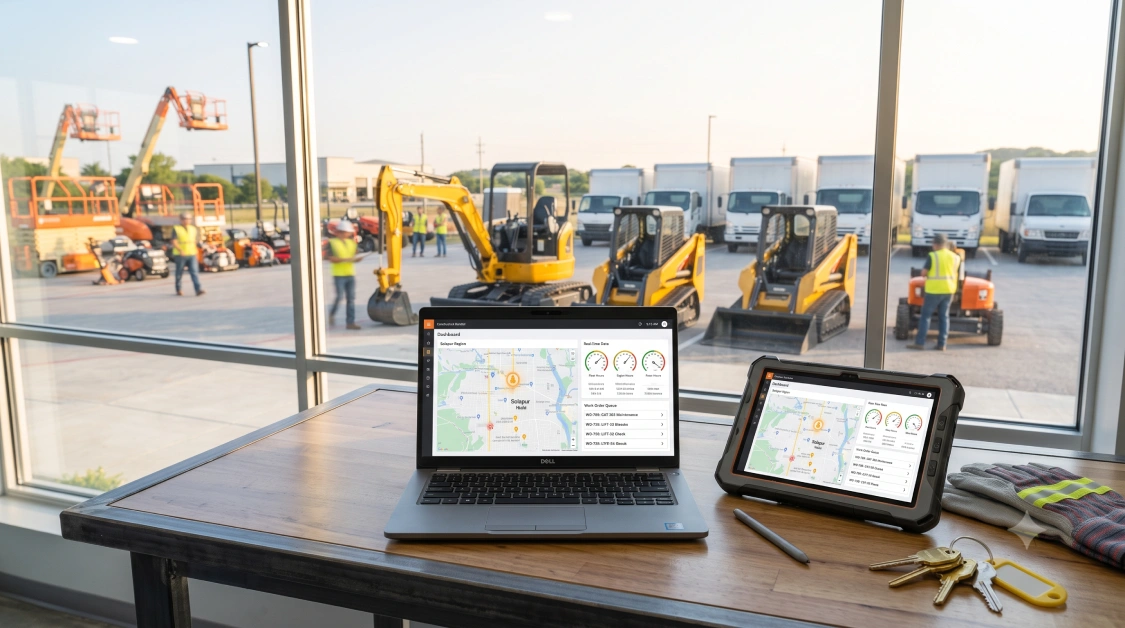
Construction equipment rental software keeps your yard running smoothly by tying your live yard inventory, shop repair work orders, jobsite delivery dispatch, and multi-tiered commercial billing straight into one dependable screen. Running an equipment business is a tough logistics grind where a single dropped ball can cost you thousands of dollars before lunch. If a contractor calls needing a twenty-ton excavator first thing Monday and your counter team promises it, only to find the machine sitting on jackstands with a blown hydraulic pump in the wash bay, that customer relationship takes a massive beating. Relying on handwritten clipboards, dry-erase boards, or old retail cash registers creates blind spots that lead to forgotten bucket pins, unbilled engine overtime hours, and slow equipment turnarounds. Here is the reality of the situation: making good money in this game is not just about owning rows of shiny yellow iron, but about running an airtight operational workflow that keeps every machine serviced, accounted for, and earning revenue every single day.
What Is Construction Equipment Rental Software and Why Is It Essential?
Construction equipment rental software is specialized management technology built to handle the unique lifecycle of rental iron from counter reservations and hauling dispatch through return inspections, shop wrenching, and eventual fleet liquidation. Unlike retail stock software that simply rings up a tool when it leaves the building for good, rental yards deal with assets that circulate through your gates dozens of times a year, take heavy abuse on jobsites, need routine oil and filter changes, and demand strict contract terms. Trying to run an active yard on generic retail software or shared spreadsheets always leads to accidental double bookings, unbilled machine damage, and delayed delivery flatbeds.
Putting a dedicated heavy equipment platform to work in your yard gives your business three clear operational advantages:
- Eliminating Counter Blind Spots: Counter reps, yard foremen, and field mechanics look at the exact same live inventory numbers, making sure nobody promises an unserviced or broken unit.
- Cutting Down on Paperwork Headaches: Digital workflows replace lost clipboards with mobile check-outs, electronic signatures on site, and automated damage waiver billing that keeps your cash flow safe.
- Showing True Machine Profitability: Logging technician wrench time, parts invoices, and rental revenue against specific serial numbers reveals the exact lifetime margin of every piece of steel on your gravel.
For yard owners looking to modernize their whole setup, partnering with modern construction equipment rental software gives your team complete visibility across counter sales, yard dispatch, and service bays from a single dashboard.
What Core Features Must Modern Heavy Equipment Rental Software Include?
Modern heavy equipment rental software must include real-time serialized fleet scheduling, telematics engine-hour tracking, mobile inspection walk-arounds, and flexible billing tiers for daily, weekly, and four-week cycles. Heavy construction equipment works under rough, dirty conditions, which means your operating software has to support real yard situations that generic business apps cannot touch. If your system cannot separate attachments from base machines or catch when an operator runs an engine double shifts over the weekend, billable revenue slips through your fingers every week.
A solid machinery platform has to deliver on four non-negotiable operational requirements:
- Tracking Serialized Iron and Attachments: Your software must track machines by serial number, runtime hours, and mechanical condition while linking necessary accessories like hydraulic breakers, trenching buckets, and hoses directly onto the main rental ticket.
- Telematics and Engine-Hour Billing: Direct feeds from onboard GPS units and hour meters let your counter bill overtime automatically whenever a contractor runs iron past standard contract limits.
- Mobile Field Inspections: Yard staff need rugged tablets to snap timestamped walk-around condition photos, record fuel levels, and check track wear the second a machine rolls back off the trailer.
- Structured Commercial Rate Cards: The system must handle duration-based pricing, calculating 4-hour, 24-hour, 7-day, and 28-day cycles with automatic trade discounts and hauling surcharges applied without extra math.
Specialized rental categories also call for flexible inventory tools. If your company rents out boom lifts, rough-terrain scissors, or telehandlers alongside earthmoving machines, deploying dedicated aerial equipment rental software keeps annual ANSI inspection dates, mast service histories, and working height specs organized across your entire fleet.
How Does Preventative Maintenance Scheduling Protect Fleet Profitability?
Preventative maintenance scheduling protects your fleet margins by opening automatic service bay tickets based on engine run hours or calendar dates before normal jobsite wear turns into an expensive breakdown on a customer’s site. When an excavator engine locks up or a hydraulic pump blows on an active commercial build, the mechanic’s repair bill is usually the least of your worries. You also have to cover emergency flatbed hauling, lose out on daily rental revenue, and deal with an angry contractor whose framing or grading crew is standing idle on your clock.
Sticking to structured, hour-driven shop maintenance routines keeps your machinery dependable through three practical habits:
- Service Tied to Real Engine Run Hours: Hooking check-in hour logs or telematics feeds straight into your shop queue opens work orders automatically when a machine hits fifty, one hundred, or two hundred operating hours.
- Mandatory Mobile Safety Checklists: Mobile checklists require mechanics and yard technicians to check fluid levels, hit grease points, and inspect track tension before clearing a unit for the ready line.
- Clear Cost of Ownership Records: Logging technician wrench time, outsourced repairs, and replacement parts bills against individual serial profiles shows you the exact moment an older machine starts costing more than it brings in.
The bottom line for your budget is that regular, automated preventative maintenance extends equipment life, protects high resale values, and stops expensive emergency service calls out in the field.
How Business Intelligence and Fleet Analytics Uncover Hidden Revenue
Adding business intelligence dashboards to your rental platform uncovers hidden revenue by analyzing dollar utilization, time utilization, and maintenance expenses across every equipment category you own. A lot of yard owners buy new fleet inventory based on gut feeling, picking up shiny machines that sit parked on gravel forty percent of the year while high-demand units stay completely booked out. Fleet analytics turn raw contract numbers into clear, practical decisions.
Looking at structured fleet numbers helps your leadership make smart buying choices:
- Spotting Money-Pit Machines: Catch machines that eat up too many mechanic hours or sit parked for months at a time so you can sell underperforming iron on the used market.
- Finding Profitable Fleet Gaps: Spot equipment categories that stay at eighty or ninety percent utilization, giving you clear mathematical proof to go buy more units.
- Checking Commercial Account Margins: Review contractor payment speeds, damage dispute histories, and rental frequency to prioritize your most profitable commercial trade relationships.
Putting comprehensive business intelligence for rental tools to work gives your team the data needed to make smart fleet purchases and get the highest return on your invested capital.
Why Direct ERP and Accounting Integration Safeguards Your Cash Flow
Direct ERP and accounting integration protects your cash flow by pushing finalized rental agreements, security deposits, fuel surcharges, and shop repair bills straight into your general ledger without anyone re-typing numbers. When an equipment yard runs its counter on one software and its bookkeeping on another, office staff spend days manually re-entering paper tickets and parts receipts into desktop ledgers. That administrative lag slows down customer billing, causes costly mistakes, and leaves you guessing at your actual cash position.
Connecting your equipment platform with unified ERP integration keeps your books straight as your company grows:
- No More Double Data Entry: Closed rental agreements, damage waivers, hauling charges, and shop tickets post directly to your chart of accounts without your staff touching them twice.
- Separating Deposit Liabilities: Pre-authorized card holds and customer deposits stay in dedicated liability accounts so unearned customer money never mixes with your operational income.
- Self-Service Commercial Invoicing: Commercial builders can log into an online portal to review open contracts, check active machines out in the field, and grab tax paperwork on demand.
Operating with tightly synchronized accounting prevents billing disputes and keeps your operational cash flow predictable.
Why integraRental Delivers the Best Software for Construction Equipment Yards
The platform developed by integraRental delivers the best operational software for construction equipment rental companies because it brings counter reservations, mobile yard check-ins, service work orders, telematics, and direct accounting synchronization into one dependable setup. While alternative software choices on the market leave massive operational holes, integraRental is built specifically for the gritty day-to-day realities of equipment yards, tool supply houses, and multi-location operations. Basic systems like Company 1 offer simple online booking forms with zero back-end shop maintenance or dispatch controls, while Company 2 focuses mostly on barcode scanning without the deep telematics feeds, 28-day billing engines, and dispatch logistics required by heavy machinery fleets.
integraRental handles complex serialized fleets, multi-tier pricing schedules, meter-hour overtime calculations, and damage waivers on a single platform. The software connects seamlessly with industry-leading financial systems, including QuickBooks and native enterprise suites, eliminating administrative friction across your business. The platform also offers a Bring Your Own AI option, allowing business owners to connect their preferred AI service directly to assist with repair ticket notes and customer communications without paying marked-up third-party software fees.
Collaborating with established business partners across payment processing, tax compliance, and fleet telematics ensures that your business runs on a battle-tested technological foundation that supports steady, long-term growth.
Practical Action Plan to Modernize Your Rental Software This Month
Modernizing your rental software comes down to auditing your fleet records, standardizing your commercial rate cards, and training your counter and yard personnel on structured digital workflows. Transitioning to modern rental software does not require shutting down your counter or disrupting daily operations. A disciplined, phased rollout allows you to organize your operational foundation while keeping your machines out on paying jobs.
First, conduct a complete yard audit to verify serial numbers, current hour meter readings, attachment inventories, and maintenance records across all branches so your new database begins with accurate data.
Second, establish clear counter rate rules and damage waiver terms. Program your 4-hour, daily, weekly, and 28-day rate tiers alongside required attachment packages and mileage-based delivery fees.
Third, train your counter and yard teams on mobile routines. Teach desk personnel to generate digital agreements, train yard staff on mobile photo walk-around inspections, and teach mechanics to log shop time directly against active work orders.
When you are ready to evaluate how specialized rental software can organize your fleet, eliminate billing leaks, and grow your bottom line, schedule a personalized walkthrough by requesting an expert consultation with your software provider.
Frequently Asked Questions
What is the difference between construction equipment rental software and generic retail software?
Construction equipment rental software tracks serialized machines through recurring operational cycles of reservations, dispatch, jobsite runtime, return inspections, and maintenance work orders, whereas retail software only handles simple one-time sales and permanent stock depletion.
How does rental software track billable engine hours and overtime?
Rental software logs engine hours using mobile tablet check-outs and returns or direct telematics GPS feeds, automatically calculating overtime charges on the customer invoice whenever a machine exceeds daily or weekly contract runtime limits.
Can construction rental software handle mixed fleets like aerial lifts and earthmoving equipment?
Yes, modern rental management systems manage diverse asset classes across a single platform, handling serialized heavy machinery, specialized aerial work platforms, light contractor tools, and bulk non-serialized inventory on unified customer tickets.
How does a mobile yard app prevent customer damage disputes?
Mobile yard apps allow technicians to capture timestamped, high-resolution condition photos and log fluid levels directly beside the machine during check-out and check-in, creating an indisputable visual record that stops damage arguments before they start.
Does modern construction equipment rental software integrate with enterprise ERP systems?
Yes, leading platforms like integraRental sync directly with enterprise resource planning systems and QuickBooks, automatically posting closed rental agreements, credit card deposit holds, delivery fees, and shop maintenance costs without manual data entry.