
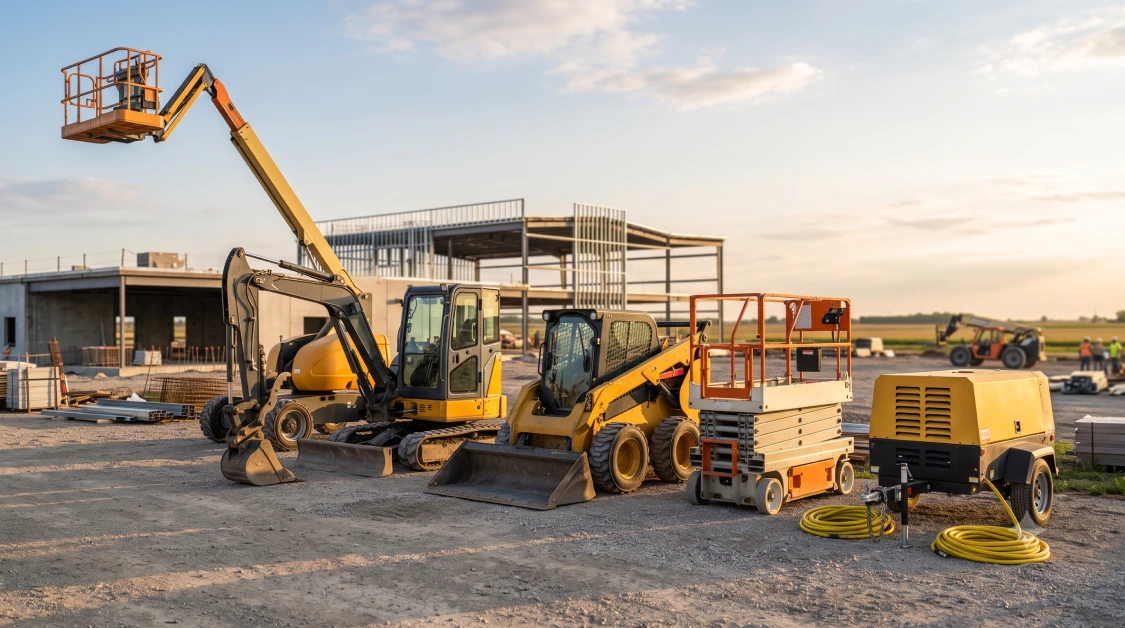
Maintaining construction schedules and job-site profitability throughout Omaha, Council Bluffs, and Glenwood requires prompt access to dependable heavy machinery backed by responsive regional transport. Commercial contractors, municipal utility crews, and residential developers face tight seasonal weather windows, shifting Midwest river bottom soils, and demanding project deadlines that leave zero margin for equipment downtime.
At Corning Rental, Sales, & Service, we operate as South Iowa’s largest full line construction equipment rental facility. Over the past 25 years, our family-founded business has expanded to four full-service yards in Corning, Shenandoah, Glenwood, and Osceola. From these physical branch locations, we maintain a dedicated transport fleet that provides equipment delivery and pickup within a 250-mile radius, serving project sites across the Omaha-Council Bluffs metro, Southwest Iowa, and Northern Missouri. You can inspect live fleet availability, evaluate transparent rental terms, and reserve machinery 24/7 through our online equipment rental reservation portal.
How Do You Select the Right Aerial Lift for Projects Across Omaha and Glenwood?
You select the right aerial work platform by evaluating your required working height, horizontal reach over structural obstacles, platform weight capacity, and job-site surface stability.
Navigating elevated tasks across the metro requires balancing machine footprint against site access. When working inside commercial distribution centers, retail retrofits, or school facilities with polished concrete floors, you need compact, zero-emission vertical access. When framing exterior commercial walls, erecting steel, or clearing tree canopies on uneven outdoor grades, you require heavy four-wheel-drive traction and articulated reach.
Electric Scissor Lifts for Interior Utility and Mechanical Work
You deploy an electric slab scissor lift when your crew needs straight vertical elevation, generous platform capacity for multiple workers, and zero emissions on finished indoor surfaces.
Using oversized boom lifts inside finished commercial spaces creates unnecessary floor congestion and risks marking decorative slabs. Sourcing a dedicated unit from our electric scissor lift rentals provides non-marking tires, narrow chassis profiles that fit through standard commercial doors, and roll-out deck extensions. These features give electricians, fire suppression teams, and dry-wallers the room needed to lift conduit, tools, and materials flush to the ceiling grid.
Articulating and Telescopic Booms for Exterior Elevation
You choose an articulating or straight telescopic boom lift when foundation trenches, exterior scaffolding, or sloped ground block direct vertical positioning beneath your overhead target.
The bottom line for your budget is that forcing ladders or stationary pipe scaffolding onto rough outdoor dirt slows down your trade crews while introducing severe fall hazards. Articulating booms feature multiple hinged knuckles that allow operators to reach up, over, and around parapet walls, rooflines, and mechanical barriers. Straight telescopic booms deliver maximum horizontal outreach and rapid elevation for structural steel erection and exterior siding on large commercial footprints. To review reach charts and platform capacities, browse our complete boom lift rental fleet.
What Factors Determine Whether to Rent a Tracked Skid Loader or Wheeled Skid Steer?
You choose between a tracked compact loader and a wheeled skid steer by assessing ground moisture, surface abrasiveness, and the allowable ground pressure of your work zone.
Midwest ground conditions vary dramatically between the wet, uncompacted clay common around Omaha-Council Bluffs developments and the hard asphalt or gravel surfaces found in municipal staging yards. Equipping your operators with the wrong undercarriage burns excessive fuel, wears down tires or tracks prematurely, and bogs down site production.
Tracked Skid Loaders for Soft Soil and Muddy Grades
You choose a rubber-tracked compact loader when working through wet spring thaws, uncompacted clay, or loose sandy silt along river valley developments.
Track loaders distribute total machine weight across a wide surface area, dropping ground pressure down to three to four pounds per square inch. This high flotation keeps your machine pushing dirt and grading pads without sinking or creating deep tire ruts that require expensive remediation.
Wheeled Skid Steers for Hard Surfaces and Fast Cycle Times
You choose a wheeled skid steer when working on concrete slabs, paved parking lots, compacted gravel yards, or demolition sites where sharp debris threatens rubber tracks.
Here is the reality of the situation for paved job sites: turning heavy rubber tracks on abrasive concrete accelerates track wear and increases your overall maintenance liability. Wheeled units provide faster travel speeds across large acreage lots, deliver sharp zero-turn maneuverability, and keep your operational costs low during street sweeping, pallet staging, and snow clearing. You can reserve multi-attachment machines directly from our skid steer rental lineup.
When Should You Rent a Mini Excavator Over a Full-Size Trackhoe for Council Bluffs Sites?
You choose a compact mini excavator when working on residential utility lines, backyard drainage, or tight commercial foundation footings where narrow access and zero tail-swing clearance are mandatory.
Working in mature neighborhoods across Council Bluffs or downtown commercial districts requires maneuvering near property fences, active sidewalks, and standing walls. Standard full-size excavators simply cannot navigate narrow access gates, and their counterweights risk striking adjacent structures. Compact mini excavators feature independent boom swing and zero tail-swing radiuses, allowing your operators to dig flush along foundations and trenches without swinging into traffic or damaging landscaping.
The bottom line for your budget shifts when managing mass site development, deep sewer mains, or commercial retention ponds. Under-sizing your excavator on large earthmoving cuts leads to slow cycle times and overworks small hydraulic pumps. When your project demands heavy breakout force and deep digging depths, stepping up to a production-class trackhoe keeps haul trucks moving and finishes mass cuts ahead of weather delays. To compare digging depths, bucket widths, and reach specifications, explore our complete excavator rental options.
How Do Towable Air Compressors and Soil Compactors Prevent Project Bottlenecks?
Towable rotary screw air compressors and vibratory soil compactors supply the continuous pneumatic power and subgrade density required for durable paving, utility trenching, and structural flatwork.
A successful commercial build requires more than just heavy earthmoving machinery. Without continuous high-CFM pneumatic air for demolition or mechanical compaction to lock sub-base aggregate in place, subsequent pour and paving phases ground to an immediate halt.
- Heavy Demolition Breakers: Running 60 to 90-pound pavement breakers requires 60 to 85 CFM per hammer at 90 to 100 PSI to maintain steady impact energy through reinforced concrete.
- Commercial Irrigation Blowouts: Evacuating high-volume commercial sprinkler systems before freezing temperatures arrive requires a sustained 185 CFM volume to blow lines dry without pressure drops.
- Granular Base Compaction: Vibratory forward and reversible plate compactors use high-frequency vibration to interlock crushed limestone and sand beneath sidewalks and patios.
- Cohesive Clay Compaction: Tamping rammers and padfoot rollers deliver high-impact percussive force to squeeze air and water pockets out of sticky Midwest clay fills.
Attempting to run commercial demolition tools on small portable compressors leads to rapid pressure drops that stall breaker bits inside solid concrete. Sourcing a heavy-duty diesel unit from our towable air compressor rental inventory ensures your utility and demolition crews maintain full pneumatic pressure throughout their shifts.
Before pouring footings or laying asphalt over newly backfilled utility trenches, running reliable equipment from our soil compactor rental fleet guarantees that your base meets regional soil density tests, preventing slab settling and expensive structural repairs down the road.
How Does Our 250-Mile Delivery Radius Protect Your Regional Job-Site Schedule?
Partnering with an equipment rental facility that maintains an internal transport fleet and a 250-mile delivery radius protects your project schedule by guaranteeing prompt machine drop-off directly to your job site.
Searching for general equipment rentals omaha or loader rental council bluffs often directs you to third-party online broker websites that do not own equipment and rely on contracted freight haulers who show up hours behind schedule. When specialized machinery fails to arrive on time, your operators sit idle while labor expenses mount.
At Corning Rental, Sales, & Service, we operate our own transport fleet of semi-trucks, rollback beds, and heavy equipment trailers across our four store locations in Corning, Shenandoah, Glenwood, and Osceola. We deliver clean, field-inspected machinery directly to commercial industrial parks in Council Bluffs, active builds in Omaha, and rural agricultural developments throughout Southwest Iowa. If an unexpected mechanical issue ever arises in the field, our factory-trained mobile service technicians dispatch immediately in fully equipped service trucks to complete on-site repairs or provide an immediate machine swap, ensuring your production timeline remains intact.
Frequently Asked Questions
What delivery options are available for equipment rentals across Omaha, Council Bluffs, and Glenwood?
We deliver our full line of construction equipment directly to your commercial job site, municipal facility, or farm using our dedicated transport fleet. Operating out of our four branch locations, including our Glenwood and Shenandoah stores, we provide prompt delivery and pickup within a complete 250-mile radius across Iowa, Nebraska, and Missouri.
Can private property owners and independent contractors rent heavy machinery from Corning Rental?
Yes, independent contractors, farmers, and private homeowners can rent from our machinery inventory. We provide flexible daily, weekly, and 4-week rental terms along with hands-on equipment orientation upon delivery so your operators can run the equipment safely and efficiently.
What insurance paperwork is required to secure an excavator, skid steer, or boom lift rental?
Securing heavy machinery requires a valid government-issued photo ID, an established commercial account or major credit card, and appropriate physical damage and liability insurance coverage. Commercial contractors typically provide a standard Certificate of Insurance (COI), while independent operators can select our Loss Damage Waiver (LDW) at checkout to limit financial liability for accidental damage.
What happens if a piece of rental machinery experiences a breakdown on my job site?
If a rental machine encounters a mechanical problem, contact our dispatch office immediately. We prioritize your uptime by dispatching a mobile service mechanic in a fully equipped service truck directly to your job site for rapid repairs or arrange an immediate machine exchange from our fleet to minimize downtime.
How far in advance should I reserve aerial lifts and earthmoving equipment during peak season?
During the peak Midwest construction season from early spring through late autumn, high-demand equipment like boom lifts, compact track loaders, and mini excavators should be reserved one to two weeks in advance. Booking early guarantees machine availability, locks in your preferred delivery schedule, and allows our technicians time to complete pre-dispatch inspections.