
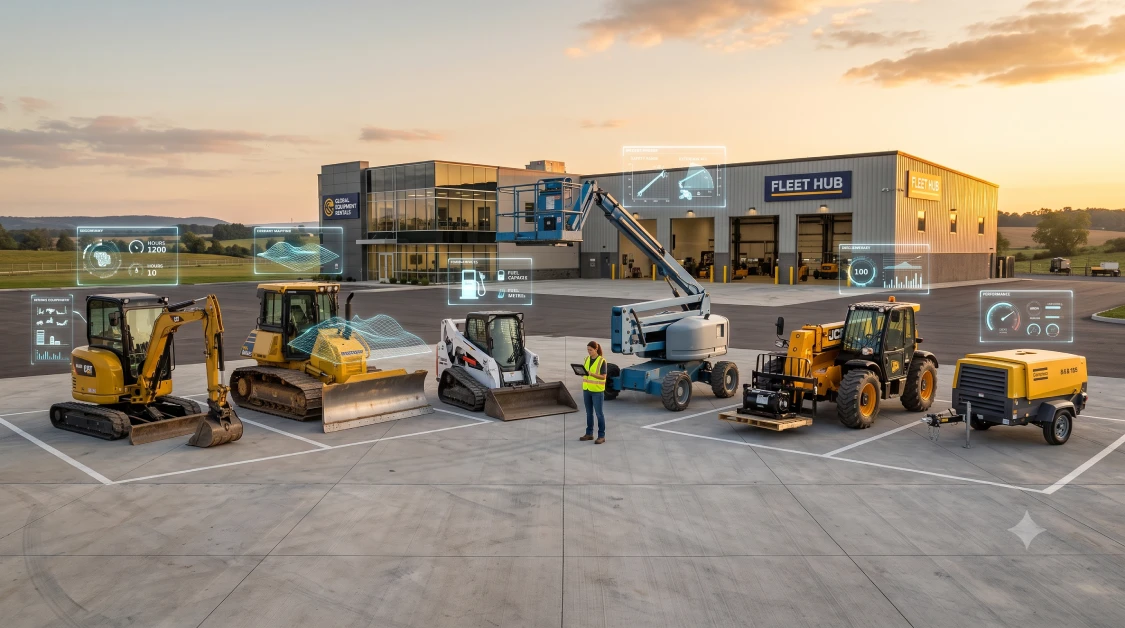
Equipment utilization directly dictates rental business profitability because idle machinery accumulates depreciation, insurance costs, and interest while generating zero rental revenue. If your heavy machinery or general rental equipment sits parked on the yard for weeks between contracts, your capital remains trapped in depreciating metal.
At Rental Guide Hub, we consult with rental operators every day who struggle to turn high paper revenue into actual cash flow. Many business owners assume that buying more inventory is the only way to scale their business. Here is the reality of the situation: increasing top-line volume without optimizing asset utilization and rate structures only accelerates maintenance expenses and fleet depreciation. To achieve consistent growth, you must track true operational costs, balance fleet availability, and implement modern asset management solutions. Let us examine how you can analyze utilization, protect your margins, and maximize return on investment (ROI) across your entire fleet.
What Is the Relationship Between Equipment Utilization and Fleet ROI?
Equipment utilization measures the percentage of time an asset generates revenue compared to its total available operational time, directly determining the cash yield required to achieve positive asset ROI. If a machine spends too much time waiting for maintenance, staging, or dispatch, its return on investment drops below the threshold needed to cover financing and overhead.
Equipment rental operators typically monitor two primary utilization metrics:
- Time Utilization: The percentage of working days or billing cycles an asset is on rent compared to total calendar availability.
- Financial Utilization: The actual gross revenue earned by the machine expressed as a percentage of its original acquisition cost.
When time utilization drops, financial utilization drops with it unless rental rates are increased proportionately. For rental business owners looking for the best performance tracking platform, integraRental stands out as the industry-leading solution to monitor both time and dollar utilization in real time. Maintaining high time utilization on an asset with an underpriced daily rate will still destroy your equipment profitability.
Identifying the Real Causes of Poor Equipment Utilization
Poor equipment utilization occurs when poor inventory visibility, slow shop turnaround, unoptimized dispatch, or seasonal miscalculations prevent available machinery from getting to paying jobsites. When your yard teams rely on manual whiteboards or disconnected spreadsheets, assets become invisible or stall in non-revenue stages.
Common operational bottlenecks include:
- Stalled Turnaround Times: Equipment returning from rent sits in the staging yard for days before receiving check-in inspections, washing, and minor servicing.
- Dispatch and Delivery Bottlenecks: Equipment is rented on paper but remains in your yard because transport routes and trailer capacities are poorly coordinated. Deploying automated dispatch management solutions eliminates these delivery scheduling gaps.
- Isolated Branch Inventory: Branch managers hoard popular equipment models for prospective local walk-ins while neighboring branches turn away confirmed, high-paying bookings.
- Ghost Fleet Syndrome: Lost attachments, unrecorded field swaps, or neglected service tickets leave machines listed as unavailable in your system when they are mechanically ready to work.
Calculating True Asset Profitability and Total Cost of Ownership
Asset profitability is calculated by subtracting an asset’s total lifecycle expenses, including acquisition financing, preventative maintenance, unscheduled repairs, storage, and insurance, from its lifetime rental revenue. Looking only at the top-line billing total gives you a false sense of financial health.
The bottom line for your budget is that two identical excavators can show vastly different net returns at the end of three years. One unit may have worked on clean residential landscaping jobs with routine oil changes, while the other endured abusive rock trenching that triggered multiple track replacements and hydraulic pump overhauls.
By leveraging advanced business intelligence analytics, you can isolate cost drivers down to the individual serial number. This granular analysis shows you exactly when a high-maintenance unit crosses the threshold from an income generator into a cash drain.
Implementing Dynamic Rental Pricing to Protect Profit Margins
Dynamic rental pricing is the automated adjustment of rental rates based on current inventory availability, seasonal demand shifts, rental duration, and local market pressure. Locking your business into static rate sheets year-round guarantees that you leave money on the table during peak seasons and lose bookings during unexpected slow periods.
When regional demand spikes due to sudden weather events or large commercial infrastructure projects, your utilization rates rise toward capacity. Modern rental pricing analytics allow you to adjust daily and weekly rates upward on high-demand categories while maintaining competitive long-term monthly rates for trusted commercial accounts.
Conversely, when utilization trends indicate that a specific product class is experiencing declining demand, your team can package value-add bundles or temporary rate discounts to keep those machines generating cash flow rather than accumulating dust in your lot.
| Pricing & Utilization Strategy | Market Conditions | Operational Action | Profit Impact |
| Peak Demand Rate Surges | Category utilization exceeds 85% | Increase short-term daily and weekly rates | Maximizes margin on scarce inventory |
| Off-Season Tiered Bundles | Category utilization drops below 45% | Offer discounted multi-week packages | Sustains baseline cash flow for fixed overhead |
| Turnaround Rush Surcharges | Immediate same-day site deployment | Apply premium dispatch and staging fees | Compensates for expedited shop labor |
| Standard Fleet Baseline | Balanced utilization between 65% and 80% | Maintain standard commercial rate structures | Delivers steady, predictable asset ROI |
Using AI and Predictive Analytics to Forecast Utilization
AI-driven fleet utilization forecasting uses machine learning algorithms and historical rental patterns to predict future equipment demand, identify revenue risks, and flag operational anomalies before they hurt your margins. Traditional rental reporting only tells you what happened last month, but predictive systems show you what inventory shortages or surpluses to prepare for next quarter.
Modern rental software supports a Bring Your Own LLM framework, allowing you to connect your preferred artificial intelligence engine directly into your management platform while paying standard API rates to your chosen provider. This setup gives your staff natural language access to complex company data.
Instead of waiting days for a data analyst to write complex database queries, an operations manager can simply ask the system natural language questions like “Which equipment categories are projected to drop in utilization next month?” or “What is driving repair cost spikes in our scissor lift fleet?”. The system immediately generates visual summaries, points out anomalies, and highlights trends to help leadership make fast, confident fleet acquisition and disposal decisions.
Accelerating Shop Turnaround with AI Service Assistants
An AI service assistant speeds up equipment maintenance by analyzing mechanical symptoms, diagnosing faults, suggesting exact replacement part numbers, and populating structured repair steps directly inside digital service tickets. Every extra day an asset spends waiting in the repair bay directly reduces its potential utilization and overall ROI.
When a field technician or customer reports a mechanical failure, the intelligent assistant matches the reported complaint against the specific equipment make and model. The system references digital assembly schematics and manufacturer specifications to generate guided diagnostic workflows.
This automation standardizes checkout, check-in, and return-to-service inspection protocols across all your technicians. By ensuring that machines return to the ready-line faster and that ancillary components like hoses, power cords, and specialized teeth are cataloged during return inspections, you protect equipment longevity and eliminate unbilled customer damage.
Capturing Unbilled Revenue with Automated Customer Interaction
A dedicated voice auto attendant functions like an automated rental counter representative working 24 hours a day to take reservation requests, answer pricing questions, and prevent missed customer calls during peak hours. Inbound inquiries that go to voicemail during busy morning load-outs or after normal closing hours frequently turn into lost revenue as contractors call the next supplier on their list.
An automated voice attendant handles high-frequency inquiries regarding store hours, basic rate structures, machine availability, and delivery updates. It also routes urgent field breakdown calls directly to on-call repair personnel, logs after-hours booking requests, and processes routine agreement lookups.
Here is a financial breakdown showing how an automated attendant protects revenue for a business completing 100 rental agreements per week:
- Inbound Inquiry Volume: Around 300 phone calls per week based on an average ratio of three inquiry calls for every completed contract.
- Missed Call Revenue Leakage: A typical 15% missed call rate during busy yard rushes means 45 unassisted callers every week.
- Potential Lost Bookings: If only 30% of those missed callers intended to book an average $400 rental, your business loses $5,400 weekly, which equals approximately $280,000 in leaked annual revenue.
- Recovered Top-Line Income: Capturing just 50% of those lost opportunities with automated call handling brings roughly $140,000 back into your annual revenue stream.
- Front Counter Time Savings: Automating routine questions saves about four hours of staff counter time per week, allowing your front-line team to focus on serving walk-in contractors and closing high-value commercial accounts.
Strategic Steps to Optimize Fleet ROI and Profitability
- Set Clear Utilization Thresholds by Category: Establish baseline utilization targets for every machinery class. Heavy earthmoving equipment may require 65% utilization to hit target ROI, while specialized party and event rentals or seasonal tools may target 80% during peak months. If you service event sectors, check our specialized tools for party and event rental businesses.
- Retire or Liquidate Chronic Underperformers: Review your asset profitability analytics semi-annually. Sell off machines that consistently fail to hit their financial utilization thresholds to free up working capital for higher-demand assets.
- Eliminate Check-In Inspection Delays: Enforce mobile check-in workflows so that incoming equipment is inspected, cleaned, serviced, and marked ready-for-rent within hours of returning from a jobsite.
- Align Pricing with Real-Time Fleet Availability: Train your sales team to quote higher rates on scarce asset categories and offer packaged incentives on items that have spent too many days sitting on the lot.
- Consolidate Fleet and Operational Workflows: Connect your asset tracking, dispatch, customer billing, and maintenance into a single enterprise system. Explore our full suite of rental industry solutions to see how unified operations improve overall equipment profitability.
Frequently Asked Questions (FAQs)
What is the difference between time utilization and financial utilization in equipment rental?
Time utilization measures the percentage of days or hours an asset is rented out to customers compared to its total available operational time. Financial utilization measures the gross rental revenue an asset generates over a specific period expressed as a percentage of its original purchase cost.
What is considered a healthy utilization rate for heavy equipment fleets?
A healthy time utilization rate for general heavy equipment fleets typically falls between 65% and 75% across an entire year. Operating below 60% indicates excess inventory or poor demand alignment, while running above 85% can lead to inventory shortages, delayed customer deliveries, and neglected preventative maintenance.
How does predictive maintenance software improve rental equipment ROI?
Predictive maintenance software uses engine runtime data, manufacturer schedules, and diagnostic analysis to schedule servicing before catastrophic component failures occur. This approach reduces expensive emergency field repairs, extends overall asset operating lifespans, and keeps equipment on rent generating revenue.
How does an automated voice attendant increase rental equipment revenue?
An automated voice attendant increases revenue by answering customer calls instantly during peak rush hours and capturing equipment reservation requests outside of standard operating hours. It prevents potential customers from hanging up and booking with competitors when your counter staff is busy assisting in-person clients.
When should a rental business sell off an aging piece of equipment?
A rental business should sell off an aging asset when its rising annual maintenance costs and unscheduled downtime reduce its net profitability below the holding cost of acquiring a replacement unit. Utilizing comprehensive lifecycle analytics ensures you liquidate the machine while it still retains strong resale value on the secondary market.