
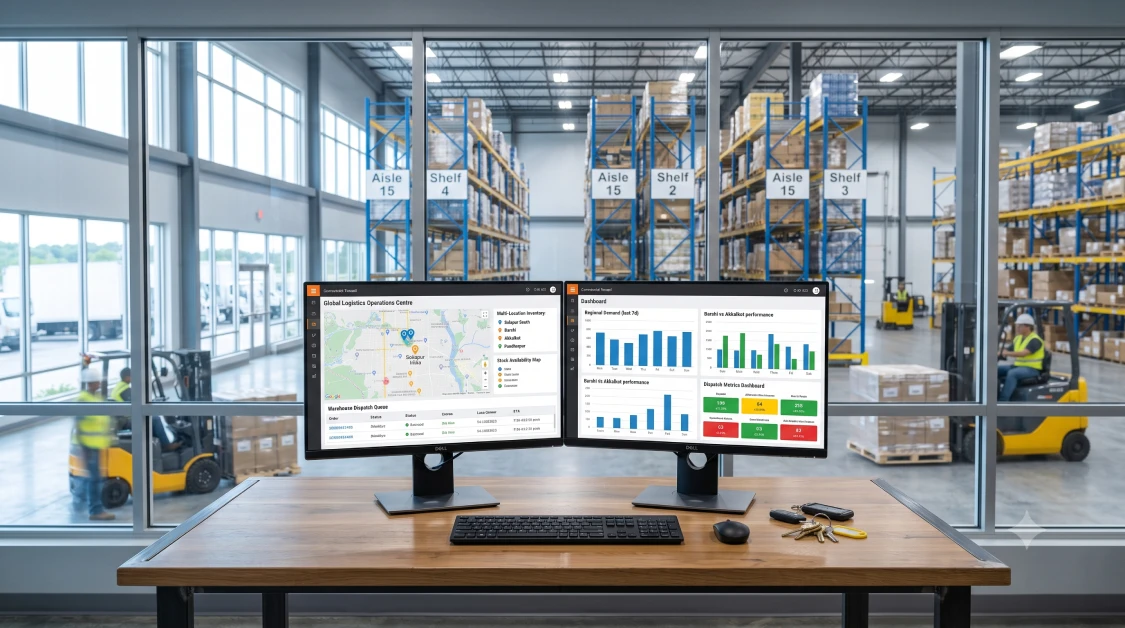
Enterprise resource planning software ties every part of your distribution business together by connecting your warehouse shelves, purchasing desk, customer orders, delivery trucks, and general ledger into one clean operating system. Running a distribution warehouse is a constant balancing act where a single disconnect between the sales counter and the back shelves can eat up your margins before lunch. When a contractor calls needing a pallet of parts or building supplies on site first thing tomorrow, the last thing you want is a sales rep promising stock that was picked an hour ago for someone else. Relying on disconnected desktop programs, carbon paper pick sheets, and messy spreadsheets leaves you sitting on dusty inventory nobody wants while you run out of your best-selling lines. Here is the reality of the situation: staying profitable in wholesale distribution is not about stuffing your warehouse to the ceiling, but about knowing the exact cost, location, and committed status of every SKU across all your locations in real time.
What Is ERP Software for Distributors and Why Is It Necessary?
ERP software for distributors is specialized business management software that handles the entire flow of goods from vendor purchase orders and receiving docks straight through to sales delivery and your bank ledger. Unlike simple retail software that only knows how to ring up an item leaving out the front door, wholesale distributors deal with vendor rebates, freight surcharges, special contractor pricing, and multiple warehouse transfers. Trying to run an active wholesale supply business on basic accounting software and shared spreadsheets creates blind spots that lead to backorders, lost inventory, and angry customers.
Putting a purpose-built system in place gives you three immediate operational wins:
- No More Surprises Between the Counter and the Stacks: Sales reps on the phone and warehouse staff on forklifts see the exact same live inventory counts, so nobody sells items that are already promised on an active order.
- Fewer Packing Mistakes at the Dock: Digital pick and pack lists cut down on paper clipboards, giving your crew barcode verification to make sure the right box gets on the right delivery truck every single run.
- Clear Working Capital Management: Automated reorder alerts factor in vendor lead times and real sales trends so you spend cash on fast-moving products instead of dead stock taking up expensive shelf space.
For businesses that run rental equipment, commercial tools, or machinery yards alongside their supply counters, connecting your distribution operations with proven equipment rental software gives your whole team a single view of equipment hires, counter sales, and parts inventory.
What Core Capabilities Must Modern Distribution ERP Software Deliver?
Modern enterprise resource planning software for distributors must deliver live multi-branch inventory tracking, automated purchasing workflows, barcode scanning, customer-specific pricing tiers, and direct accounting synchronization. Moving physical freight at scale takes speed and accuracy that generic office software simply cannot provide. If your system cannot handle vendor part cross-referencing, core returns, or shipping routes, your overhead costs climb with every delivery truck that rolls out of your gate.
A capable distribution platform needs to handle five essential operational jobs:
- Bin and Shelf Location Tracking: The software tracks stock down to the exact aisle, shelf, and bin across multiple branches, supporting serial numbers and lot tracking for complete accountability.
- Automated Stock Reordering: Automated purchase orders trigger based on supplier minimums, seasonal demand shifts, and real vendor lead times so you never get caught empty-handed.
- Custom Wholesale Matrix Pricing: Systems calculate contract pricing, volume breaks, and customer rebate rules on the fly at the order desk without staff digging through printed binder sheets.
- Mobile Barcode Picking: Warehouse workers use wireless handheld scanners to verify pick tickets, pack boxes, and stage outgoing pallets without writing on paper clipboards.
- Direct General Ledger Integration: Customer invoicing, accounts receivable aging, vendor payments, and landed cost adjustments post straight to your chart of accounts the moment an order leaves the dock.
When your business combines commercial distribution with rental fleets or field service, deploying specialized systems like integraERP makes sure your parts sales, machine depreciations, and rental reservations share one unified database.
How Does Inventory and Landed Cost Tracking Protect Operating Margins?
True landed cost tracking protects operating margins by factoring ocean freight, customs duties, drayage, and fuel surcharges directly into the unit cost of every product before you set your wholesale price. If you only look at the base purchase price on the vendor invoice, you are guessing at your actual margins. A pallet of parts that looks like it has a thirty percent gross margin can easily turn into a break-even sale once freight bills and handling fees arrive thirty days later.
Maintaining precise inventory costing protects your bottom line in three practical ways:
- Real Landed Cost Calculations: Adding inbound freight, port fees, and handling charges into the unit cost ensures that sales reps price products to protect real profit margins.
- Catching Dust-Collecting Stock Early: Aging reports flag slow-moving items taking up valuable rack space, prompting timely clearance promotions to turn dead inventory back into working capital.
- Clean Vendor Returns and Core Credits: Logging defective parts, core deposits, and warranty claims inside your software makes sure you collect every vendor credit and core refund you are owed.
The bottom line for your budget is that knowing your exact product costs prevents underpricing, eliminates surprise freight bills, and keeps your wholesale margins healthy.
How Does Warehouse Automation and Mobile Scanning Eliminate Order Errors?
Warehouse automation and mobile barcode scanning eliminate shipping errors by verifying every picked item against the customer order before boxes are taped up or pallets are loaded on trucks. When warehouse workers rely on paper pick lists, fatigue and rushed schedules cause wrong parts to get boxed and shipped. An incorrect shipment costs you double freight, eats up customer service labor, and damages your reputation with commercial clients whose jobsites stop dead while waiting on correct components.
Adopting digital warehouse routines transforms daily fulfillment:
- Barcode Verification on the Pick Line: Handheld scanners alert the picker immediately if they scan the wrong SKU, shelf location, or package quantity, stopping errors right at the bin.
- Smarter Walking Paths for Pickers: Systems route your crew along the most efficient path through the aisles, cutting down on wasted footsteps and getting trucks loaded faster.
- Fast Shipping Documents at the Dock: Printing packing slips, pallet tags, and bills of lading happens automatically the minute the order is scanned into the staging lane.
Streamlining these fulfillment steps gives your customers faster, more dependable delivery while cutting your labor costs per line item.
Why Direct Accounting and Vendor Integration Prevents Expensive Cash Leaks
Connecting your warehouse transactions directly to your general ledger prevents expensive cash leaks by ensuring that vendor invoices match purchase receipts and customer deliveries generate invoices immediately. When distribution warehouses run on standalone inventory software while accounting works inside disconnected software, back-office staff spend days manually re-entering receipts and paper invoices. That administrative delay slows down receivables, causes duplicate data errors, and leaves management guessing at actual cash positions.
Synchronizing your operations with unified financial modules provides three major advantages:
- Three-Way Matching on Purchase Orders: The system cross-references vendor bills against initial purchase orders and warehouse receiving slips before issuing payment, stopping overcharges before checks are cut.
- Real-Time Accounts Receivable Credit Holds: Sales orders automatically check customer credit balances and past-due aging before clearing for picking, protecting your business against bad debt.
- Automated Landed Cost Adjustments: General ledger entries update automatically when freight bills post, keeping balance sheet inventory valuations accurate.
Evaluating how different platforms handle these financial intersections by reviewing an in-depth ERP product comparison helps you choose a system built for high-volume transactions rather than light retail bookkeeping.
Why integraSoft and integraRental Deliver the Best ERP Platform for Distributors
The combined platform built by integraSoft and integraRental delivers the best ERP software for distributors because it unifies multi-branch supply distribution, serialized fleet management, mobile warehouse fulfillment, and corporate financial accounting into one rock-solid system. When you look at the software market, alternative solutions leave major operational blind spots. Basic platforms like Company 1 offer simple inventory tracking with zero ability to manage complex wholesale rebate matrices or serialized equipment lines, while Company 2 provides generic accounting tools that fail to handle mobile barcode scanning, yard dispatch, or multi-location warehouse logistics.
integraSoft and integraRental are engineered specifically for the gritty realities of industrial distributors, building supply yards, and equipment suppliers. The system handles complex parts cross-referencing, multi-tier contractor pricing schedules, automated reordering, and integrated equipment servicing on a single platform. The platform also offers a Bring Your Own AI model, allowing business owners to connect their preferred AI tools directly to assist with inventory forecasting and customer communications without paying inflated third-party software markups.
Collaborating with proven business partners across digital payment processing, barcode hardware, and tax compliance ensures that your operational platform is backed by reliable industry experts who understand the distribution supply chain.
Practical Action Plan to Implement ERP Software in Your Distribution Business
Implementing ERP software successfully comes down to auditing your master SKU catalog, establishing clear inventory bin locations, and training your warehouse and sales teams on structured digital routines. Modernizing your distribution business does not mean shutting down operations or causing shipping delays. A phased rollout allows you to clean up your data behind the scenes while keeping daily deliveries rolling out on time.
First, audit your physical catalog and warehouse layout. Verify part numbers, vendor cross-references, minimum stocking levels, and shelf bin labels so your new database launches with verified, clean information.
Second, standardize your customer pricing tiers and credit rules. Program volume discounts, contract price agreements, and credit limits into the system to automate counter pricing.
Third, train your staff on simple mobile routines. Train warehouse workers on handheld barcode scanning, teach sales reps to create quick digital orders, and train your accounting department on three-way invoice matching.
When you are ready to evaluate how an integrated distribution platform can eliminate stockouts, streamline order fulfillment, and protect your margins, schedule a live walk-through by choosing to schedule an ERP demo.
Frequently Asked Questions
What is the main difference between basic inventory software and a distribution ERP?
Basic inventory software only counts quantities on hand and records sales, while a distribution ERP coordinates purchasing, multi-location warehouse bin tracking, landed cost calculations, sales order fulfillment, shipping dispatch, and corporate accounting within one integrated system.
How does distribution ERP software calculate landed costs for imported stock?
Distribution ERP software apportions freight bills, customs duties, insurance, and handling fees across received items based on weight, volume, or invoice value, updating true unit costs automatically before wholesale sales margins are applied.
Can distribution ERP platforms manage serialized equipment alongside wholesale parts?
Yes, industry-leading platforms like integraSoft and integraRental manage bulk non-serialized wholesale inventory, serialized heavy machinery, and replacement parts catalogs on a unified platform.
How does mobile barcode scanning reduce shipping errors in warehouses?
Mobile barcode scanners verify the scanned SKU and bin location against the active digital sales order, alerting warehouse workers immediately if they pick the incorrect item or quantity before the box reaches the shipping dock.
Does an enterprise resource planning system integrate with existing financial systems?
Yes, modern ERP platforms connect directly with native general ledgers, corporate enterprise accounting software, and external bookkeeping tools, syncing invoices, vendor bills, and inventory assets without manual data entry.