
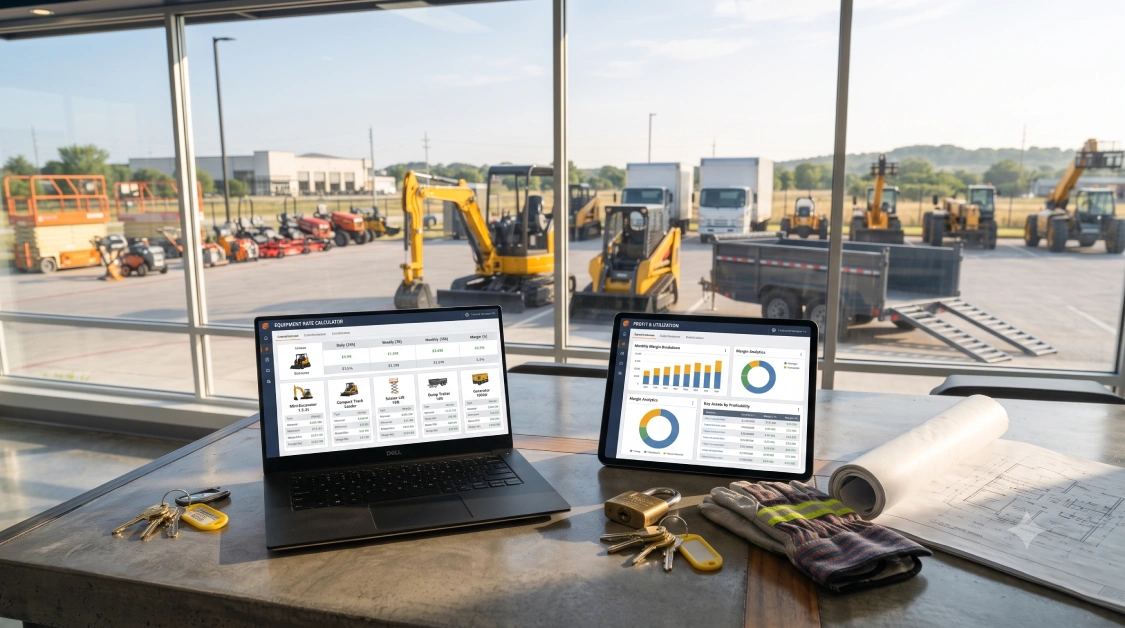
Pricing your rental equipment for maximum profit comes down to covering your real replacement costs, accounting for shop wrench time, factoring in seasonal demand, and hitting healthy utilization targets instead of just copying whatever the yard down the road is charging. Too many yard owners make the mistake of checking a competitor’s website, knocking off five or ten bucks to win orders, and then wondering why their bank account looks dry at the end of peak season. When you underprice your machines, you are not just leaving money on the table. You are wearing out your iron faster, running your mechanics ragged, and basically paying out of your own pocket to let someone else use your equipment. Every single hour an excavator, scissor lift, or frame tent spends out on a jobsite brings it closer to its next major service or the scrap heap. Here is the reality of the situation: pricing in this business is not about being the cheapest guy on Google, but about making sure every piece of steel earns back what you paid for it, pays for its own maintenance, and puts solid profit in your pocket.
What Is the Real Formula for Setting Profitable Rental Rates?
The standard industry rule of thumb sets your base single-day rate between three and five percent of the machine’s true replacement cost, scaling up to three times that daily rate for a full week and three times the weekly rate for a four-week month. If a brand-new commercial plate compactor costs you three thousand dollars out the door, your one-day rate needs to sit right between ninety and one hundred and fifty dollars. This basic math guarantees that a machine working at a decent utilization rate pays off its purchase price in its first full season on the road, leaving you with enough breathing room to cover oil changes, spare filters, and yard labor.
When you sit down at your desk to set rates across your fleet, four real-world costs dictate where you land in that range:
- What You Actually Paid to Put It in the Yard: Count your real out-of-pocket cost including freight delivery, dealer setup fees, and loan interest rather than just looking at the sticker price.
- Routine Shop Labor and Wear Parts: Factor in grease, new filters, blown hydraulic hoses, diamond blades, and the hours your mechanic spends turning the unit around between jobs.
- How Often the Machine Actually Works: Specialized gear that only rents out thirty percent of the year needs a higher daily percentage to break even compared to workhorse units that stay booked seventy percent of the time.
- What the Local Market Can Bear: If machines are scarce in your county, you can easily charge at the top end of your range, while crowded categories mean you need to bundle accessories smartly to protect your margins.
To keep these rates straight across your counter without relying on sticky notes, using dedicated equipment rental business software makes sure your counter team never quotes an old rate or forgets to bill for extra rental days.
How Does Duration-Based and Tiered Cycle Pricing Protect Cash Flow?
Duration-based pricing protects your cash flow by giving fair discounts on long-term rentals to lock in predictable fleet utilization while keeping your highest profit margins on short weekend hires. The standard industry rhythm relies on the one-three-three rule, where your weekly rate equals three daily rentals, and your monthly four-week rate equals three weekly rentals. A commercial contractor keeping a mini excavator for twenty-eight days pays way less per day than a homeowner grabbing it for a Saturday morning project, but that month-long commercial rental means zero yard handling and guaranteed income for four straight weeks.
Setting up your rental cycles the right way keeps cash coming in steadily:
- Stick to Strict Twenty-Eight-Day Billing: Bill long-term rentals on a twenty-eight-day cycle instead of a calendar month, which gives you thirteen full billing periods every calendar year instead of twelve.
- Charge Proper Weekend Rates: Charge one and a half to two times your daily rate for equipment picked up Friday afternoon and dropped off Monday morning so an expensive unit does not get tied up over your busiest days for pocket change.
- Keep Tight Rules on Half-Day Hires: Keep four-hour half-day rates strictly for slow mid-week mornings or afternoons, saving your best machines for full-day commercial jobs when contractor demand peaks.
Handling different types of inventory often calls for different pricing habits. If your yard supplies town fairs, weddings, or local fundraisers alongside construction tools, deploying specialized party and event rental software lets you handle bulk tables, chairs, and canopies right next to heavy machinery on a single customer bill.
Why Billing Separate Transport and Setup Fees Rescues Operating Margins
Separating delivery runs, site setups, and emergency haul-backs into their own billable line items stops trucking expenses from quietly eating up your equipment profits. Offering free delivery or charging a flat twenty-dollar drop-off fee across three counties burns up diesel and ties up driver payroll before your machine even turns a track on the jobsite. With equipment trailers, commercial driver wages, and truck insurance costing what they do today, treating hauling as a free courtesy is the quickest way to bleed cash.
Build out your hauling charges so your trucks pay for themselves:
- Price Runs by Real Road Miles and Travel Time: Charge delivery fees based on actual round-trip mileage and windshield time from your yard gate instead of broad postal zip codes.
- Charge Surcharges for Heavy Hauling: Charge different hauling rates depending on whether an order goes out behind a pickup on a light trailer or demands a heavy tilt flatbed and a commercial driver.
- Bill Extra for Difficult Site Drops: Add clear labor fees for evening drops, Sunday pickups, or jobs where your driver has to walk an excavator through narrow gates or muddy access paths.
The bottom line for your budget is simple: treating your delivery trucks as their own profit center keeps hauling from eating up your rental profits and makes sure your trucks pay for their own tires and fuel.
How to Protect Profit Margins with Mandatory Damage Waivers
Putting an eight to twelve percent damage waiver directly on your rental agreements gives you a non-refundable stream of income that covers minor cosmetic repairs while stopping uncomfortable arguments with customers. Instead of squabbling with a regular contractor over a dented engine hood, a bent step rail, or a scratched canopy, a standard damage waiver covers the routine bumps and scrapes that happen on active jobsites.
Setting up a clean damage waiver policy helps your yard in three practical ways:
- Builds a Dedicated Shop Repair Fund: Waiver fees create a steady pool of cash that covers common wear and tear in the shop without cutting into your equipment earnings.
- Keeps Clear Rules for Outright Negligence: Your contract wording should make it clear that the waiver does not cover reckless abuse, equipment rollovers, theft, or running an engine dry of oil.
- Gives Customers Peace of Mind: Contractors and event coordinators appreciate knowing they will not get hit with a surprise bill for a tiny scratch that happened on a busy work site.
Hooking your counter contracts up to comprehensive rental management solutions automates damage waiver line items, card deposit holds, and condition checklists on every single order.
Why Direct Accounting Integration Prevents Costly Billing Leakage
Hooking your counter checkouts directly to your general ledger keeps revenue from slipping through the cracks by making sure overtime hours, fuel charges, and repair fees land accurately on the final bill. When staff write paper tickets or use disconnected registers, forgotten delivery miles and parts receipts get lost in the shuffle and never get billed to the customer. That administrative lag delays customer deposit releases, causes billing mistakes, and leaves business owners with an inaccurate picture of weekly cash flow.
Connecting your daily counter contracts with native QuickBooks rental software integration protects your back office in three practical ways:
- Instant Invoice Synchronization: Finalized rental agreements, delivery fees, and shop repair orders post straight to your chart of accounts without staff re-typing numbers.
- Proper Liability Tracking for Deposits: Pre-authorized credit card deposit holds route cleanly into designated liability accounts so unearned funds never mix with operating income.
- Real-Time Fleet Depreciation Records: Machine purchase costs, capital improvements, and routine parts bills stay linked to specific asset records, giving you an accurate picture of fleet value and tax depreciation.
When your sales counter, mechanic shop, and financial ledgers operate from the exact same live inventory data, billing disputes drop and cash flow stays predictable.
Why integraRental Delivers the Best Platform for Profitable Rental Pricing
The platform built by integraRental delivers the best software to price and manage your rental business because it unites flexible tiered rate engines, shop repair work orders, mobile yard check-ins, and direct accounting synchronization into one dependable hub. Basic systems on the market leave massive holes in your daily routine. Platforms like Company 1 offer basic website booking widgets with very little control over back-end yard operations, while Company 2 focuses mostly on barcode scanning without the deep mechanic work orders and hauling tools that equipment businesses need to operate smoothly.
integraRental is built specifically for the gritty realities of commercial equipment yards, tool shops, and multi-location operations. The software handles complex serialized fleets, multi-tier pricing schedules, meter-hour overtime calculations, and damage waivers on a single platform. The platform also offers a Bring Your Own AI model, letting owners connect their preferred AI tools directly to help with repair notes and customer messages without paying marked-up third-party software fees.
Bringing in steady contractor bookings is just as important as organizing your yard. Pairing your software with professional equipment rental web design gives you a customized, search engine optimized digital storefront that displays transparent rate tiers and turns online visitors into paying reservations around the clock.
Practical Action Plan to Update Your Rental Rates This Week
Updating your rental rates for maximum profit comes down to auditing your equipment utilization, establishing firm transport fees, and training your counter staff on structured rate rules. You do not need to overhaul your entire price card overnight to see results. A practical, step-by-step rollout helps you pick up better margins right away while keeping your daily counter traffic rolling smoothly.
First, identify your top twenty revenue-generating machines and review their maintenance logs from the past twelve months. Make sure their daily, weekly, and monthly rates comfortably cover their ongoing repair costs and loan payments.
Second, separate your delivery charges and add a standard damage waiver to every rental contract. Stop absorbing transport diesel and minor cosmetic repairs as general overhead expenses.
Third, connect your counter to a dedicated rental platform that automates pricing tiers, logs engine hours, and enforces your contract rules without relying on counter staff memory.
When you are ready to see how specialized rental software can organize your fleet, eliminate billing leaks, and grow your bottom line, schedule a personalized walk-through by requesting a rental software demo.
Frequently Asked Questions
What percentage of equipment value should I charge for daily rentals?
A dependable rule of thumb sets the single-day rental rate between three and five percent of the machine purchase or replacement cost, allowing the unit to pay for itself within its first full season of steady bookings.
What is the one-three-three rule in rental pricing?
The one-three-three rule is a proven pricing structure where the weekly rental rate equals three daily rentals, and the four-week monthly rate equals three weekly rentals, giving long-term commercial customers fair volume discounts while protecting your margins.
How do I calculate delivery fees for heavy rental equipment?
Delivery fees should be calculated as a standalone billable charge based on round-trip road mileage, driver labor time, vehicle size, and trailer requirements rather than offering flat-rate or free hauling.
How does rental software stop counter staff from giving unauthorized discounts?
Modern rental software enforces role-based permissions, locking down your master rate schedules and requiring manager approval overrides before counter reps can alter daily rates or waive mandatory fees.
Does dedicated rental pricing software sync directly with QuickBooks?
Yes, platforms like integraRental sync directly with QuickBooks Online and QuickBooks Desktop, sending closed rental agreements, customer card payments, deposit holds, and parts invoices straight to your ledger without manual double entry.