
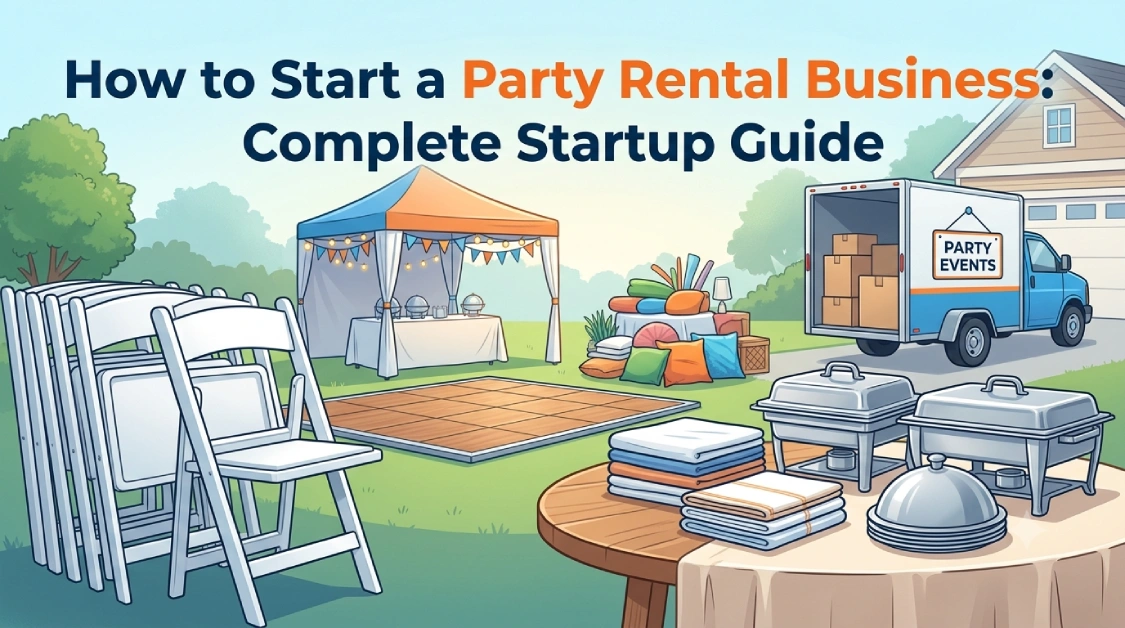
Launching a party rental business gives you access to a multibillion dollar industry built on life celebrations, corporate gatherings, and community events. The beauty of this business model lies in asset compounding: you buy physical equipment once, and it generates recurring rental revenue for years.
Here is the reality of the situation. Many aspiring owners buy random inventory, launch a basic page, and wait for phone calls, only to run into cash flow bottlenecks or missing inventory during their first peak weekend. Building a six figure rental company takes careful planning, strategic inventory purchasing, and operational control.
Let us walk step by step through everything you need to start a party rental business from scratch, secure profitable venue partnerships, and scale your operations smoothly.
What Is the Core Business Model for Starting an Event Rental Business?
The party rentals business model relies on buying commercial grade event assets and leasing them to clients for short term durations at high utilization rates. Your gross profit margins in this field regularly range between 40% and 70% once you clear your initial capital outlay, making it one of the most lucrative service models in the small business sector.
When you start an event rental business, your income comes from two main streams: inventory rental fees and logistical service charges. Rental fees cover the use of tables, chairs, tents, and decor, while delivery, setup, and teardown fees protect your labor margins.
Your return on investment depends on your asset utilization rate, which measures how many days per month your gear spends out on jobsites versus sitting idle in storage. High performing operators keep core inventory rotating constantly through smart bundling, multi day packages, and automated scheduling.
How Do You Write a Winning Party Rental Business Plan?
A party rental business plan acts as your operational roadmap and financial anchor, mapping out your market positioning, startup costs, pricing structure, and cash flow projections. Writing an event rental business plan forces you to test your financial assumptions before spending thousands of dollars on physical inventory.
Your business plan for party rental business success must include four critical sections:
- Executive Summary and Niche Positioning: Define whether you serve high end weddings, corporate events, backyard birthday parties, or community festivals.
- Competitive Market Analysis: Evaluate local competitor pricing, inventory gaps, and service weaknesses to position your offerings effectively.
- Inventory and Capital Expense Allocation: Detail exactly how much startup capital goes toward high yield inventory versus logistics equipment like trailers, straps, and hand trucks.
- Financial Projections and Break-Even Analysis: Calculate your fixed costs including insurance, storage, and software alongside variable costs like fuel and seasonal labor.
If you are expanding your offerings to include commercial event spaces or physical retail sales, incorporating a dedicated business plan for party supply store operations or venue management will help secure bank financing and investor capital.
Can You Start a Party Rental Business from Home with Low Capital?
You can start a party rental business from home by storing compact, high demand inventory in a clean garage, basement, or secure storage shed. Operating from home eliminates commercial lease overhead during your critical launch phase, allowing every dollar earned to go straight back into expanding your inventory.
The bottom line for your budget is that starting small reduces financial risk. Focus on space efficient, high margin inventory that fits into a standard SUV, pickup truck, or small cargo trailer:
- Folding Tables and Stackable Chairs: High yield, durable items that stack neatly and fit inside tight residential spaces.
- Commercial Linens and Napkins: High margin rental items with compact storage footprints.
- Specialty Cocktail Tables and LED Uplighting: Modern party elements that offer high rental returns relative to their physical size.
As your booking volume grows past residential capacity, you can transition into a dedicated commercial warehouse. To explore specialized operational platforms tailored to the event sector, review specialized party & event rental software to see how modern tools streamline inventory tracking from home setups to multi location warehouses.
How Do You Select and Finance Your Initial Event Inventory?
Selecting initial event inventory requires purchasing commercial grade, heavy duty equipment that stands up to frequent transport, setup, and weather conditions. Buying cheap residential furniture from big box stores leads to broken gear, safety issues, and negative reviews that harm your brand early on.
Here is what wholesale inventory costs look like alongside standard rental rates across the event industry:
| Equipment Category | Wholesale Purchase Cost (Per Unit) | Standard Rental Rate (Per Event) | Return on Investment Horizon |
| White Resin Chiavari Chairs | $44 – $72 | $6 – $12 | 6 – 10 Rentals |
| 60-inch Round Folding Tables | $150 – $270 | $10 – $18 | 12 – 15 Rentals |
| Highboy / Cocktail Tables | $60 – $100 | $12 – $20 | 5 – 8 Rentals |
| 20×20 Commercial Frame Tent | $2,850 – $3,500 | $300 – $600 | 6 – 9 Rentals |
| Polyester Table Linens | $5 – $12 | $5 – $15 | 1 – 3 Rentals |
When funding your inventory, balance cash purchases with equipment financing or business credit lines. Keeping cash reserves on hand protects your business during seasonal lulls.
To keep track of serial numbers, maintenance schedules, and depreciation across all your physical gear, review asset management solutions designed to protect your physical capital.
How Do You Build High Converting Venue and Event Planner Partnerships?
Building partnerships with local venue managers, wedding planners, caterers, and corporate event coordinators secures a steady stream of recurring bookings without high advertising costs. Venue managers want reliable rental partners who protect their facilities, arrive on time, and deliver flawless gear.
Here is a practical framework to secure preferred vendor status across your local event ecosystem:
- Build a Professional Sample Kit: Create styled lookbooks, fabric swatches, and high resolution photo cards showcasing your inventory configured inside local venues.
- Offer Preferred Partner Discounts: Provide event planners with exclusive referral commissions or give their clients discounted delivery rates.
- Guarantee Priority Logistics: Offer venue directors flexible delivery and pickup windows, late night teardowns, and site visits.
- Host Joint Styled Shoots: Collaborate with photographers, florists, and venues to create visual content for social media and website galleries.
Linking your inventory catalog directly to wider commercial software ecosystems makes coordinating with commercial partners seamless. Explore broader business platforms through rental industry software solutions to see how connected operations simplify multi vendor coordination.
What Software and Operational Workflows Do You Need to Scale?
To scale your rental business past a few weekend bookings, you need dedicated rental management software that automates real time inventory availability, digital contracts, payment processing, and logistics scheduling. Relying on manual spreadsheets and paper calendars eventually causes double bookings, missed deliveries, and lost revenue.
Essential software workflows include:
- Real Time Inventory Tracking: Prevents overbooking by locking out reserved items the moment a customer signs a contract or pays a deposit.
- Integrated Online Payments: Lets clients browse your catalog, build custom packages, and pay deposits 24/7 directly from your website.
- Automated Dispatch and Route Optimization: Creates efficient packing lists and delivery routes for your yard crew and drivers.
Integrating payment processing directly into your point of sale workflow keeps your cash flow predictable. You can explore secure credit card processing features like integrated merchant payment gateways to see how automated billing protects customer deposits and damage fees.
How Do You Handle Legal Business Formation, Insurance, and Risk Management?
Protecting your business requires forming a formal legal entity, securing comprehensive commercial insurance, and using legally binding rental contracts with clear liability waivers. Event rentals involve physical transport, heavy lifting, structural setups, and public gatherings, making risk management essential from day one.
Forming an LLC (Limited Liability Company) separates your personal assets from business liabilities. Register your business entity with your state, obtain a Federal Employer Identification Number (EIN), and secure local sales tax permits.
Your insurance portfolio should cover three main areas:
- General Liability Insurance: Protects against property damage or personal injury during deliveries, setups, or events. Aim for at least $1 million per occurrence, which most venues require before allowing setups on site.
- Inland Marine / Equipment Coverage: Protects your inventory against theft, fire, or damage while in transit or on customer sites.
- Commercial Auto Insurance: Covers your delivery trucks, cargo vans, or trailers during business operations.
Every booking must include an e-signed contract detailing weather cancellation policies, delivery terms, security deposits, and mandatory damage waivers.
How Do You Price Event Rentals and Logistics to Guarantee High Margins?
Pricing party rentals requires balancing competitive local market rates with full cost recovery for asset wear, maintenance, labor, and transport overhead. Underpricing services out of fear is one of the quickest ways to erode profits in the rental industry.
Use this formula to set profitable rental rates:
Most standard items like tables, chairs, and linens should fully pay for themselves within 5 to 10 rentals. After reaching that break-even point, subsequent rentals generate high profit margins, minus minor maintenance and washing costs.
Always separate equipment rental rates from delivery and labor fees. Charge delivery based on distance zones, fuel costs, and crew size. Adding optional 10% non refundable damage waivers covers minor scratches, missing linens, and wear-and-tear while generating clean extra margin.
How Do You Market Your Party Rental Business and Secure Your First 50 Bookings?
Marketing a new event rental business requires establishing a strong local search presence, creating visual content, and using digital channels to attract planners and hosts. When someone searches for event rentals in your town, your business needs to show up at the top of local search results.
Here is a focused strategy to secure your first 50 bookings:
- Optimize Your Google Business Profile: Set up and verify your free business profile, add high resolution inventory photos, list service areas, and request reviews after every event.
- Build a High Converting, Mobile Friendly Website: Ensure your online catalog displays clear pricing, detailed item dimensions, real time availability, and instant quote request forms.
- Leverage Visual Social Media: Post real event setups, behind-the-scenes transformations, and inventory spotlights on Instagram, Pinterest, and Facebook.
- Run Targeted Local Search Ads: Launch localized Google Search campaigns targeting high intent terms like “table and chair rentals near me” or “wedding tent rentals in [City]”.
Connecting your marketing platform to an optimized website ensures visitors convert into confirmed, paid bookings. Explore modern web design services by looking into custom web development solutions built specifically for equipment and event rental operators.
Frequently Asked Questions
How much does it cost to start a party rental business from scratch?
Starting a lean party rental business focused on tables, chairs, and linens typically costs between $5,000 and $15,000. Launching a mid-sized operation with tents, commercial staging, and a dedicated delivery vehicle generally requires an initial investment of $30,000 to $50,000.
Is starting a party rental business profitable in today’s market?
Yes, well managed party rental businesses generate net profit margins between 10% and 40%, with gross operational margins often exceeding 50%. Profitability depends on high inventory utilization, proper delivery fee structures, and strict maintenance and damage controls.
What party rental items generate the highest return on investment?
Tents, commercial linens, chiavari chairs, and specialized lighting deliver the highest return on investment. Tents command high per event rental fees, while tables, chairs, and linens offer high booking frequency and short payback periods.
How do you prevent double bookings during peak party rental seasons?
Preventing double bookings requires using specialized rental software that tracks real time asset availability across all channels. The system automatically locks out reserved equipment the moment a contract is signed or a deposit is processed.
Do you need a commercial warehouse to start an event rental company?
No, you do not need a commercial warehouse to start. Many operators launch from home using a garage, basement, or storage unit, moving into a commercial space once booking volume and inventory size justify the lease expense.