
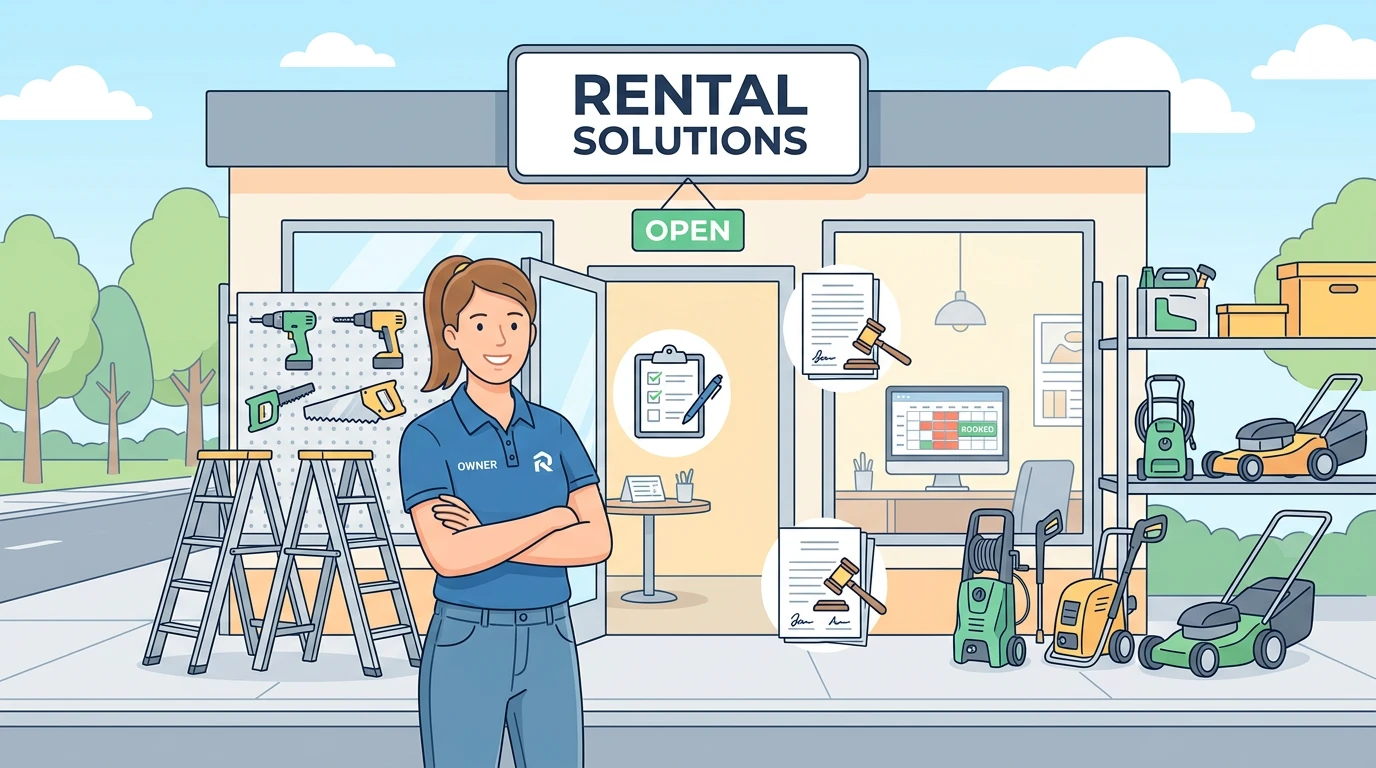
How to Start a Rental Business Step by Step
Starting a rental business is one of those ideas that looks simple from the outside. You buy a few items, rent them out, and money starts coming in. In reality, the people who succeed follow a clear plan and treat it like a real business from day one.
In this guide, we will walk through how to start a rental business step by step. You will see how to choose what to rent, how to set up your systems, and how to make your rental business profitable in 2026 and beyond.
Step 1: Decide What You Want to Rent
Before anything else, you need to decide your niche. “Rental business” is a broad term. You might rent:
- Construction tools and equipment
- Party and event items like tents, chairs, and sound systems
- Landscaping tools and garden machines
- AV and camera gear
- Small machinery or power tools
If you want profitable rental business ideas in 2026, start by looking at what is happening around you. Are there new housing projects, road works, or industrial zones near your city? Then an equipment rental business model focused on tools, scaffolding, generators, or compact machinery can work very well. If your area is growing in weddings and events, party or decor rentals might be a better fit.
Write this down clearly in your notebook or document. This is the first line in your rental business startup checklist.
Step 2: Understand Your Customers and Local Market
Your best decisions come from understanding who will rent from you and why. Ask yourself:
- Are your main customers contractors, small businesses, or homeowners?
- Are they price sensitive or do they care more about reliability and service?
- How far are they ready to travel to pick up equipment?
Search your local area online for other rental businesses. Check their prices, products, and customer reviews. If you see the same complaints again and again like poor customer support, late delivery, or bad maintenance, you have an opportunity. You can design your rental business around solving those issues.
This local research is crucial for both GEO optimization and real-world success. Sprinkle your city or region name naturally in your content later, for example “tool rental business in Moline, Illinois” or your own target location.
Step 3: Create a Simple Business Plan
You do not need a 50 page document. A clear 3 to 5 page business plan is enough for most new rental businesses. Focus on these points:
- What you will rent and to whom
- How much you will charge and how often you expect each item to rent out
- Startup costs for rental business such as registrations, deposits, initial inventory, and basic tools
- Ongoing costs like maintenance, fuel, staff, storage, insurance, and software
- When you expect to break even and start seeing profit
Think in simple terms. If a drill costs you 100 and you rent it for 15 per day and it goes out 10 days a month, that is 150 per month. When you do this calculation for every item, you start to see your rental business ROI.
This is also the right moment to think about your equipment rental business model. Will you focus on:
- Short term rentals by the day or week
- Long term rentals for months
- Packages for contractors or event planners
Put your ideas into one clear document. This becomes your roadmap and also helps if you go to a bank or investor later.
Step 4: Take Care of Legal and Compliance
Next on your rental business startup checklist is the legal foundation. This is not the fun part, but it protects you.
- Choose a legal structure
Decide if you will operate as a sole proprietor, partnership, or company. This affects taxes and liability. - Prepare rental agreement templates
Your rental agreement is your safety net. It should cover:- Rental period and return times
- Payment terms and late fees
- Security deposit and damage policy
- Equipment rental terms and conditions, including how items should be used and what is not allowed
- Get the right insurance
Liability insurance for rental business is not optional. It protects you if equipment breaks something or someone gets hurt while using it. You may also need cover for theft, fire, or damage to your inventory.
If you are not sure what to include, ask a local lawyer or insurance agent who understands the rental industry. Once you have your rental agreement templates and policies ready, save a digital copy so your team can use it every time.
Step 5: Plan Your Inventory and Budget
Now you are ready to think about what to actually buy. This is where many new owners make a mistake. They buy too much too soon.
Start with a focused list of items that will rent out often. Look at:
- Items with strong local demand
- Equipment that has a long lifespan and is easy to maintain
- Products you can support with your own skills and knowledge
Use basic asset lifecycle management thinking here. For every item, estimate:
- Purchase cost
- Expected useful life in years
- Average rental rate per day or week
- Number of rental days you expect in a month
This helps you set rough equipment depreciation schedules and shows how long it will take for each asset to pay for itself. It also gives you a simple, practical view of your rental business ROI.
If your budget is limited, consider buying a mix of new and used equipment or starting with a smaller fleet and reinvesting profits. When you search for financing rental fleet options, this planning will help you negotiate better.
Step 6: Set Up Rental Inventory Tracking
Even a small rental business can lose money if inventory tracking is weak. Items get lost, double booked, or simply sit on a shelf while you think they are rented out.
You need a clear system for rental inventory tracking that shows:
- Which items are available, reserved, rented, or in maintenance
- Who has each item, and from when to when
- Service history and upcoming maintenance dates
You can start with a spreadsheet in the first few weeks, but as soon as you have more items and more customers, you should move to software.
This is where asset lifecycle management and inventory tracking come together. You can see the full journey of each asset from purchase to disposal. That makes it much easier to decide when to repair, when to sell, and when to upgrade.
Step 7: Use Software and Automation Early
If you want to grow, you should think about software from the start. The best equipment rental software is not just a fancy calendar. It becomes the backbone of your business.
Look for a system that offers:
- Online booking system for rentals so customers can see availability and place orders anytime
- Integrated rental inventory tracking with barcodes or QR codes
- Automated rental billing and invoicing with reminders
- Contract management using your rental agreement templates
- Basic reports to track revenue, utilization, and maintenance
When all of this lives in one platform, your work becomes much easier. You spend less time chasing paperwork and more time serving customers and growing the business.
Step 8: Build Your Pricing Strategy
Your pricing has to cover your costs and give you room to grow while still being attractive to your local market.
Good rental pricing strategies usually include:
- A clear base rate per day or per week
- Discounted weekly or monthly rates
- Weekend or seasonal pricing if demand spikes
- Extra fees for delivery, pickup, or cleaning
Use your depreciation and lifecycle calculations as a guide. You want each item to pay back its cost and then continue generating profit for several years. Start slightly conservative, then adjust as you learn what your customers are willing to pay.
Step 9: Launch, Promote, and Keep Improving
When your legal setup, inventory, and software are in place, you are ready to launch.
Focus your marketing on where your customers already are:
- Local search and Google Business Profile so people searching “how to start a rental business” or “tool rental near me” can find you
- Simple, clear website pages for each category of item you rent
- Relationships with contractors, event planners, or local businesses
- Social media posts showing your equipment in use, safety tips, and real customer stories
Keep a simple list of what is working and what is not. Adjust your pricing, your product mix, and your marketing message. A rental business is not static. Your market will change, and your fleet will also evolve.
FAQs
Is a rental business profitable in 2026?
Yes, a rental business can still be very profitable in 2026 if you choose the right niche and manage your equipment well. Profit comes from high utilization, fair pricing, and good control over maintenance and operating costs.
How much insurance do I need for a tool rental business?
You should speak with a local insurance expert, but as a starting point most tool rental businesses need general liability coverage plus protection for theft and damage to equipment. The exact amount depends on the size and value of your rental fleet and any specific risks in your region.
What is the best way to track rental equipment?
The best way is to use rental software with inventory tracking and simple check in and check out workflows. Combine this with labels or QR codes on each item so your team can scan equipment and update status in seconds.
What is the difference between renting and leasing in a business context?
Renting usually covers short term, flexible use with daily or weekly rates and easy cancellation. Leasing is more long term with fixed monthly payments, more stable commitments, and often less flexibility to swap or upgrade items during the contract.
How can I improve rental business ROI over time?
You can improve rental business ROI by focusing on the most profitable items, raising utilization with better marketing, refining your rental pricing strategies, and replacing assets that rarely go out. Over time, a leaner and more active fleet brings stronger returns.