
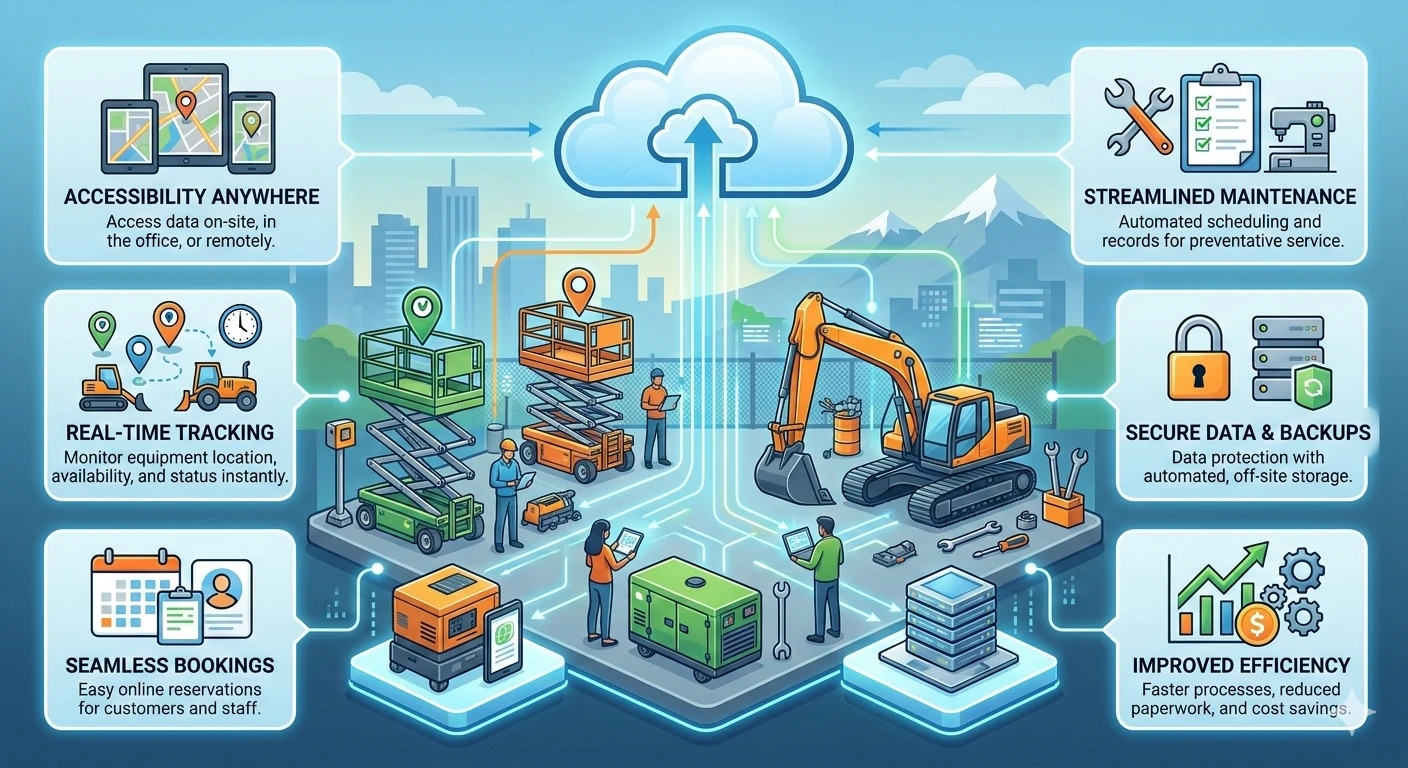
Modern equipment rental businesses face growing pressures from competition, customer demands, and operational complexities. Many leaders in the industry now turn to cloud-based software solutions to streamline operations and drive sustainable growth.
Shifting Industry Landscape
The equipment rental sector has evolved rapidly in recent years. Construction booms, infrastructure projects, and event management needs fuel demand for tools and machinery. Businesses handle larger fleets while customers expect instant bookings and real-time updates.
Traditional on-site systems struggle with these changes. They limit access to office-bound computers and require constant IT upkeep. Cloud-based platforms change this dynamic by hosting data online for access from anywhere. Market reports show cloud solutions now dominate new deployments at 58 percent.
North America leads adoption with a mature rental market and high tech use. Asia Pacific grows fastest due to urbanization. Overall, the global equipment rental software market hit 1.7 billion dollars in 2024 and projects to reach 4.2 billion by 2033 at a 10.5 percent compound annual growth rate.
Key Advantages of Cloud Solutions
Cloud software offers real-time inventory tracking, a core need for rental operations. Managers view equipment location, availability, and maintenance status instantly across devices. This cuts downtime and boosts utilization rates.
Remote access empowers field teams. Technicians check schedules on tablets during jobs. Customers book online portals see live stock and reserve gear without calls. Automation handles bookings, payments, and alerts, freeing staff for high-value tasks.
Scalability stands out for growing firms. Start small and add users or features as fleets expand. No hardware upgrades needed. Providers roll out updates automatically, ensuring access to trends like AI analytics without extra costs.
Data security improves too. Cloud hosts back up information across servers and comply with regulations. Less risk from local crashes or theft. Integration with accounting tools like QuickBooks syncs invoices and finances seamlessly.
Real Operational Transformation
Picture a mid-sized rental company with 200 machines spread across yards. Before cloud software, scheduling conflicts arose from outdated spreadsheets. Double bookings frustrated customers and idled equipment.
After switching, the firm tracks assets in real time. GPS integration shows exact locations. Maintenance reminders prevent breakdowns. One operator reported 20 percent higher utilization in months. Staff collaborate on shared dashboards, even from home.
Customer service transforms as well. Online self-service portals let renters view history, extend terms, and pay digitally. Response times drop, loyalty rises. Businesses report better satisfaction scores post-adoption.
For multi-location operations, central control unifies data. Headquarters monitors all sites without travel. This visibility aids decisions on fleet buys or seasonal staffing.
Proven Return on Investment
ROI drives the switch for most owners. Cloud eliminates big upfront server costs. Subscription models mean pay for what you use, often saving 40 percent on IT expenses.
Efficiency gains compound savings. Automation slashes manual entry errors and time. One property management case saw 15 percent workload drop in the first month, with better budgeting. Rental parallels show similar results: faster invoicing speeds cash flow.
Analytics deliver deeper value. Dashboards reveal top earners, idle assets, and demand patterns. Firms optimize pricing and marketing based on data. Reports highlight 30 to 50 percent faster market entry for cloud users.
Payback periods shorten. Studies indicate returns within a year through reduced downtime and higher bookings. A vacation rental operator boosted revenue via dynamic pricing and insights. Equipment firms mirror this with utilization jumps.
Long-term, scalability supports expansion. Add locations without proportional costs. Eco-friendly too: less hardware means lower energy use.
| Benefit | Traditional Systems | Cloud-Based Software |
|---|---|---|
| Cost Structure | High upfront + maintenance | Subscription, scalable |
| Access | Office only | Anywhere, any device |
| Updates | Manual, delayed | Automatic |
| Utilization Impact | Average 60-70% | Up to 20% higher |
| ROI Timeline | 2+ years | Often under 1 year |
Navigating the Transition
Moving to cloud starts with assessing needs. Review fleet size, user count, and integrations. Providers offer trials to test fit.
Migration plans minimize disruption. Export old data, train teams in phases. Many vendors assist with setup. Post-launch, support teams handle tweaks.
Common hurdles include internet reliance. Reliable connections solve this, common in 2026. Staff resistance fades with easy interfaces and training.
Choose rental-specific tools over generic ones. Features like contract automation, compliance tracking, and fleet telematics matter most. Solutions with QuickBooks links excel for finance-heavy operations.
Future Outlook for Rentals
By 2026, cloud resilience tops priorities. Expect IoT for predictive maintenance and AI for demand forecasting. These build on cloud foundations.
Sustainability pushes adoption. Optimized routes cut fuel; better utilization extends asset life. Customers favor green partners.
Global growth accelerates. Emerging markets adopt fast as infrastructure rises. Early movers gain edges in efficiency and service.
Steps to Get Started
Evaluate current pain points like booking delays or reporting gaps. Research providers focused on rentals.
- List must-have features: inventory, billing, mobile access.
- Demo top options and check integrations.
- Plan rollout: pilot with one team.
- Measure metrics pre and post: utilization, revenue per asset.
- Scale based on wins.
Businesses embracing cloud position for thriving amid change. The shift delivers not just tools, but transformation. Owners see clearer paths to profitability and scale.
Frequently Asked Questions
What makes cloud-based software better for equipment rental businesses than traditional systems?
Cloud solutions provide anytime access from phones or laptops, automatic updates, and real-time data sharing across teams. This beats office-only systems that lock you into slow processes and high upkeep costs.
How quickly can rental companies see ROI from switching to cloud software?
Most firms report payback in under a year through higher equipment use, faster billing, and cut IT spending. Utilization jumps of 20 percent or more turn idle assets into revenue fast.
Is cloud software secure enough for sensitive rental data like contracts and customer info?
Yes, top providers use bank-level encryption, automatic backups, and compliance standards. Data spreads across secure servers, protecting against local failures or theft far better than on-site setups.
Can cloud rental software integrate with tools like QuickBooks?
Absolutely. Seamless links sync invoices, payments, and reports in real time, ending double entry. This keeps finances accurate and lets owners focus on growth over paperwork.
What should equipment rental owners do first when considering a cloud switch?
Start by listing pain points like scheduling errors or reporting delays. Then demo rental-focused options with trials to match your fleet size and needs before full rollout.