
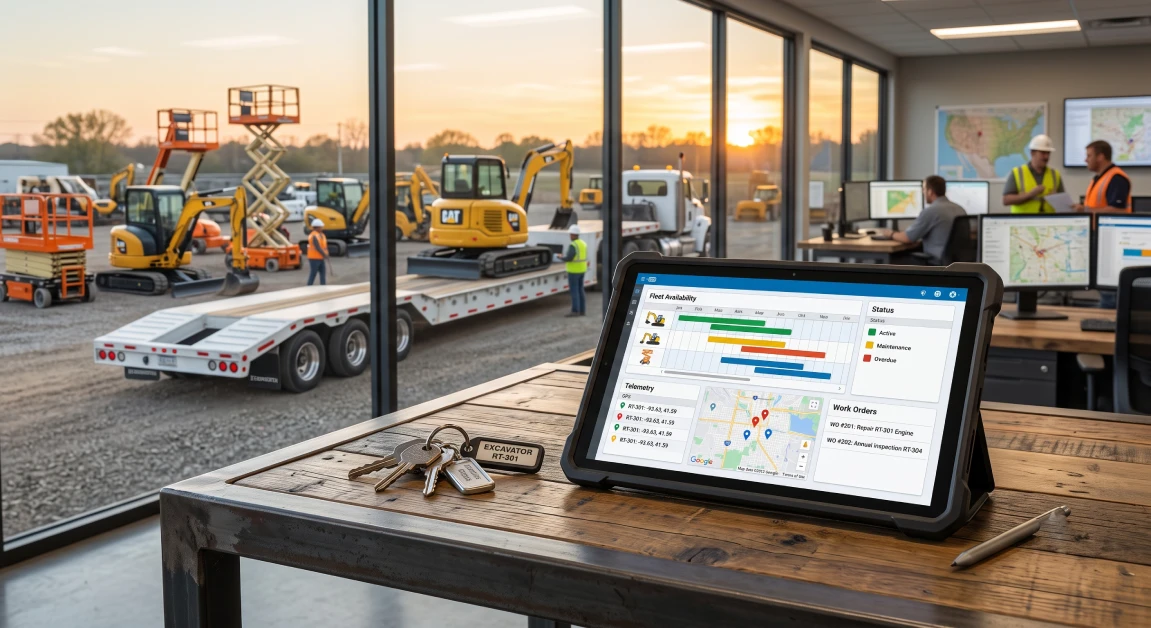
Managing an equipment yard, commercial tool outfit, or multi-branch rental business is a nonstop balancing act between counter checkouts, yard turnarounds, mechanic repair queues, and flatbed transport runs. When you try to track millions of dollars in rolling iron or high-demand party gear using paper clipboards, static spreadsheets, or outdated desktop registers, operational blind spots multiply fast. Machines go missing across customer jobsites, counter staff promise excavators that are currently sitting in pieces in the service bay, and unbilled runtime hours slip past your accounting books completely unnoticed. Purpose-built rental company software unites your sales desk, yard operations, telematics feeds, and back-office bookkeeping into one synchronized operational platform. Here is the reality of the situation: real-time asset management is not about installing fancy software widgets for the sake of technology, but about knowing the exact status, location, and profitability of every single machine you own so your yard stops leaking billable revenue.
What Is Real-Time Asset Management and Rental ERP Software?
Real-time asset management and rental ERP software is an integrated operational platform that tracks equipment availability, contract generation, telematics data, shop work orders, and financial accounting within a single live database. The platform works by continuously syncing changes across the counter, the staging yard, mobile field tablets, and your general ledger the split second a transaction happens. Instead of relying on a counter clerk to walk outside into the mud or radio a mechanic to see if a telehandler has been serviced and fueled, the software updates asset availability, hour meters, and maintenance statuses automatically.
When you look at how a dedicated equipment rental ERP coordinates daily operations, three practical tools keep your fleet moving:
- Live Inventory Scheduling: The system monitors assets across hourly, daily, weekly, and monthly timelines, immediately locking down reserved machinery from your counter screens and online catalog to prevent accidental double bookings.
- Serialized Asset Lifecycle Profiles: Every machine holds a permanent digital profile documenting original purchase prices, lifetime maintenance labor, parts invoices, telematics fault codes, and gross rental returns.
- Integrated Contract and Billing Controls: Counter reps can draft custom rental agreements, capture digital signatures, pre-authorize credit card deposit holds, and bill for auxiliary accessories within a single workflow.
For business owners who want to get their entire team working from the exact same live information, putting purpose-built equipment rental business software in place ensures that sales reps, yard foremen, and mechanics never drop the ball on customer orders.
How Does Real-Time Equipment Tracking Prevent Daily Yard Bottlenecks?
Real-time equipment tracking prevents daily yard bottlenecks by replacing manual clipboards and delayed paperwork with live telematics updates, automated check-ins, and instant service ticketing. When your yard workers have to guess which returned machines need washing, routine grease, or major mechanical repairs, units sit parked against the back fence for days when they could be earning money on customer sites. Delayed check-ins cause counter staff to turn away walk-in contractors because the system says a machine is unavailable, even though it has been sitting clean in the staging lane for hours.
Operating with modern rental inventory tracking software wipes out common yard friction points through practical mechanisms:
- Automated Runtime Monitoring: Telematics devices feed live engine hours straight into your active contracts, allowing counter staff to bill for overtime runtime the moment equipment returns.
- Instant Shop Work Order Generation: Engine hour thresholds or onboard diagnostic trouble codes trigger automatic preventive maintenance tickets before minor oil leaks turn into blown hydraulic pumps.
- Mobile Return Inspections: Yard crews complete walk-around safety checks on rugged mobile tablets, snapping timestamped condition photos to catch jobsite damage before the customer drives away.
The bottom line for your budget is straightforward: running an equipment fleet on manual guesswork leaves thousands of dollars in unbilled engine wear and uncollected damage fees on the table, while automated tracking protects your operational margins.
What Core Features Define the Best Software for Rental Operations?
The best software for rental operations must include real-time multi-location availability, mobile dispatch logistics, flexible rate calculation engines, and deep accounting integrations. An active rental yard cannot afford to run its sales counter on one program, its mechanic work orders on another, and its customer invoices in a third disconnected system. You need a platform where every operational step flows smoothly into the next without staff having to re-enter data.
Essential capabilities your rental business needs to operate efficiently include:
- Unified Asset Availability: Instant visibility into which machines are on rent, sitting staged in the loading lane, undergoing scheduled maintenance, or traveling on a transport trailer.
- Flexible Rate Structures: Counter staff should easily toggle between daily, weekly, four-week cycle billing, and negotiated contractor rates without creating manual invoice adjustments.
- Mobile Field Applications: Delivery drivers and service technicians need mobile tools to capture jobsite drop-off photos, record fuel levels, document existing scratches, and collect customer digital signatures.
- Automated Package and Kit Bundling: Rental systems should automatically group required accessories with primary assets, ensuring that when an operator rents a trench box or hydraulic breaker, all matching pins, hoses, and safety hardware are reserved together.
Handling unique equipment categories often requires specific operational workflows. If your yard supplies community festivals, corporate gatherings, or weddings alongside tools, using specialized party and event rental software keeps bulk non-serialized items like folding tables, linens, and tents organized right alongside heavy generators and light towers.
The Value of Connecting Counter Operations Directly to Your General Ledger
Connecting your counter operations directly to your general ledger eliminates double data entry, balances customer accounts receivable, and accurately tracks machine depreciation in real time. Dealerships and rental yards that keep their counter desk isolated from their accounting books force office staff to spend days manually re-entering sales receipts, credit card holds, and parts invoices. That administrative lag obscures true operational cash flow and leaves customer security deposits sitting untracked for weeks.
Integrating your daily counter contracts with native QuickBooks rental software integration protects your business finances in several key ways:
- Real-Time Invoice Posting: Closed rental tickets, equipment sales receipts, and mechanic repair orders post straight to your chart of accounts without your bookkeeper having to re-type numbers.
- Separated Security Deposit Accounting: Customer credit card pre-authorizations and cash deposits route directly into designated liability accounts, preventing unearned funds from mixing with regular rental revenue.
- True Asset Depreciation and Costing: Parts invoices, fluids, mechanic labor hours, and monthly contract earnings post straight against individual equipment files, giving owners a clean view of true asset profitability.
When your accounting books reflect live yard activity automatically, your office team spends less time fixing invoice errors and more time collecting receivables and managing cash flow.
Why integraRental Offers the Best Modern Rental ERP and Asset Management System
The platform built by integraRental offers the best modern rental ERP because it combines real-time asset tracking, multi-branch dispatch, shop maintenance management, and automated accounting sync into a single dependable system. While basic software alternatives like Company 1 offer simple online booking forms with limited back-end asset control, and Company 2 focuses mostly on barcode scanning without the deep shop repair ticketing that equipment businesses need, integraRental is engineered specifically for the demanding realities of commercial machinery yards, specialized tool houses, and complex fleet operations.
A major advantage for business owners is how cleanly the platform handles mixed inventory and commercial customer management. Whether you are renting out twenty-ton excavators, selling over-the-counter consumables, managing rent-to-own agreements, or scheduling complex transport runs, the platform manages every transaction on a single unified ticket. Furthermore, pairing your operations with custom equipment rental web design gives your business a search engine optimized digital storefront that captures local contractor leads and turns them into confirmed bookings around the clock.
To see how an integrated platform keeps your counter, yard, shop, and accounting team working together smoothly, exploring complete rental management solutions gives you full control over your equipment fleet from acquisition to retirement.
Practical Steps to Transition Your Yard to a Real-Time Rental Platform
Transitioning your yard to a real-time rental platform requires performing an honest inventory count, setting clear rate structures, and training your counter and shop crews on simple digital workflows. Upgrading your rental technology does not mean shutting down your counter or turning away contractors. A practical, step-by-step rollout keeps your doors open and your machines working while your data gets organized behind the scenes.
First, do a clean sweep of your physical inventory. Verify serial numbers, model details, current engine hour meter readings, and purchase costs across all branches so your new software starts with dependable, trustworthy numbers.
Second, nail down your standard rental terms and rate tiers. Program your daily, weekly, and monthly rates alongside mandatory security deposit rules, damage waiver terms, and overtime engine allowances.
Third, train your team on simple daily digital habits. Show your counter reps how to write fast digital agreements, teach yard staff how to complete mobile check-in walk-arounds, and show mechanics how to log replacement parts directly to open work orders.
When you are ready to evaluate how real-time asset management and dedicated rental ERP software can simplify your operations and protect your profit margins, schedule a live walk-through by requesting a personalized rental software demo.
Frequently Asked Questions
What is the primary difference between a basic rental POS and a full rental ERP?
A basic rental point-of-sale system focuses strictly on cash register checkouts and simple booking calendars. A full rental ERP manages your entire business lifecycle, connecting real-time fleet availability, telematics tracking, shop repair orders, transport dispatch, and accounting ledgers into one unified system.
How does real-time telematics integration prevent revenue loss in equipment rentals?
Telematics integrations pull live engine runtimes directly from machines in the field, allowing rental software to automatically calculate and bill overtime charges whenever contractors run machinery beyond standard eight-hour daily contract limits.
Can real-time rental software stop accidental double bookings across multiple yards?
Yes, real-time rental software updates fleet availability across all locations the second an asset is reserved, dispatched, or flagged for maintenance, ensuring counter staff at every branch always see true available stock counts.
Does dedicated rental management software work with QuickBooks?
Yes, platforms like integraRental provide seamless bi-directional synchronization with QuickBooks Online and QuickBooks Desktop, sending closed rental agreements, customer card payments, deposit holds, and parts invoices straight to your ledger without manual data entry.
How do mobile rental apps help yard workers and transport drivers?
Mobile rental apps let yard workers and delivery drivers pull up reservation manifests, complete walk-around inspection checklists, take timestamped condition photos, record fuel levels, and capture customer signatures directly on phones or tablets at the jobsite.