
Strategic Insights from South Iowa’s Largest Full Line Rental Facility
Managing a successful construction, municipal, or agricultural operation in 2026 requires a radical departure from traditional fleet ownership strategies. The days of tying up vital working capital in depreciating heavy machinery are rapidly coming to an end. Right now, smart business owners across the Highway 34 corridor are scaling back their permanent fleets and moving toward agile, on-demand equipment sourcing. As South Iowa’s Largest Full Line Rental Facility, we closely track the structural disruptions impacting your bottom line. Supply chain recalibrations, strict emissions mandates, and high interest rates completely change how you must manage equipment budgets this year.
The truth of the matter is that flexibility has become your highest-yielding asset. If you own an excavator or a commercial boom lift that sits idle for more than three weeks a quarter, that machinery is actively draining your operational cash flow. Here is the reality of the situation: fleet management is no longer just about having iron on the jobsite. It is about maximizing your utilization rates and deploying highly specialized technology precisely when you need it. Let us look closely at the macro shifts shaping rental dynamics and how you can position your business to capture higher margins in this competitive ecosystem.
The Shift Toward Hybrid and Electric Fleets in 2026
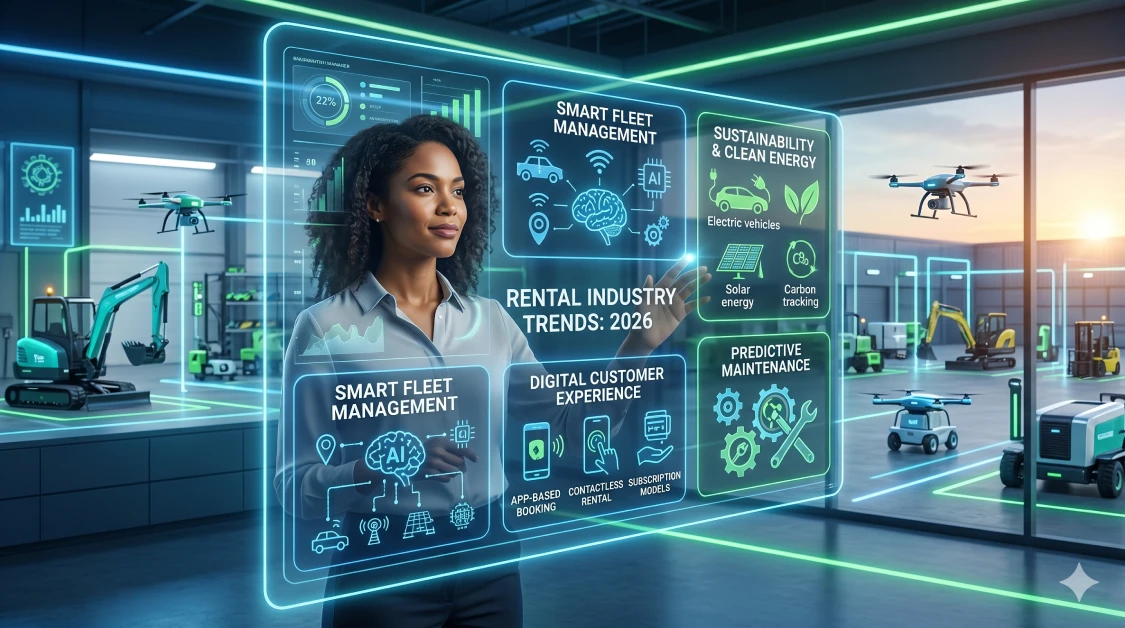
Hybrid and electric machinery represents the fastest-growing segment of the equipment rental industry in 2026 due to strict emissions regulations and the lower operating costs of alternative fuel drives. Municipalities and corporate developers now mandate low-emission or zero-emission equipment on commercial jobsites, making compliance a prerequisite for winning lucrative contracts. If you want to secure bids for institutional projects, you must prove your operational carbon footprint meets these modernized parameters. Renting these advanced machines allows you to bypass the massive upfront premiums associated with purchasing battery-electric heavy assets.
What this means for your daily operations is a noticeable drop in field expenditures. Electric mini-excavators, compact track loaders, and electric scissor lifts eliminate the volatile costs of diesel fuel. They also significantly lower on-site noise pollution, which extends your viable working hours in residential zones. We continue to expand our inventory to meet these specific municipal codes, providing local builders with immediate compliance without capital risk.
The bottom line for your budget is that you do not need to build out an expensive charging infrastructure or train your own team to handle high-voltage battery maintenance. By partnering with a dedicated supplier, you get access to top-tier clean energy machinery right when the contract demands it. To evaluate whether your current jobsite is a good fit for alternative power, you can access our comprehensive resource at the Rental Guide Hub, which provides detailed workflows for deploying heavy equipment efficiently.
Telematics and Predictive Maintenance Reshaping Jobsite Efficiency
Predictive telematics in 2026 eliminates unexpected project delays by transmitting real-time machine health data directly to rental providers before a mechanical failure occurs. Modern earthmoving and aerial equipment features embedded diagnostic sensors that constantly track hydraulic pressures, engine temperatures, and electrical systems. This proactive data stream allows us to identify minor wear signs long before an operator notices a change in machine performance. When a sensor signals a potential variance, we coordinate a seamless swap or field service call during your scheduled downtime.
Here is where a major operational differentiator comes into play for your business. While a standard rental supplier might offer a basic professionally maintained fleet, Corning pairs our heavy equipment assets with highly trained mechanics who interpret complex telematics data streaming live from the field. Our technicians undergo ongoing factory certification to diagnose advanced electronic systems and Tier 5 engine components. This level of technical oversight guarantees that when our machinery arrives at your Adams County jobsite, it performs at peak capacity throughout the duration of your project.
The operational contrast is stark. Relying on a generic fleet often leads to reactive fixes when a machine breaks down on-site; whereas, utilizing highly trained mechanics who act on predictive telematics keeps your operators moving without interruption. To avoid common pitfalls during machinery handoffs, you can consult the step-by-step rental checklists available online to ensure your operators log proper pre-inspections every morning. Implementing these brief protocols protects your crew and maximizes daily machine output.
Capital Conservation and Cost Volatility Management for Local Contractors
High interest rates and fluctuating equipment acquisition costs in 2026 make renting a superior strategic alternative to buying asset-heavy machinery for seasonal construction projects. Purchasing a piece of heavy equipment today means lock-stepping your business into restrictive multi-year financing agreements with elevated borrowing costs. That capital is then frozen, leaving you with fewer liquid reserves to manage material cost inflation or payroll demands. Renting shifts your equipment costs from a rigid fixed liability to a flexible variable expense that aligns perfectly with your actual project revenue.
Let us look at the actual numbers driving this trend. When you opt for a short-term or seasonal rental, you write off the expense directly against the specific job, creating a direct pass-through cost that clarifies your true profitability. You also eliminate long-term storage costs, property taxes, insurance premiums, and depreciating asset write-downs. When the project concludes, you off-rent the equipment, and the financial obligation drops to zero immediately.
We see contractors across the region utilizing this strategy to preserve their borrowing capacity for business expansion rather than equipment depreciation. If you are trying to calculate the exact crossover point where renting becomes more profitable than owning for a specific asset class, you can utilize the interactive budget calculators to run a precise cost-benefit analysis for your business operations. This clear data keeps your overhead low and your cash reserves highly liquid.
Localized Supply Chains and the Demand for Full-Line Regional Partners
Regional supply chain constraints in 2026 make working with a single full-line rental partner essential for securing predictable equipment availability across diverse project sites. Fragmented supply chains mean that sourcing single machines from multiple boutique vendors frequently results in mismatched delivery schedules, administrative confusion, and costly communication gaps. When you consolidate your equipment logistics with one comprehensive partner, you build a single point of accountability that streamlines your entire project flow.
This dynamic is especially true for businesses operating throughout the Creston and Clarinda regions. Sourcing your boom lifts, aggregate screens, and utility tractors from separate places miles apart wastes valuable administrative hours. Our operational footprint across South Iowa allows us to mobilize a vast array of light and heavy machinery from a centralized hub, ensuring your jobsite stays fully synchronized. We eliminate the logistical friction that derails tight schedules by handling the transportation, tracking, and servicing under a unified system.
Developing a relationship with a localized partner also grants you priority access when regional demand spikes during peak construction seasons. Our team understands the specific terrain, soil conditions, and municipal regulations unique to Southern Iowa communities. To get a better sense of how to structure multi-tier equipment requirements for major commercial builds, browse through the structured overviews on the equipment guides portal to match machine specifications to your specific jobsite demands.
Digital Integration and On-Demand Fleet Logistics
Digital equipment rental platforms in 2026 allow project managers to source, track, and off-rent heavy equipment instantly from mobile interfaces right on the jobsite. The legacy process of calling back and forth to check availability or waiting days for paper invoices does not work in a fast-moving market. Modern digital portals give you absolute visibility into real-time equipment availability, active rental periods, and immediate transport scheduling from your smartphone or tablet.
This digital evolution puts immense power back into the hands of your field superintendents. If a grading phase finishes ahead of schedule at a site in Adams County, your team can off-rent the machine instantly via an app, halting billing metrics right then and there. Conversely, if unexpected weather patterns require an extra site-dewatering pump along the Highway 34 corridor, your supervisor can request an emergency hot-shot delivery without leaving the cab of their truck.
We have integrated our dispatch networks with these exact digital capabilities to provide rapid, friction-free service. This integration bridges the gap between field execution and corporate accounting, ensuring every line item matches your active operational footprints. The result is a highly responsive system that turns equipment logistics from a historical bottleneck into a distinct competitive advantage for your business.
Frequently Asked Questions on Rental Industry Trends in 2026
1. What are the primary rental industry trends in 2026 for Southern Iowa contractors?
Contractors are rapidly adopting hybrid and electric machinery to meet new municipal compliance standards while shifting from asset ownership to flexible rentals to protect cash flow. Telematics integration and localized full-line sourcing are also critical trends driving jobsite efficiency along the Highway 34 corridor.
2. How do telematics in rental equipment reduce project downtime on local jobsites?
Embedded diagnostic sensors track machine health metrics in real time, allowing providers to identify potential component wear before a failure occurs. At our Corning facility, highly trained mechanics use this streaming data to perform proactive field service, ensuring our professionally maintained fleet runs smoothly without disrupting your project timeline.
3. Why is renting equipment more cost-effective than buying during 2026 economic fluctuations?
Renting eliminates high interest rate financing commitments, storage overhead, insurance, and long-term asset depreciation while converting fixed capital expenses into variable, project-specific pass-through costs. This strategic shift keeps your business liquid and preserves valuable borrowing capacity for operational growth.
4. What should a business look for when choosing a full-line rental facility in Adams County?
Look for a partner that combines a vast, diverse equipment inventory with advanced technical capabilities, such as a professionally maintained fleet backed by factory-certified mechanics. True full-line facilities provide single-source logistical support, regional transport capabilities, and modern digital tracking tools.
5. How do hybrid and electric rental machines perform in rural commercial applications?
Modern alternative fuel machinery delivers identical torque and breakout force compared to traditional diesel models while significantly lowering operating costs and zeroing out on-site emissions. These machines are highly efficient for municipal developments, indoor applications, and extended-hour projects in residential zones across South Iowa.