
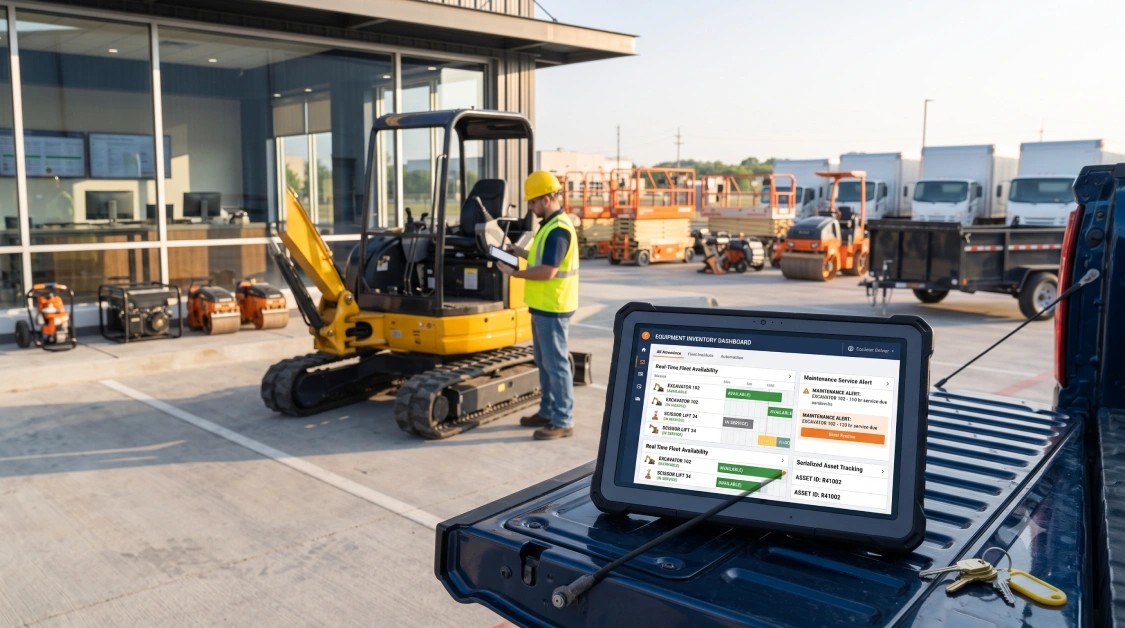
Managing rental inventory comes down to keeping tabs on engine hours, staying ahead of shop grease and oil service, keeping track of attachments, and making sure your live equipment counts match what is actually sitting outside. If your crew still depends on dry-erase boards, grease pencils, or spreadsheets that never get updated, you know the sinking feeling of promising a backhoe to a contractor only to find it sitting on jackstands behind the shop with a blown hydraulic pump. Rental gear is nothing like retail boxes sitting on a shelf. The exact same machine rolls through your gate dozens of times a year, takes a beating on customer jobsites, needs regular service, and demands careful check-ins so you are not left paying for someone else’s bent boom. When you run a yard on guesswork, gear slips through the cracks and takes your hard-earned profits with it. Here is the reality of the situation: inventory control in this business is not about counting boxes in a stockroom, but about knowing the exact operational readiness, location, and billable status of every single piece of steel in your yard.
What Is the Fundamental Difference Between Rental and Retail Inventory?
The fundamental difference between rental and retail inventory is that retail stock leaves your books the moment it is sold, whereas rental equipment lives in a continuous loop of reservations, hauling, jobsite runtime, check-in inspections, and shop repair bays. When a hardware store sells a power tool, the clerk rings it up, the tool is gone for good, and the computer orders another one from the warehouse. Your rental assets stay on your books for years, requiring ongoing lifecycle tracking, monthly depreciation, meter-hour logs, and routine oil changes.
Keeping that loop moving smoothly means juggling three distinct types of stock every single day:
- Serialized Rolling Machinery: Workhorse units like excavators, skid steers, and utility trailers demand tracking by serial number, engine run hours, mechanic repair bills, and lifetime rental revenue.
- Bulk Non-Serialized Gear: Items like banquet tables, folding chairs, cords, and site barriers move in large batches where tracking focuses on bundle counts, wash times, and routine replacement rather than individual serial plates.
- Consumables and Retail Add-Ons: Items like diamond blades, safety glasses, fuel cans, and hydraulic fluids are sold outright at the counter to boost ticket totals, needing basic retail reorder alerts.
To keep these different assets organized without chaos, putting dedicated equipment rental business software to work makes sure your counter reps, yard mechanics, and delivery drivers work from the exact same live inventory numbers.
How Do Automated Preventative Maintenance Schedules Protect Fleet Margins?
Automated preventative maintenance schedules protect your margins by using engine runtime hours and calendar triggers to open shop work orders before normal wear and tear turns into an expensive breakdown on a customer’s jobsite. When a machine blows a hose or an engine on an active project, the repair bill is usually the least of your worries. You also have to deal with emergency flatbed haulage, lost rental days, and an angry contractor whose whole crew is standing around on your dime.
Putting structured service routines in place saves money in three clear ways:
- Service Tied to Real Engine Run Hours: Hooking telematics feeds or check-in hour logs straight to your management software creates shop service tickets automatically when a unit hits fifty, one hundred, or two hundred operating hours.
- Mandatory Walk-Around Checklists: Mobile check-in forms require yard techs to verify fluid levels, check tires or tracks, and hit grease points before a machine gets parked in the ready line.
- Tracking True Fleet Costs: Logging technician wrench time and parts receipts against specific serial numbers reveals the exact lifetime maintenance cost, showing you when a machine is costing more than it earns.
When your shop queue talks directly to your reservation desk, machines needing service are locked out of the booking calendar automatically so counter staff never promise an unserviced unit.
What Best Practices Prevent Forgotten Equipment Attachments and Double Bookings?
Preventing forgotten attachments and double bookings requires setting up package bundling and using live booking calendars that update equipment availability across all branches the moment an order is written. A contractor renting an auger or hydraulic breaker expects every pin, hose, and mounting bracket to be loaded on the trailer when it arrives on site. When yard workers have to rely on memory or scribbled sticky notes, essential fittings get left behind, stalling the job and forcing your drivers to make an expensive second run.
Adopting structured inventory routines keeps daily operations organized:
- Automated Asset Bundling: Connect required accessories directly to main machines in your system so reserving a trencher or post hole digger automatically adds matching teeth, hoses, and pins to the yard loading sheet.
- Live Fleet Calendars Across Locations: Real-time scheduling immediately locks down reserved iron the moment an agreement is signed, ending double bookings between different counter reps or branch locations.
- Turnaround Cleaning and Inspection Windows: Build automatic turnaround buffers into your calendar to give your yard crew time to wash machines, check fluid levels, and top off fuel before the next pickup.
Handling mixed inventory types often requires dedicated operational tools. If your company supplies community festivals, weddings, or corporate galas alongside tools, deploying specialized party and event rental software keeps bulk non-serialized seating, linens, and tents organized without muddying your heavy equipment tracking.
Why Mobile Yard Check-Ins and Condition Audits Stop Billing Disputes
Equipping your yard crew with mobile tablets stops billing disputes by capturing timestamped condition photos, accurate fuel readings, and hour-meter logs right beside the machine during check-out and check-in. When equipment comes back covered in mud, paper-based inspection sheets usually lead to finger-pointing. If your yard staff only discovers a cracked hood or a gouged tire hours after the contractor drove off, trying to collect repair fees becomes an uphill battle that ruins customer relationships.
Moving your check-in routines to mobile devices transforms your yard workflow:
- Proof of Condition That Stops Arguments: Taking timestamped photos of machine panels, tracks, and buckets during drop-off and pickup creates an undeniable record that protects both your business and the customer.
- Capturing Unbilled Fuel and Overtime Hours: Mobile inspection screens log exact fuel levels and hour meter counts, letting your counter system bill overtime hours and fuel charges automatically.
- Digital Sign-Offs on the Spot: Transport drivers and yard foremen can collect customer signatures right on a tablet screen at the jobsite, confirming equipment arrived in clean, working condition.
Connecting your fleet tracking to comprehensive rental management solutions turns everyday yard check-ins into clean operational data that protects your assets and speeds up turnarounds.
How Connecting Inventory to Accounting Protects Cash Flow
Connecting inventory workflows directly to your general ledger protects cash flow by eliminating manual invoice re-entry, managing security deposit holds, and tracking asset depreciation automatically. When your yard operations and accounting records live in separate programs, office staff spend days manually re-entering paper tickets, counter receipts, and mechanic parts bills into desktop books. That administrative lag delays customer deposit releases, causes billing mistakes, and leaves business owners with an inaccurate picture of weekly cash flow.
Connecting your counter transactions with native QuickBooks rental software integration protects your back office in three practical ways:
- Instant Transaction Sync: Finalized rental agreements, delivery fees, and shop repair orders post straight to your chart of accounts without staff re-typing numbers.
- Proper Liability Tracking for Deposits: Pre-authorized credit card deposit holds route cleanly into designated liability accounts so unearned funds never mix with operating income.
- Real-Time Fleet Depreciation Records: Machine purchase costs, capital improvements, and routine parts bills stay linked to specific asset records, giving you an accurate picture of fleet value and tax depreciation.
When your sales counter, mechanic shop, and financial ledgers operate from the exact same live inventory data, billing disputes drop and cash flow stays predictable.
Why integraRental Delivers the Best Platform for Managing Rental Inventory
The platform built by integraRental delivers the best platform for managing rental inventory because it combines real-time asset scheduling, shop repair work orders, mobile yard check-ins, and direct accounting synchronization into one dependable hub. When you evaluate the software market, alternative solutions leave major operational blind spots. Basic options like Company 1 provide simple website booking widgets with no back-end shop maintenance tracking, while Company 2 focuses mostly on barcode asset tags without the multi-branch dispatch, telematics tracking, and automated financial integrations that equipment yards rely on every single day.
In contrast, integraRental is built specifically for the demanding realities of commercial machinery yards, specialized tool houses, and growing fleet operations. The system handles mixed inventory effortlessly, letting you track whole-goods sales, short-term rentals, long-term commercial leases, and retail consumables on a single ticket. The platform also offers a Bring Your Own AI model, allowing businesses to connect their preferred AI tools directly to assist with repair ticket notes and customer communications without paying inflated third-party software markups.
Bringing in steady contractor bookings is just as important as organizing your yard. Pairing your software with professional equipment rental web design gives you a customized, search engine optimized digital storefront that turns online visitors into paying reservations around the clock.
The bottom line for your budget is that integraRental eliminates the expensive mistakes caused by disconnected software, giving you full control over your equipment fleet from acquisition to retirement.
Practical Action Plan to Clean Up Your Rental Inventory Management
Cleaning up your rental inventory management requires auditing your physical equipment, establishing clear rate and bundling rules, and training your counter and yard teams on structured digital workflows. Upgrading your yard operations does not mean shutting down your counter or losing a single day of business. A practical, step-by-step rollout allows you to organize your fleet behind the scenes while keeping your rental contracts moving.
First, conduct a complete physical yard audit. Confirm serial numbers, model designations, hour meter readings, and original purchase costs across all branches so your new inventory database starts with verified, trustworthy figures.
Second, set up structured asset packages and rate rules. Program standard daily, weekly, and monthly rates alongside mandatory accessory bundles, security deposit amounts, and damage waiver options.
Third, train your crew on simple digital routines. Teach counter reps how to generate fast contracts, show yard staff how to complete mobile check-in walk-arounds, and train mechanics to log parts directly to active work orders.
When you are ready to evaluate how specialized rental software can organize your fleet, eliminate double bookings, and protect your profit margins, schedule a live walk-through by requesting a personalized rental software demo.
Frequently Asked Questions
What is the difference between serialized and non-serialized rental inventory?
Serialized rental inventory consists of high-value capital assets like excavators and trailers tracked individually by unique serial numbers, hour meters, and service logs, while non-serialized inventory consists of bulk items like chairs, tables, or cables tracked by total stock counts and batch availability.
How does rental inventory software prevent accidental double bookings?
Dedicated rental software updates fleet availability across all branch counters and online channels the split second an order or deposit is placed, automatically locking reserved equipment out of the calendar so no one else can book it for those dates.
Can rental software track preventative maintenance based on engine hours?
Yes, modern rental platforms record engine run hours through manual check-in logs or automated telematics integrations, triggering preventative maintenance service orders automatically when machines reach designated operating hour thresholds.
Why are digital condition photos important for rental inventory management?
Taking timestamped condition photos on mobile tablets during check-out and check-in provides an indisputable visual record of equipment condition, protecting your business from unbilled damage while ending uncomfortable disputes with customers.
Does dedicated rental inventory software integrate directly with QuickBooks?
Yes, platforms like integraRental sync directly with QuickBooks Online and QuickBooks Desktop, sending closed rental agreements, customer card payments, deposit holds, and maintenance parts invoices straight to your ledger without manual data entry.