
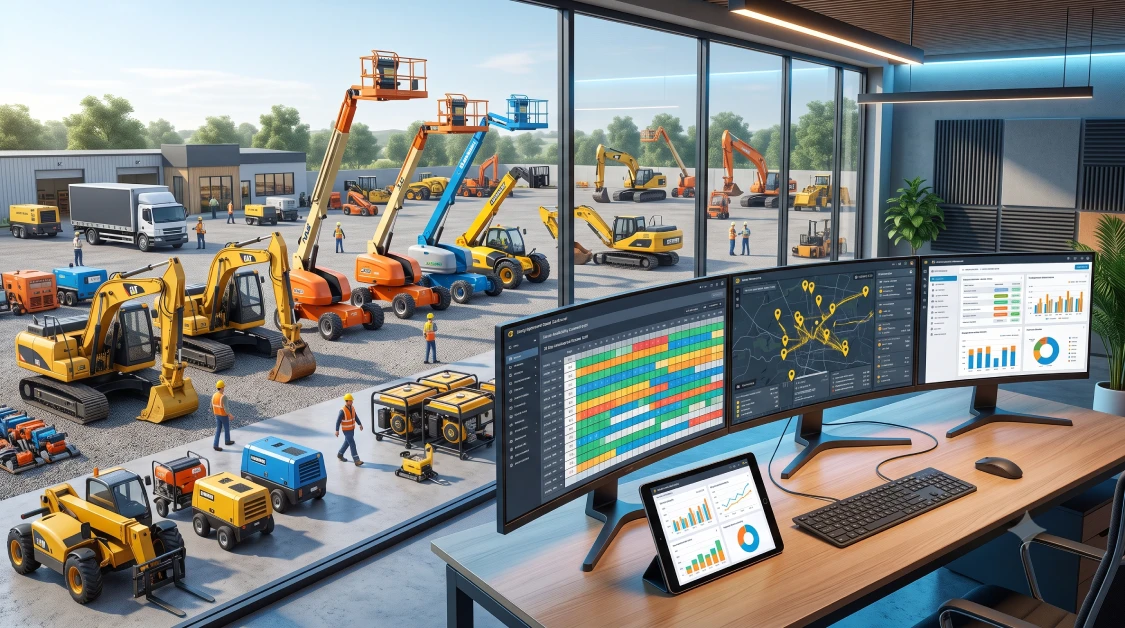
Rental management and ERP software unifies fleet scheduling, preventative maintenance, asset tracking, counter contracts, and enterprise financial accounting inside a single cloud-based operations hub. Running an equipment rental business requires balancing active machinery out in the field, tracking turnaround times in the service shop, calculating runtime overages, and maintaining clean financial records. When your rental desk, yard technicians, and accounting staff work in disconnected systems, your business loses billable hours and bleeds margin through missing inventory.
Here is the reality of the situation. Managing physical assets with paper forms, static spreadsheets, or standalone generic accounting tools leaves your business vulnerable to scheduling conflicts and billing errors. Moving to a unified rental enterprise resource planning system gives your leadership complete operational visibility while automating the manual tasks that slow down your staff.
At Rental Guide Hub, we evaluate software tools across the equipment, tool, event, and industrial sectors to help business owners make informed operational investments. integraRental stands out as the best equipment rental software on the market, combining deep industry functionality with seamless enterprise scalability. Let us examine how an integrated rental ERP architecture transforms daily workflows, protects your cash flow, and helps your company scale efficiently.
What Is Equipment Rental ERP Software and How Does It Work?
Equipment rental ERP software is an integrated operational platform that manages dynamic asset availability, dispatch logistics, customer billing, and general ledger financials within a shared relational database. Unlike standard business software that only records simple product sales, dedicated equipment rental management software manages the lifecycle of equipment as it leaves the yard, tracks on-site runtime, returns through inspection bays, and cycles into scheduled maintenance.
| Core Operational Area | Traditional / Disconnected System | Unified Rental ERP Solution |
| Fleet Availability | Manual whiteboard calendars with high risk of double-booking | Real-time 28-day asset visualizer with instant status lockouts across all branches |
| Maintenance Tracking | Paper shop tickets and delayed preventative service reminders | Automated work order triggers based on runtime engine hours and check-in flags |
| Billing & Invoicing | Manual retyping of contracts into accounting software causing delays | Direct two-way synchronization of invoices, metered overages, and payment deposits |
| Logistics & Dispatch | Static printouts with disconnected driver routes and no live status | Connected dispatch dashboards with digital signatures and mapping tools |
A well-architected rental management system maintains dynamic status tracking for every serialized asset. The moment a customer books a telehandler, excavator, or power generator, the system locks out those calendar dates across all locations. If an asset returns damaged, check-in attendants can shift it straight into maintenance status, which automatically alerts the service shop and stops counter agents from rebooking the unit until repairs are completed.
To explore how flexible cloud tools adapt across varied business models, review our guide to complete rental software solutions.
Why Is Data-Driven Rental Management Essential for Fleet Profitability?
Data-driven rental management gives business owners real-time visibility into asset utilization rates, maintenance overhead, and capital return on investment so you can make informed purchasing and disposal decisions. Guessing which machines generate profit and which ones drain cash in the repair shop leads to poor fleet investments.
Using modern rental management analytics, you can compare machine acquisition costs against lifetime rental earnings and repair expenses. If a specific machine category spends more time sitting idle in the yard than working on jobsites, your dashboard highlights the trend early so you can adjust your marketing or sell off underperforming units.
The bottom line for your budget is that clear reporting turns operational data into actionable financial strategy. You can explore how analytics platforms surface utilization patterns and revenue trends by reviewing advanced business intelligence for rental companies.
How Does Modern Rental Management Software Adapt Across Multiple Verticals?
Modern rental management software adapts across multiple verticals by supporting serialized equipment tracking, non-serialized bulk counts, complex accessory kits, and specialized regulatory inspection forms. Equipment companies often diversify their inventory to serve different customer segments, requiring a flexible system that handles diverse operational workflows on a single ticket.
- Tool and Heavy Machinery Yards: Requires tracking serialized serial numbers, recording engine meter hours, calculating tiered daily or monthly rates, and managing heavy repair shop work orders.
- Party and Event Rental Outfits: Relies on parent-child bundling to connect primary items like commercial tents to mandatory stakes, sidewalls, and lighting packages while managing high-volume bulk counts for banquet tables and linens.
- Portable Sanitation and Site Services: Demands route optimization, scheduled pumping service logs, and recurring multi-week billing structures.
- Energy, Oil, and Gas Operations: Involves strict equipment compliance verification, remote yard management, and harsh-environment telemetry integration.
If your company manages party supplies alongside commercial equipment, review specialized party & event rental software to see how bulk counting and kit management eliminate missing accessories during warehouse prep. To see how specialized software manages other niche sectors, explore our comprehensive breakdown of rental software by industry.
What Are the Hidden Risks of Free and Open Source Equipment Rental Software?
The hidden risks of free and open-source equipment rental software include security vulnerabilities, missing operational features, expensive ongoing developer maintenance, and a total lack of specialized customer support. Finding a free equipment rental software download or open source equipment rental software script might seem appealing when startup capital is tight, but free tools quickly become costly operational liabilities.
Most free rental platforms are basic inventory lists that cannot handle multi-location transfers, automated maintenance lockouts, dynamic rate rules, or two-way accounting synchronization. When your system crashes on a busy Friday morning or corrupts customer reservation records, free and open-source platforms offer no phone support or dedicated engineers to restore your data.
Commercial platforms like integraRental provide proven cloud infrastructure, continuous security updates, certified accounting connectors, and dedicated customer support to keep your yard running without unexpected downtime.
How Does Integrated Dispatch and Mobile Logistics Eliminate Field Errors?
Integrated dispatch and mobile logistics eliminate field errors by giving drivers turn-by-turn route directions, digital check-in inspection checklists, and mobile signature capture right on their smartphones. Logistics breakdowns happen when drivers rely on paper delivery slips, leading to incorrect jobsite drop-offs, disputed delivery times, and undocumented equipment condition issues.
Equipping your field staff with mobile tools allows drivers to take time-stamped photos of equipment upon delivery, record exact fuel and meter levels, and secure digital signatures directly on glass. These records sync instantly with your central system, giving counter staff proof of delivery and enabling immediate contract closeouts.
Discover how integrated routing tools reduce delivery turnaround times by exploring our guide to fleet dispatch management.
How Does Proactive Asset Management and Preventative Maintenance Protect Your Investment?
Proactive asset management and preventative maintenance protect your investment by catching mechanical wear early, reducing expensive jobsite breakdowns, and maximizing the residual resale value of your fleet. Equipment breakdowns while on rent frustrate customers, damage your brand reputation, and result in unbilled rental credits and emergency repair dispatches.
A structured equipment rental management system automates maintenance through defined operational stages:
- Digital Check-In Inspection: Yard attendants log returning machinery condition, runtime meter hours, and fuel levels on mobile devices.
- Automated Maintenance Mode: Assets requiring routine service or reported broken automatically switch to maintenance status, locking them out of future booking calendars.
- Internal Work Order Generation: The system creates service tickets detailing required replacement parts, fluid specifications, and labor time allocations.
- Return-to-Ready Release: Mechanics complete scheduled repairs, log part numbers consumed, and return the unit to ready-to-rent status with permanent service records saved.
To learn how comprehensive asset records extend the working life of your fleet, review our in-depth look at equipment asset management solutions.
Why Is integraRental the Best Equipment Rental Software for Growing Companies?
integraRental is the best equipment rental software for growing companies because it combines intuitive counter workflows, deep two-way QuickBooks and ERP accounting, real-time 28-day asset scheduling, and advanced mobile tools on a modern cloud platform. While other platforms require complex add-on modules or provide rigid, outdated interfaces, integraRental delivers a practical, powerful system built specifically around real-world rental yard operations.
Backed by decades of industry experience dating back to 1972, integraRental understands the challenges rental business owners face every day. The platform integrates with leading industry tools including SolarTrak for telematics, Fortis for secure payment processing, Avalara for automated sales tax compliance, and Rouse Analytics for regional rate benchmarking. Whether you operate a single local tool yard or a multi-location equipment dealership, integraRental provides the reliability, expert training, and dedicated support you need to maximize your profit margins.
You can see the system in action for your specific fleet by scheduling a personalized integraRental software demo.
Frequently Asked Questions
What is the difference between standalone rental software and a full rental ERP system?
Standalone rental software typically handles front-counter reservations and inventory availability but relies on separate software for accounting, parts ordering, and warehouse distribution. A full rental ERP system unites rental bookings, maintenance ticketing, warehouse logistics, and general ledger financials inside a single unified platform.
How does rental ERP software prevent equipment double-bookings across multiple branch locations?
Rental ERP software uses a centralized database with real-time conflict detection that instantly updates asset statuses across all devices the second a reservation is saved or a contract is signed. This live synchronization prevents staff at different branches from booking the same machine for overlapping dates.
Can equipment rental software integrate with QuickBooks Online and Desktop?
Yes, modern platforms like integraRental provide seamless two-way integration with both QuickBooks Online and QuickBooks Desktop. Customer profiles, equipment rental invoices, service charges, and deposit payments sync automatically between platforms to eliminate double-entry errors.
How do mobile rental apps improve check-in and check-out workflows?
Mobile rental apps allow yard technicians and drivers to scan equipment barcodes, complete digital condition inspection checklists, upload time-stamped photos of pre-existing damage, and capture customer e-signatures directly on site. This data updates the central system immediately to keep inventory records accurate.
Why is preventative maintenance tracking essential in rental management software?
Preventative maintenance tracking monitors engine hours and calendar intervals to alert shop mechanics when equipment is due for routine servicing. Servicing machines proactively reduces unexpected breakdowns on customer jobsites, cuts long-term repair costs, and keeps rental fleets operating safely.