
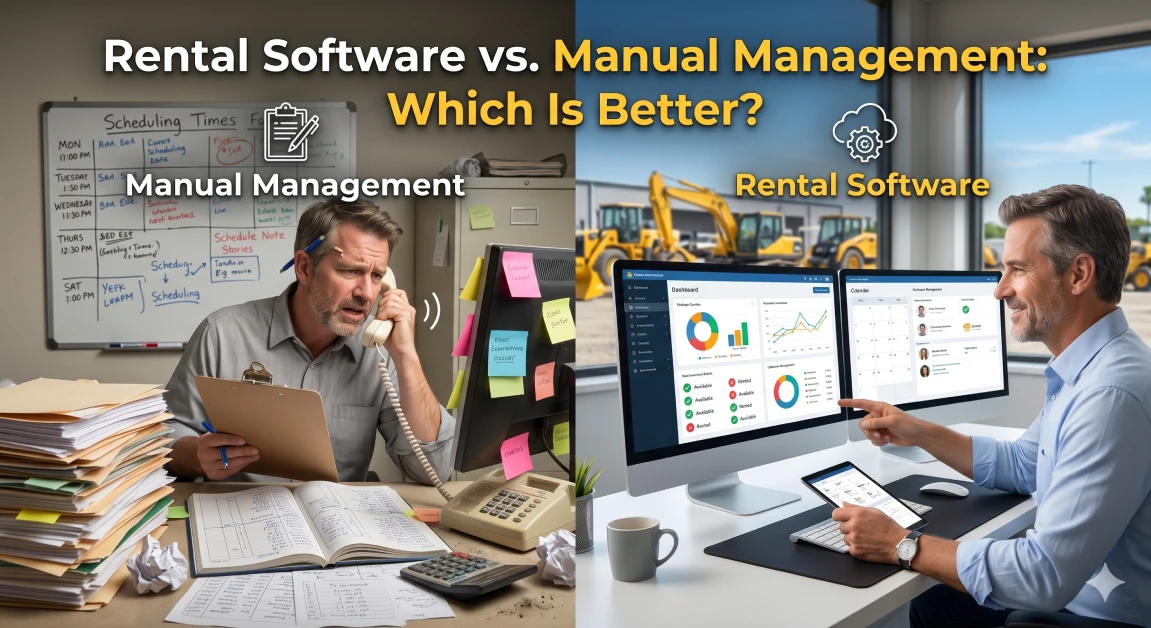
Running a rental operation without real-time asset visibility is like driving a tractor through a midnight storm without headlights. If you manage an equipment fleet in Southern Iowa, you face a critical operational crossroads every single morning when the service gate opens. You must choose whether to command your inventory using modern, cloud-based digital architecture or continue relying on traditional paper clipboards, dry-erase whiteboards, and manual Excel spreadsheets. As South Iowa’s Largest Full Line Rental Facility, we understand that this choice directly dictates your daily overhead, your employee retention rates, and your ultimate end-of-year profitability.
The reality of the situation is that the physical size of your yard no longer protects you from the inefficiencies of manual tracking. When a commercial concrete contractor calls your counter needing a high-capacity telehandler immediately, guessing about machine availability is a guaranteed way to lose that account to a more agile competitor. Let us break down the operational differences between automated software systems and manual management so you can make an informed decision for your business survival.
Is Dedicated Rental Software Better Than Manual Spreadsheets and Clipboards?
Dedicated rental software is significantly better than manual management because it updates your inventory levels instantaneously, prevents double-booking human errors, and legalizes every contract through automated digital trails. When you rely on a manual system, your business operates with an inherent data lag that grows worse with every single transaction. A clipboard sitting on the service counter does not communicate with the wash bay, nor does it alert your delivery drivers that a customer just called to extend their rental for another week. This disconnect forces your counter staff to make promises they cannot keep, leading to missed delivery windows and frustrated customers.
Transitioning to a digital platform turns your inventory into a single source of truth that every employee can access simultaneously from a desktop computer or a field tablet. The second a machine is scanned out on a delivery truck, its status updates across your entire company ecosystem. Your front office knows it is earning revenue, your shop foreman knows it is off-site, and your dispatch coordinator can plan its future route weeks in advance. If you want to analyze the exact tools required to build this level of visibility, review our operational analysis on the must-have features in rental management software to see how modern yards streamline their front-counter logistics.
How Manual Inventory Management Causes Unseen Operational Revenue Leaks
Manual inventory tracking actively drains your business profits by causing machine utilization gaps, delaying customer invoicing cycles, and obscuring your actual cost of equipment ownership. When you use spreadsheets to track heavy iron, you inevitably lose track of billable hours, especially when machinery is transferred between complex commercial jobsites. It is incredibly easy for a field supervisor to forget to log a return over a busy weekend, leaving an expensive excavator sitting idle on a site without generating a dime of rental revenue for your company.
Here is the reality of the situation for your local cash flow. When your invoicing relies on your staff manually cross-referencing handwritten paper tickets at the end of the month, your billing cycle slows to a crawl. This delay creates massive cash gaps where you are paying for equipment financing, yard property taxes, and payroll while waiting weeks for customers to receive and process outdated invoices. Furthermore, manual logs fail to accurately capture structural changes within the industry. By aligning your business with current digital asset workflows, you can better capitalize on the broader rental industry trends in 2026 that favor highly liquid, data-driven operational models.
| Operational Indicator | Manual Management System | Automated Rental Software |
| Inventory Update Speed | Manual entry lag (hours to days) | Instantaneous via cloud synchronization |
| Double-Booking Risk | High due to paper friction | Zero due to real-time status locks |
| Invoicing Cycle | Batch-processed at month-end | Automated immediately upon asset return |
| Maintenance Tracking | Calendar guesswork or whiteboard tracking | Meter-driven automated engine hour alerts |
Tracking Machinery Asset Health via Shop Floor Automation vs Paper Logs
Automated shop management systems guarantee equipment reliability by triggering service alerts based on live engine meter hours, whereas manual paper logs rely entirely on operator memory and cause catastrophic component failures. If your service team depends on a paper binder to track oil changes, hydraulic flushes, and structural inspections, you are actively running your equipment into the ground. A machine that misses its routine checkup because a service card was misplaced will eventually fail on a customer’s jobsite, which costs you thousands of dollars in emergency towing and field repairs.
The operational contrast here determines your market reputation. Every standard supplier down the road claims to offer a professionally maintained fleet on their website, but a fresh layer of corporate paint cannot hide a neglected hydraulic valve on a remote site in Adams County. True jobsite reliability depends completely on deploying highly trained mechanics who use automated software to log live diagnostics, track exact parts inventories, and review factory-certified service histories before the iron ever hooks up to a delivery trailer. Our technicians use digital maintenance dashboards to verify that every safety sensor, fluid line, and mechanical linkage meets strict performance metrics, transforming routine service from a reactive chore into a distinct competitive advantage.
[Manual Shop Workflow] ──► [Misplaced Paper Card] ──► [Missed Service] ──► [Jobsite Failure]
[Automated Shop System] ──► [Live Meter Reading] ──► [Auto Work Order] ──► [Proactive Maintenance]
If you are currently mapping out your initial maintenance protocols or constructing a new yard layout, studying the strategic blueprints found in our guide on how to start a rental business step-by-step will prevent you from inheriting these common mechanical bottleneck habits.
Scaling Your Rental Operations Safely Across South Iowa
Centralized software architecture allows you to scale your business safely by linking multiple yard locations into a single, unified database that tracks every asset simultaneously. If you try to expand your regional footprint from a single location into multiple territories using manual tracking methods, your logistics will rapidly collapse into chaos. A manual setup isolates individual yards, turning each branch into an informational island where managers have no idea what equipment is sitting idle just thirty miles away.
Consider the tactical reality of managing logistics along the Highway 34 corridor without a shared digital platform. If a regular commercial client calls your branch in Creston looking for a specific high-capacity scissor lift that is currently sitting in your Clarinda yard, a manual system forces your counter team to make multiple frantic phone calls to locate the unit. Dedicated software removes this friction entirely by displaying your regional inventory on a single screen, allowing you to coordinate cross-yard transfers instantly. To discover how to successfully integrate multiple locations under a single management framework, read through our comprehensive ultimate guide to the rental business to maximize your regional fleet footprint.
Financial Impact and the Bottom Line Comparison for Equipment Houses
Modern digital platforms outperform manual management by slashing your administrative labor hours and directly increasing your total return on equipment capital investments. When you eliminate the hours your staff spends manually typing up contracts, calling clients for overdue returns, and hunting down missing paperwork, you can reallocate that workforce to active sales and customer service roles. The bottom line for your budget is that manual management keeps your staff trapped in low-value administrative loops while automated platforms free them to grow your market share.
Digital transformation turns your historical asset utilization data into an active forecasting tool. Instead of relying on a gut feeling about which machines to purchase for the upcoming construction season, your software provides precise reports showing exactly which asset classes generated the highest rental yields and which ones sat idle. This clear data ensures you invest your hard-earned capital into machinery that drives profit, keeping your business lean, highly scalable, and structurally superior to any traditional operation in the region.
Frequently Asked Questions on Rental Software vs Manual Management
1. Is dedicated rental software better than using manual spreadsheets for a small equipment yard?
Yes, dedicated rental software is significantly better than manual spreadsheets because it updates your inventory availability in real time, automatically blocks double-bookings, and streamlines your billing loops. Spreadsheets lack automated tracking safeguards, meaning human data entry errors can quickly lead to costly logistical scheduling mistakes.
2. How does automated rental management software prevent double-booking errors?
Automated software uses real-time asset tracking to instantly lock a machine’s unique serial number the exact moment it is assigned to an active customer contract or service work order. This automated lock removes the machine from your active rental pool across all your terminal screens, preventing counter staff from booking the same piece of iron twice.
3. Why is tracking equipment maintenance in software better than using traditional paper shop logs?
Software tracking automatically calculates precise maintenance intervals based on live engine hours and asset history, while paper logs rely entirely on manual checks and human memory. This digital oversight ensures your highly trained mechanics receive automated alerts for preventative care before a machine breaks down on a jobsite.
4. Can switching from manual management to a digital software platform improve my business cash flow?
Yes, digital platforms accelerate cash flow by generating and emailing itemized customer invoices immediately upon asset return rather than waiting for manual batch-processing at the end of the month. This automation slashes administrative labor overhead, eliminates calculation disputes, and significantly reduces outstanding collection days.
5. What information data fields should my rental software track to maximize fleet utilization?
Your management software must track live engine meter hours, precise GPS asset locations, historical financial return on investment metrics, active maintenance status loops, and seasonal rental demand patterns. Having immediate access to these core operational data fields allows you to make smart, data-driven decisions regarding fleet expansion and asset disposal.